By myCHEF Dubai Team|
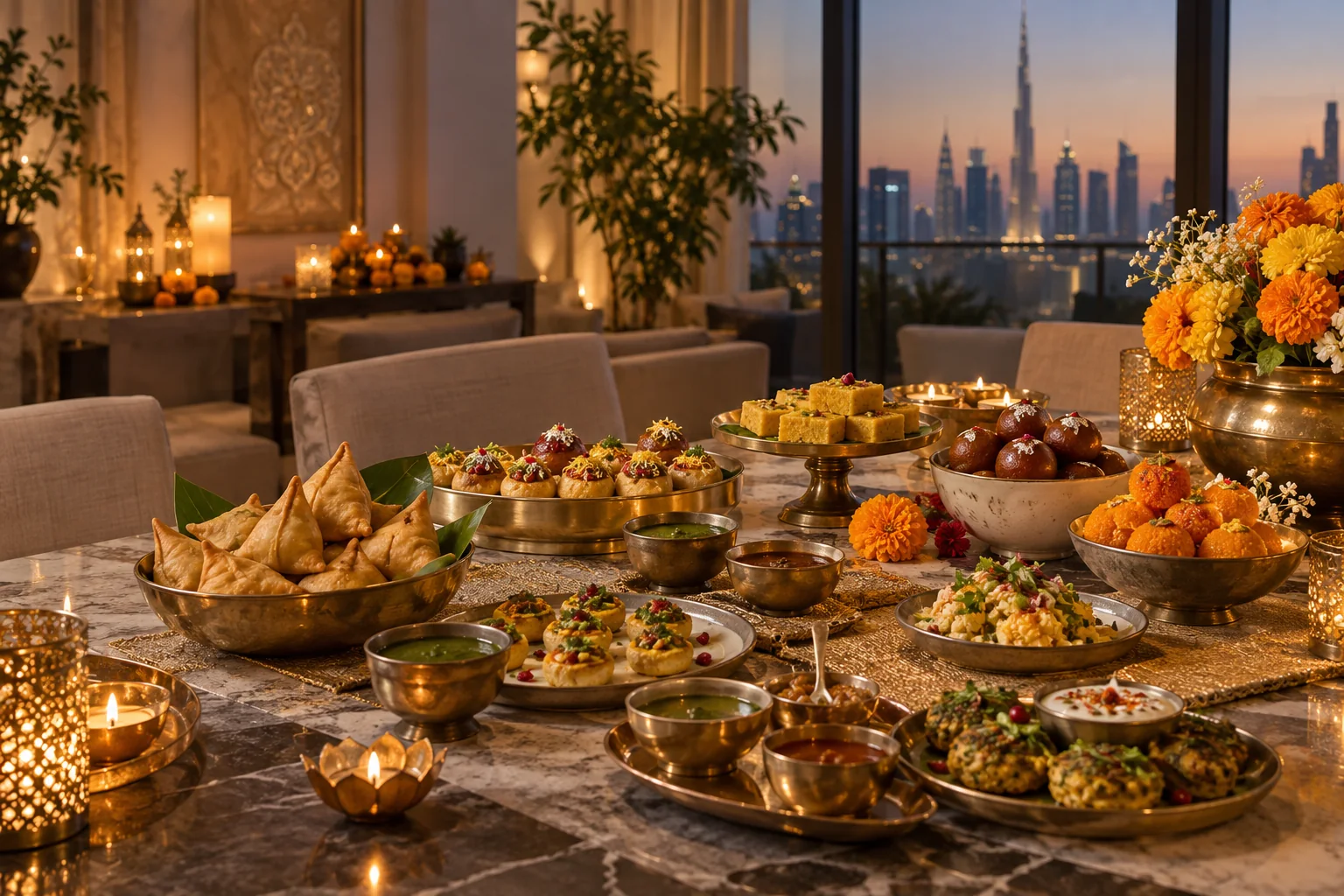
AI-generated illustration of a hosting concept.
A Diwali party at home in Dubai can bring together family traditions, friends with different food preferences and guests arriving at different times. The best food plan begins with how your household celebrates. It should support the occasion you want to host, rather than assume every Diwali gathering follows the same menu or timetable.
This guide covers a home reception with savoury food, a main meal or substantial alternatives, and sweets. The examples are ideas to discuss, not a fixed package or a statement about every family’s traditions. For a tailored proposal, start with Diwali catering.
Diwali party at home in Dubai: start with your traditions
Tell the catering team what matters to your family. There may be a ceremony, a quiet period, a shared meal, a visiting pattern or a particular dish that gives the gathering its character. Those details belong in the brief before the chef proposes a sequence.
Explain when food should begin and whether any part of the event needs service to pause. A team that knows the plan can work discreetly around it. A team that only has an arrival time and guest count has to guess.
Be specific about the style of food you enjoy. Regional preferences, family recipes and favourite sweets are more useful than a generic request for “traditional food”. If authenticity to a particular family preparation matters, share a recipe or reference and discuss what can be achieved within the service.
Choose one household contact to consolidate decisions. It is natural for several relatives to have ideas, but the supplier needs an agreed menu and timetable rather than separate messages with competing priorities.
Choose between a reception and a full meal
Decide whether guests are coming for a short visit, an extended standing reception or a seated meal. The invitation should make the food expectation clear. A gathering described as dinner needs a different menu balance from a brief sweets-and-savouries visit.
For staggered arrivals, discuss how the service will operate in waves. Putting the entire menu out at the first arrival may not suit the planned duration or the caterer’s handling arrangements. The chef should recommend a practical sequence for the actual dishes.
A seated meal can create a shared centre to the evening, but depends on guests being present at a similar time and on having sufficient seating. A buffet offers flexibility but needs a clear layout and active management. Passed food suits conversation but still needs a deliberate quantity and service plan.
The canapé reception guide and buffet layout guide explain those formats in more detail. Choose the one that fits your home and guest pattern before finalising the menu.
Confirm dietary expectations precisely
Ask guests about dietary requirements and share the confirmed information with the caterer. Do not assume that vegetarian, vegan, Jain, halal or another description means exactly the same thing to every person using it.
Where a guest has specific restrictions, ask them to identify the ingredients and preparation expectations that matter. The chef can then confirm what is possible. Avoid making a broad promise based only on the name of a menu section.
Treat allergies and intolerances as a separate conversation from religious or preference-based choices. Ask the team about ingredients, sourcing and handling for the proposed menu, including sauces, garnishes and sweets. The dietary requirements page is the place to begin a detailed enquiry.
If the whole event is vegetarian, say so at the outset. If you want separate vegetarian and non-vegetarian elements, discuss whether that fits your household’s expectations and the kitchen setup. The catering team should follow your confirmed brief, not infer it from the occasion.
Build a menu with a clear progression
A useful progression might begin with a small selection of savoury bites, move into a more substantial meal and finish with sweets and tea. The exact dishes should reflect the guests, the family’s preferences and the service format.
Think about texture and richness across the menu. Several fried items followed by several creamy dishes may feel repetitive, even if each is a favourite. A contrast of crisp, soft, fresh and substantial elements can make the meal more enjoyable.
Choose accompaniments that complete the main dishes. Rice, breads, vegetables, lentils, sauces and chutneys should be considered as a plate, not as unrelated additions. The chef can help you avoid a menu that looks extensive but leaves guests unsure how the elements fit together.
The Indian catering page can support a broader cuisine discussion. For a fully plant-based direction, use the vegan service page and confirm the actual ingredients of every proposed dish.
An illustrative vegetarian menu discussion
The following structure is deliberately flexible. Every item requires the chef’s ingredient and service confirmation, and it should be adapted to your household’s traditions and guest requirements.
| Stage | Possible direction | What to discuss |
|---|---|---|
| Welcome | Small savoury bites with contrasting textures | Which items are convenient while guests stand and greet one another? |
| Fresh element | A suitable salad, chaat-style dish or vegetable preparation | Does it need finishing immediately before service? |
| Main meal | A substantial vegetable dish and a lentil or legume dish | How do the dishes balance richness, spice and substance? |
| Accompaniments | Rice, breads and confirmed sauces | Which items need on-site finishing or a separate service sequence? |
| Sweets | A selected mithai assortment or another agreed dessert | What are the ingredients, portion plan and handling instructions? |
| Later hospitality | Tea, coffee or other agreed drinks | Who serves and clears after the main food period? |
You do not need to include every category. For a short reception, a smaller savoury selection and sweets may fit the brief. For dinner, make sure the main meal is complete before adding extra decorative variety.
Decide where live finishing adds value
Some dishes are especially appealing when assembled or finished close to service. That can create an engaging experience, but it also requires equipment, working space, staff and a practical queue arrangement.
Ask what the proposed station needs and what the venue permits. In a home, an attractive corner is not automatically a suitable cooking area. The chef should assess the equipment and service requirements, while the property team confirms any applicable restrictions.
Consider whether the station will become a gathering point that blocks other food or the route through the room. If every guest wants the same item at once, the experience may be slower than expected. A complementary ready-to-serve selection can sometimes help, subject to the caterer’s plan.
Do not add a live element solely because it looks impressive. Include it when the food and guest experience justify the space and staffing. The outdoor villa kitchen guide is useful if the working area is outside the main kitchen.
Plan the sweets as carefully as the savoury food
Tell the caterer whether sweets will be served during the event, displayed for guests to choose, packaged as gifts or supplied by family members. These are different quantities and handling arrangements.
Collect ingredient information from any separate supplier and share it where necessary. Do not assume that all sweets in an assortment have the same ingredients or suit the same dietary requirements. If a guest needs an alternative, identify it clearly and agree how it will reach them.
If take-home boxes are part of the plan, confirm who supplies and fills them, what goes inside and what instructions accompany them. Food intended for a guest to take away should be planned for that purpose rather than assembled from an unreviewed display at the end.
Consider the visual balance too. A few carefully presented varieties may be more inviting than an overcrowded table. The dessert-table service page can help if sweets are a central feature of the event.
Build the evening around arrival waves
For an illustrative gathering with guests expected over a longer period, the plan might use a welcome phase, a clearly announced main food window and a later sweets-and-drinks period. The chef should confirm which dishes suit that sequence and how service is managed.
| Phase | Guest experience | Coordination detail |
|---|---|---|
| Early arrivals | Greetings and light hospitality | Keep the main route and family activities clear |
| Agreed pause or ceremony | The household’s chosen observance | Brief the team on when service should pause |
| Main food period | Shared meal, buffet or substantial reception food | Confirm the start signal and the service lead |
| Later arrivals | A planned food option if included | Avoid improvising outside the agreed handling plan |
| Sweets and conversation | Relaxed finish | Confirm drinks service, clearing and take-home items |
This structure should be adapted to your celebration, not imposed on it. If there is no ceremony or formal meal, remove those phases. If guests will eat together at a fixed time, make that expectation clear in the invitation.
Let decoration support the food service
Flowers, lamps, gifts and decorative objects can make the home feel special, but they also occupy working space. Keep food preparation, serving surfaces and guest routes usable after the decorations are installed.
Discuss candles, electrical items and other decorative equipment with the venue or property team where relevant. Position them according to the applicable instructions and away from the catering team’s working needs. Do not ask servers to carry trays through an arrangement that has become difficult to navigate.
Test the lighting at the time the event will take place. Guests should be able to see food and read necessary information, while staff need adequate working visibility. A decorative mood should not make the service area hard to use.
If furniture is being moved, show the final layout to the caterer. The kitchen-to-table route in an earlier photograph may no longer exist once the room is dressed.
Include children and older guests in the service plan
Ask whether some guests would benefit from earlier food, a seat near the service area or assistance carrying a plate. Let the guests or responsible family members explain what would be helpful rather than making assumptions.
For children, discuss suitable portions, food formats and adult support with parents and the caterer. A familiar component from the main menu may work well, but suitability should be confirmed for the actual age group and requirements.
For guests who prefer milder food, ask whether the menu can offer flavour without relying on heat, with stronger condiments separately where appropriate. This can make the meal welcoming without turning the entire menu into the least expressive option.
The family-party menu guide offers a detailed framework for coordinating different ages within one event.
Confirm what the proposal includes
Check the menu, quantities, staffing, equipment, tableware, drinks, setup, clear-down and collection. If the team is expected to serve sweets supplied by another business, include that task explicitly.
Ask when guest numbers, dietary information and menu choices must be finalised. Confirm how late changes are handled and keep the accepted version in one place. The catering quote comparison guide helps identify gaps between proposals.
If the event extends beyond the booked service, decide what happens afterwards. The host should receive a clear handover for any retained food and hired items. Do not assume staff or equipment remain indefinitely because guests are still enjoying the evening.
A useful enquiry brief
Send the date, Dubai location, guest count, arrival pattern, preferred food format and the traditions the service should work around. Add kitchen photographs, dietary requirements, sweets arrangements and the parts of the event you want the team to manage.
Be clear about open decisions. If you are choosing between a buffet and passed service, ask the caterer to explain the implications for your room and guest count. That is more useful than requesting two menus without the context needed to compare them.
Begin through the Diwali catering page or enquiry form. A successful gathering gives the food a thoughtful place within your celebration, with enough structure behind the scenes for the evening to feel relaxed and personal.