By myCHEF Dubai Team|
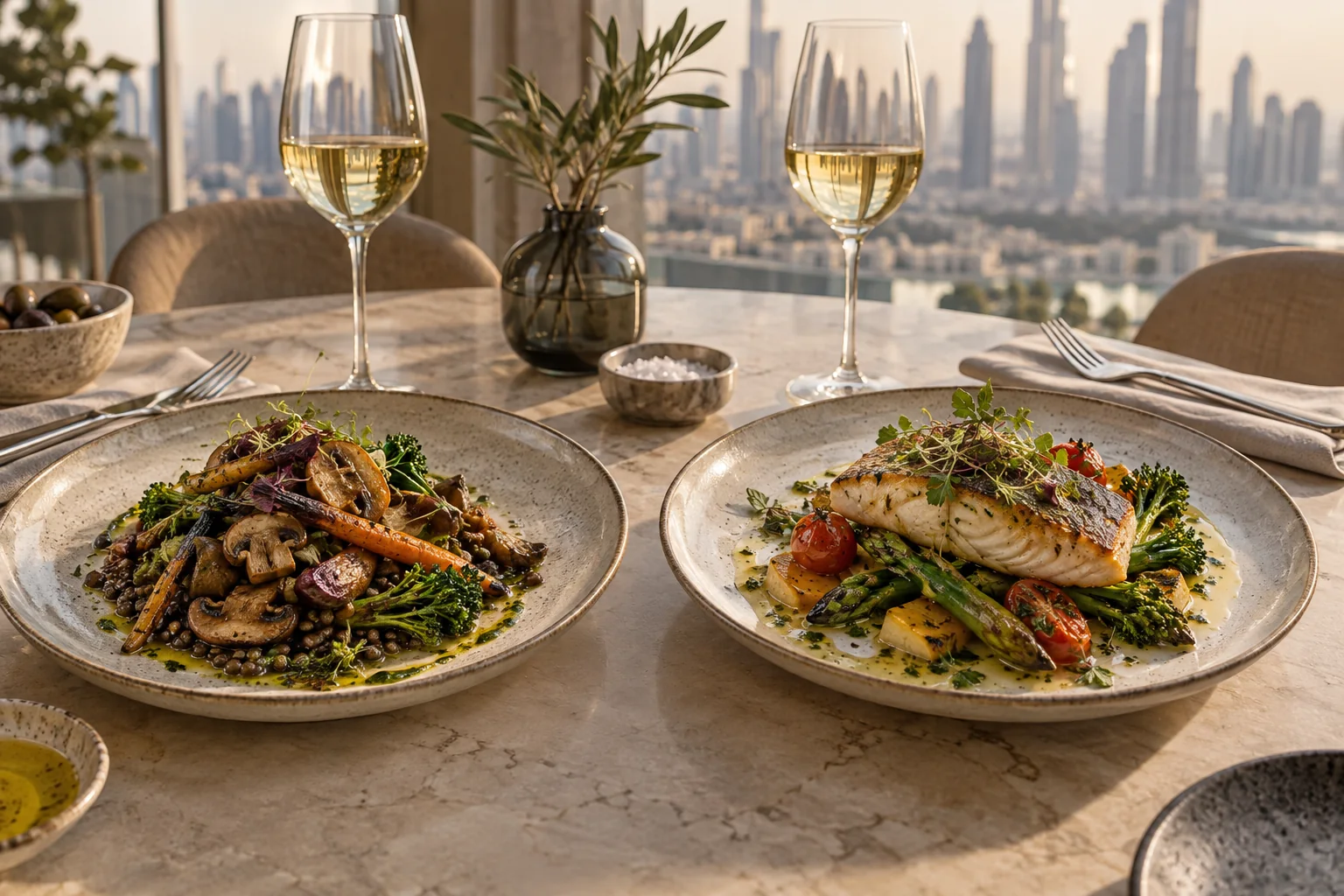
AI-generated illustration of a hosting concept.
A mixed-diet dinner party in Dubai can feel like one coherent meal when the alternatives are planned from the beginning. The goal is not to make every guest eat an identical plate. It is to give everyone a complete, considered meal with a similar place in the evening’s sequence.
Start by collecting clear information, then ask the chef to build a menu around shared structure and deliberate differences. This guide is about hosting and menu organisation, not medical advice or a guarantee that a particular kitchen can accommodate every requirement. Explore cuisine and menu options before developing the specific brief with the team.
Plan a mixed-diet dinner party in Dubai from confirmed information
Ask guests about requirements before choosing the menu. Keep the question open enough for people to explain what matters, then clarify anything ambiguous. A short label such as “dairy-free” or “vegetarian” may need more detail before a chef can design and prepare the meal.
Separate preferences, allergies, intolerances, religious requirements and any professionally prescribed eating instructions. The categories can overlap, but they should not be treated as interchangeable. The host should pass on the guest’s confirmed information rather than rewriting it into an assumption.
Give the caterer the requirements in one agreed list and ask for acknowledgement. If something changes, update the list and confirm that the menu and service plan still work. A message to a friend who is helping with decorations is not a reliable way to change an essential food instruction.
Protect guests’ privacy. The kitchen and relevant service staff need enough information to do their work, but the whole table does not need a public explanation of someone’s health or personal choices.
Understand what a menu label can and cannot tell you
A dish described as vegan or vegetarian tells you something about its intended ingredients, but it does not answer every allergy or handling question. The UK Food Standards Agency’s consumer guidance explains that vegan labelling is not an allergen-free guarantee. Discuss the actual requirement with the food business.
Likewise, a cuisine name is not a complete specification for religious requirements. Ask the chef about the ingredients and sourcing expectations relevant to your guests. The halal catering page is a starting point for that conversation, with the details confirmed for your booking.
Avoid declaring an event “safe for everyone” because a menu has several symbols beside it. The caterer must explain what can be accommodated and what limitations remain. If a requirement cannot be met, resolve that with the guest before the event rather than improvising at the table.
Use the dietary requirements enquiry page to share specific information. The discussion should cover ingredients and handling as well as the finished dish name.
Build a shared structure before choosing separate mains
Think of the meal in components: opening course, main element, vegetables, starch or grain, sauce and dessert. Identify where a shared component can work for the confirmed guests and where a separate preparation is needed.
For example, the menu might use a common vegetable direction and similar presentation while offering a fish main and a substantial plant-based main. That can make the plates feel related without pretending the same recipe suits everyone.
The chef should confirm ingredients in every shared component. Stocks, dressings, cooking fats, sauces and garnishes can change whether a dish meets a requirement. A plate is not defined only by the most visible ingredient in its centre.
Do not force a shared component if it complicates the handling plan or fails the brief. Sometimes separate dishes are the clearer option. The purpose of a common structure is to make the meal coherent, not to minimise differences at any cost.
Give each guest a complete main course
A complete alternative should have its own balance of flavour, texture and substance. Removing the meat or fish from an existing plate can leave a collection of accompaniments rather than a main course.
Ask the chef to describe the alternative with the same care as the principal dish. What is the central element? What provides contrast? Which sauce belongs with it? How does the portion fit the rest of the meal?
For a plant-based direction, ingredients such as vegetables, mushrooms, legumes or grains can be organised in many ways, subject to the guests’ requirements and the chef’s menu. The vegan catering service provides a relevant starting point; the vegetarian service is distinct and should not be assumed to meet vegan requirements.
Equal care does not require identical shapes or colours on every plate. It requires an intentional dish that arrives at the appropriate time and feels like part of the same occasion.
An illustrative menu framework
This example shows how to discuss a coordinated meal. It is not a confirmed menu, and suitability depends on the actual recipes, guest requirements and handling arrangements.
| Course | Shared idea | Separate decision where needed |
|---|---|---|
| Opening | A vegetable-led course with a consistent presentation | Confirm stocks, dressings and finishing ingredients |
| Main | A similar seasonal vegetable direction across the table | Fish, meat or a substantial plant-based centre, as agreed |
| Accompaniment | A grain, potato or other suitable component | Confirm preparation and whether a separate version is required |
| Sauce | A flavour direction that ties the menu together | Use the appropriate recipe for each confirmed plate |
| Dessert | A common flavour theme such as citrus or chocolate | Choose recipes that meet the specific requirements |
The framework can also be used for sharing food. In that case, the service plan must make clear which dishes are shared by everyone and which are reserved or served separately. Do not rely on guests to infer the distinction from appearance.
Decide how much choice guests really need
More choices can make a menu feel flexible, but they also increase ordering, kitchen and service complexity. For a small dinner, a confirmed plate for each guest may be easier than asking everyone to choose from several mains on arrival.
If you want guests to choose in advance, set a response deadline that fits the caterer’s process. Keep choices linked to the correct guests and communicate changes clearly. A seating plan or discreet place identifier can help the team serve accurately.
If the menu is mainly shared, consider how popular alternatives will be with other guests. A vegetable dish designed for two people may be chosen by the whole table. Either make it a shared dish with sufficient quantity or use an agreed separate allocation for those relying on it.
The right amount of choice is the amount the kitchen can deliver well while meeting the actual guest brief. It is not necessarily the longest menu.
Choose plated or sharing service deliberately
Plated service can make individual allocation clearer, but requires an accurate guest list and a practical way to identify the correct diner. Sharing service can feel relaxed, but needs more thought about utensils, portions and the movement of dishes around the table.
Discuss the format with the chef before deciding that one is automatically better for every requirement. The specific ingredients, kitchen and handling process matter. The team should explain the arrangement it can support.
For sharing food, make the dish information clear and brief the service staff. If a guest asks an ingredient question, there should be a reliable answer available rather than an improvised guess based on the dish’s name.
For buffet service, review the layout planning guide and confirm the dietary handover process. A separate platter on a crowded table is not, by itself, a complete plan.
Keep service simultaneous where the plan allows
Ask how the alternatives fit into the same course sequence. Guests should not be left waiting through everyone else’s main course because their dish was treated as an extra request after the kitchen plan was finished.
The chef may need a different preparation method or finishing time for an alternative. That is precisely why the information should arrive early. The service lead can then coordinate the plates and communicate any unavoidable difference discreetly.
If guests change seats, tell the relevant team member before service. A carefully prepared seating note becomes unreliable when people swap places without an update. For a relaxed dinner, a simple host confirmation may be enough if that is the agreed method.
The dinner-party timeline guide explains how course timing and guest transitions work together. Include alternatives in that plan from the outset rather than adding a separate unofficial timeline.
Make dessert part of the original brief
Dessert is often where an otherwise thoughtful menu becomes less complete. A guest may receive carefully planned savoury courses and then discover that the only sweet option was never reviewed for their requirements.
Ask the chef to propose dessert alternatives alongside the main courses. Consider the same flavour theme in different recipes where that works, or choose a dessert everyone can enjoy only if the ingredients and handling have been confirmed for the group.
Do not assume fruit is always the preferred or only alternative. It can be a lovely deliberate course, but it should be chosen as such rather than used as an automatic replacement for an unplanned dessert.
If a cake or sweet selection comes from another supplier, obtain the relevant ingredient and handling information and include it in the discussion. The caterer should not be expected to guarantee an unfamiliar item brought to the event without prior review.
Include children without creating a second event
For a family dinner, ask parents about the children’s preferences, requirements and suitable serving formats. Where possible, the chef may adapt components from the main meal rather than preparing an entirely unrelated menu.
An earlier serving time or a sauce served separately can be more useful than adding another long list of dishes. Confirm those details with the responsible adults and the chef, including any support needed at the table.
Make sure children’s food is included in the overall kitchen sequence. An unplanned early meal can compete with preparation for the adults, especially in a small home kitchen.
The children-and-adults menu guide covers the wider event logistics. The same principle applies to an intimate dinner: give each guest a practical place in one coordinated plan.
Use a guest matrix for the team
A simple private service matrix can connect each guest with the confirmed dish and any essential note. Keep it factual, current and available only to the people who need it for the booking.
| Guest identifier | Confirmed menu | Service note |
|---|---|---|
| Guest A | Agreed main menu | Standard course sequence |
| Guest B | Confirmed plant-based menu | Same course sequence; identify the correct plate |
| Guest C | Individually confirmed requirement | Follow the caterer’s approved preparation and handover plan |
| Child guest | Agreed age-appropriate meal | Serve at the confirmed time with responsible adult support |
Replace these placeholders with the actual information needed for service. Do not use the example as evidence that any particular requirement has been approved. The caterer’s acknowledgement and final menu are what establish the plan.
If you prefer not to use names in a working kitchen list, agree another reliable identifier with the team. Privacy should not come at the expense of ambiguous service instructions.
Ask about changes and substitutions
Confirm how ingredient substitutions are reviewed, especially after the menu is accepted. A replacement that seems minor can matter to a guest’s requirement. The approval process should be clear before sourcing begins.
Ask guests to tell you if their information changes, and pass that change to the caterer promptly. Do not wait until arrival to mention something known earlier. If a late requirement cannot be accommodated, discuss the available options honestly with the guest.
Keep the accepted menu and the final guest matrix together. Where several people are helping organise the dinner, nominate one person to approve food changes so the supplier does not receive conflicting instructions.
The quote comparison guide can help you confirm whether alternatives, extra preparation or other requested work are included in the proposal.
A brief the chef can work from
Send the guest count, dining format, desired meal time and the confirmed requirements. Explain the atmosphere you want and provide a few food preferences without prescribing every recipe. Ask for a complete menu showing the principal dishes, alternatives, shared components and dessert.
Include kitchen photographs for a home event and identify any equipment or space constraints. The kitchen preparation guide is useful for the practical photo set, while the catering team determines the event setup.
Request a clear explanation of what can be accommodated, how plates will be identified and what remains to be confirmed. A thoughtful response should make the guest experience easier to understand, not bury important requirements in a decorative menu.
Share the brief through the enquiry page. A well-planned mixed menu lets guests enjoy the same occasion with confidence that their meal has been considered from the first course to the last.