By myCHEF Dubai Team|
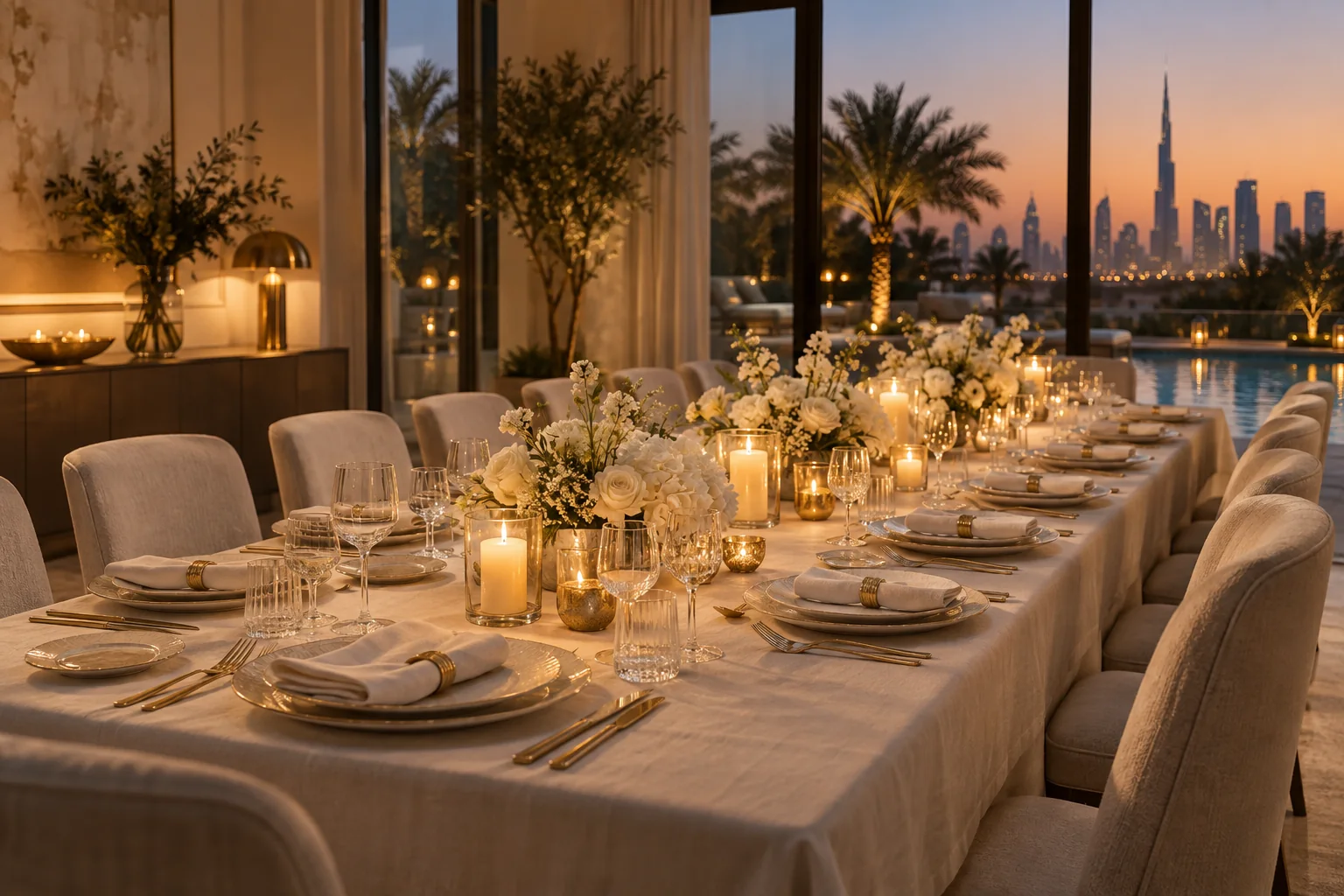
AI-generated illustration of a hosting concept.
A dinner party timeline in Dubai should protect the parts of the evening you care about: time with your guests, food served at the right moment and a calm finish. It is not a theatrical script. It is a shared running order that helps the host, chef and service team make good decisions when arrivals, conversation or the kitchen move at a different pace.
This guide uses an illustrative dinner for twelve at a home, with guests arriving at 7pm and a seated meal following. The timings are planning examples to discuss with your team, not a promised service duration. Start with private party catering if the occasion needs a timed event service.
Dinner party timeline in Dubai: choose the anchor moments
Begin with three anchors: guest arrival, the intended start of the main meal and the point at which formal service should finish. Add any moment that cannot easily move, such as a surprise, a short speech or a guest who must leave early.
Then decide which moments can flex. A welcome period might expand slightly if guests arrive gradually. A plated course already being finished in the kitchen may have less room to move. Discuss that distinction before the event so the host understands when a small delay becomes a menu problem.
Tell guests the arrival time you actually want them to use. If an invitation says “from 7pm”, do not privately expect everyone seated at 7:05. The invitation and running order should describe the same evening. For a more formal dinner, make the seating time clear without overwhelming guests with operational detail.
The chef’s access time is a separate anchor. It depends on preparation, equipment, staffing and what can be completed before arrival. Ask the team to set it from the menu rather than assuming all dinners need the same setup period.
Choose a service style that fits the room
Plated service gives the team control over portions and presentation, but requires a clear finishing area and coordinated movement between kitchen and table. Sharing dishes can make the meal feel relaxed, but need enough table space and serving utensils. A buffet changes the movement of the whole room.
Use your actual dining furniture as the starting point. A narrow table covered with tall flowers, candles and multiple glasses may have no room left for sharing platters. A kitchen separated by stairs from the dining area may need a different staffing or service plan from a room next to the hob.
For menu inspiration, the menu collection helps you discuss the food sequence. If you are considering a self-service format, the buffet layout guide explains how the room and guest flow change.
Do not ask the running order to compensate for an unsuitable format. If the table cannot hold the proposed sharing meal, change the presentation. If there is no practical finishing space for many individual plates, discuss a simpler course structure or the additional setup required.
Work backwards from the seated meal
Once the intended seating time is agreed, the chef can work backwards through final cooking, plating, table readiness and guest movement. The host can work backwards through drinks, introductions and any welcome remarks.
Keep the table ready before the first guest arrives where possible. Setting cutlery while guests are already in the room creates unnecessary movement and leaves less attention for hosting. Confirm who supplies and sets the tableware, linen and glassware; these items should not be assumed from the food menu alone.
Allow a transition between the welcome area and the table. Twelve people do not finish a conversation, find a seat and settle instantly. A gentle invitation to sit is more effective than asking the kitchen to hold a finished course while the host begins another round of introductions.
Agree who gives the kitchen the final signal that guests are ready. That should be one person, usually the event lead or nominated host contact. Conflicting instructions from several guests can create avoidable confusion at the most time-sensitive point.
An illustrative running order for twelve
| Time | Guest experience | Host and team action |
|---|---|---|
| Before 6:30pm | Guests have not arrived | Complete the agreed kitchen setup, table setting and service briefing |
| 6:30pm | House ready to welcome | Confirm dietary places, drinks station and final guest count |
| 7:00pm | Arrivals and introductions | Offer drinks and the agreed welcome food in manageable waves |
| 7:35pm | Invitation to sit | Check that the kitchen and table are ready before moving guests |
| 7:45pm | First course | Begin the agreed seated sequence |
| 8:20pm | Main course | Adjust within the menu’s practical limits and keep the host informed |
| 9:00pm | Short toast or conversation pause | Use an agreed break rather than interrupting active service |
| 9:15pm | Dessert | Serve the planned dessert or cake sequence |
| 9:45pm | Coffee and relaxed conversation | Begin discreet clearing where included |
| Agreed finish | Guests continue or depart | Complete the confirmed handover, clear-down and collection arrangements |
These times illustrate the shape of an evening. Your menu may need a different pace. A long tasting sequence, a live station or extensive speeches will change it. Have the chef approve the final version after the menu and equipment are settled.
The table should also include a contact name for each operational decision in the team’s working copy. Guests need the invitation details; the service team needs the fuller version.
Plan the welcome food as part of the meal
Welcome bites should suit the length of the arrival period and the dinner that follows. A generous reception followed immediately by several rich courses can overwhelm the evening. A long welcome period with very little food can leave guests hungry before they sit down.
Ask the chef to plan the welcome food and seated meal together. Think about texture and convenience as well as flavour: guests may be holding a glass, greeting friends or standing away from a table. Food that needs cutting or produces awkward debris may be better saved for the seated course.
If the welcome period is a substantial part of the event, use the canapé reception planning guide to discuss quantity and service waves. The relevant question is what the food is expected to do—provide a small introduction or cover a longer period of eating.
Confirm where used glasses, napkins and small plates go. Without a clearing plan, these items accumulate on furniture and reduce the usable space just as guests are being invited to sit.
Put speeches and surprises into the plan
A surprise is more enjoyable when the people serving the food know about it. Tell the event lead privately if a toast, gift, announcement or cake reveal needs a particular moment. The team can then avoid beginning a course immediately before everyone is asked to stop eating.
Give speeches a realistic place and approximate length. A brief toast between courses is different from several guests each speaking for ten minutes. The kitchen needs to know which kind of pause is intended, especially when the next dish depends on a last-minute finish.
For a birthday, confirm whether the cake replaces dessert, follows it or is mainly for the ceremonial moment. Identify who receives the cake, where it is kept according to the supplier’s instructions, who brings it out and who portions it. The birthday catering page is the relevant service route for an event built around that occasion.
Do not rely on “we will decide on the night” for every special moment. Leave room for spontaneity in the conversation, but give the service team enough structure to protect the meal.
Make dietary service discreet and precise
Collect requirements before the menu is confirmed and communicate them through one agreed list. If individual alternatives are being served, the team needs a reliable way to identify the correct diner without repeatedly asking the table to announce personal information.
A seating plan can help even at a small dinner. It need not be formal or decorative; a simple host-approved sketch with the necessary service notes may be enough. Confirm changes if people swap seats before the first course.
Ask whether alternative dishes will be served at the same point as the main menu. A guest should not have to wait through everyone else’s course because their meal was treated as an afterthought. The mixed-diet menu guide offers a framework for building equivalent courses.
Keep essential requirements separate from general preferences and confirm what the team can accommodate. A dish name or a decorative menu card is not a substitute for the ingredient and handling conversation.
Allow for late arrivals without disrupting everyone
Decide in advance how you want to respond if one guest is late. The right choice depends on the occasion, the guest’s role and the food. You might extend the welcome period within an agreed limit, begin with those present or offer a different sequence to the late arrival.
Ask the chef which parts of the menu have flexibility. Some dishes can be prepared in a different order; others lose quality if held after finishing. The host should understand the options before making a promise to a guest on the phone.
Avoid repeatedly moving the entire dinner in small increments. A clear decision after a short check is easier for the team than a sequence of “another five minutes” messages with no endpoint. Keep guests comfortable while the host and event lead settle the plan quietly.
For a guest who must leave early, discuss that before the event too. It may be possible to adjust the seating or course timing, but the team needs to know what matters most: sharing the main course, hearing a toast or being present for the cake.
Keep the service route clear
Walk from the kitchen to the dining table carrying an empty tray before the event. Notice tight corners, loose rugs, doors, steps and furniture that may obstruct service. This simple rehearsal often reveals more than looking at a room plan.
Give the team a place to set down items discreetly. A sideboard can hold spare cutlery or water, but should not become a crowded dumping area for everything being cleared. Distinguish clean service items from used ones and agree the practical arrangement with the team.
If part of the evening is outdoors, confirm the indoor alternative and the point at which a decision will be made. Moving twelve guests and a finished meal is easier when the fallback table has been considered in advance. The outdoor kitchen planning guide covers the additional working-space questions.
Define the end of service
The party may continue after the booked team finishes. Confirm what happens then: which dishes or drinks remain available, who takes over and what handling instructions apply. If equipment is hired, agree whether it is collected that night or at another time.
Clarify what clear-down includes. Restoring the cooking and service areas is different from cleaning every room used by guests. Confirm the scope for tableware, waste, furniture and any external supplier items in the written proposal.
Ask how an extension would be handled if the evening runs late. Do not assume staff can remain indefinitely or that an extra hour carries no additional cost. Knowing the arrangement beforehand lets the host make a calm decision rather than negotiating while guests are still at the table.
Send one final running order
Before the event, send the approved guest count, menu, service times, access details, dietary notes and special moments in one final version. Mark any changes clearly. The working document should be easy to scan on a phone and precise enough to resolve uncertainty.
For the host, the essential instruction is simple: be available for the few decisions that matter, then let the team do the agreed work. A good running order gives you more time with your guests because the ordinary questions have already been answered.
Share your preferred arrival and dining times through the event enquiry page, together with the Dubai area and guest count. The team can then build the menu, staffing and sequence around the evening you actually want to host.