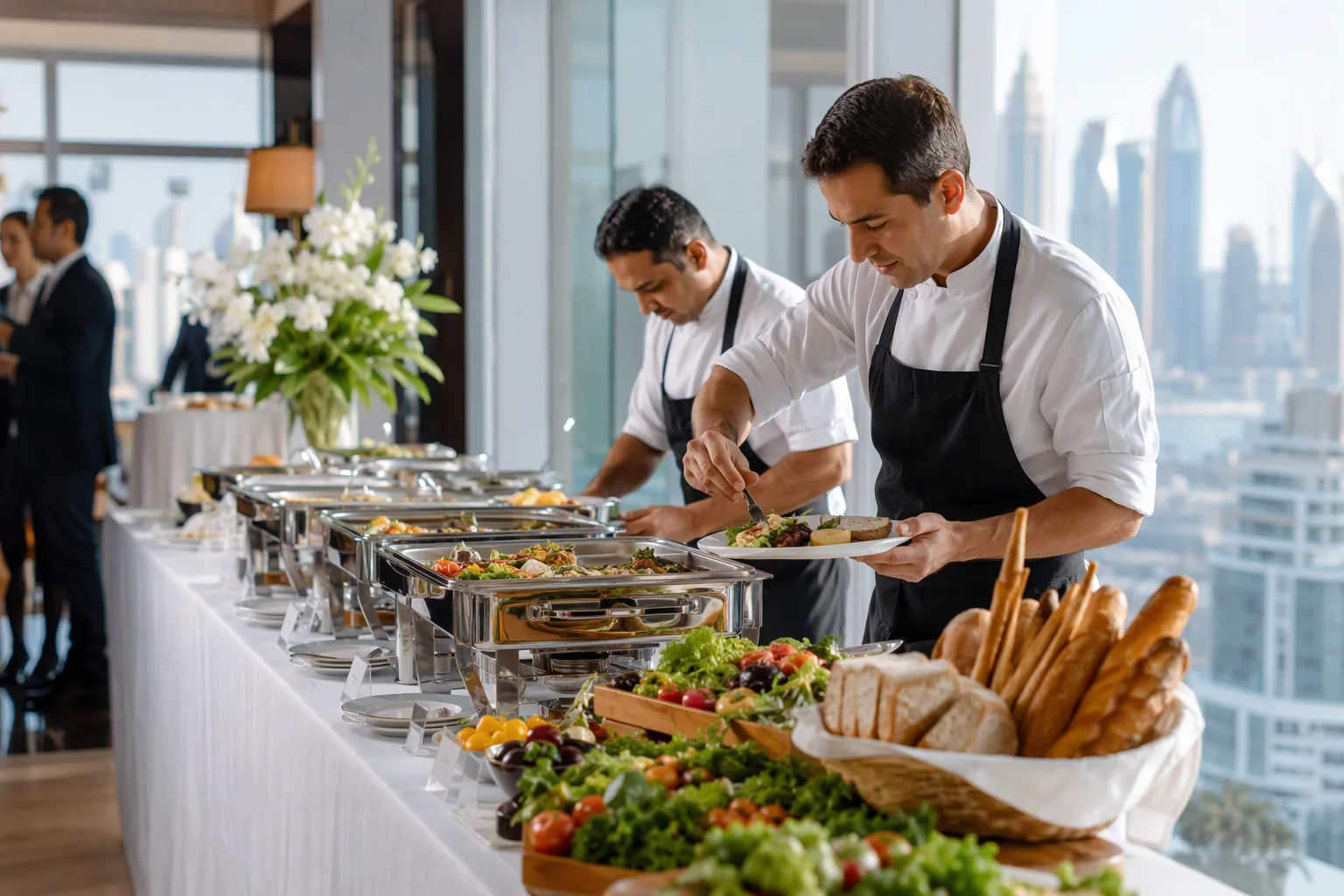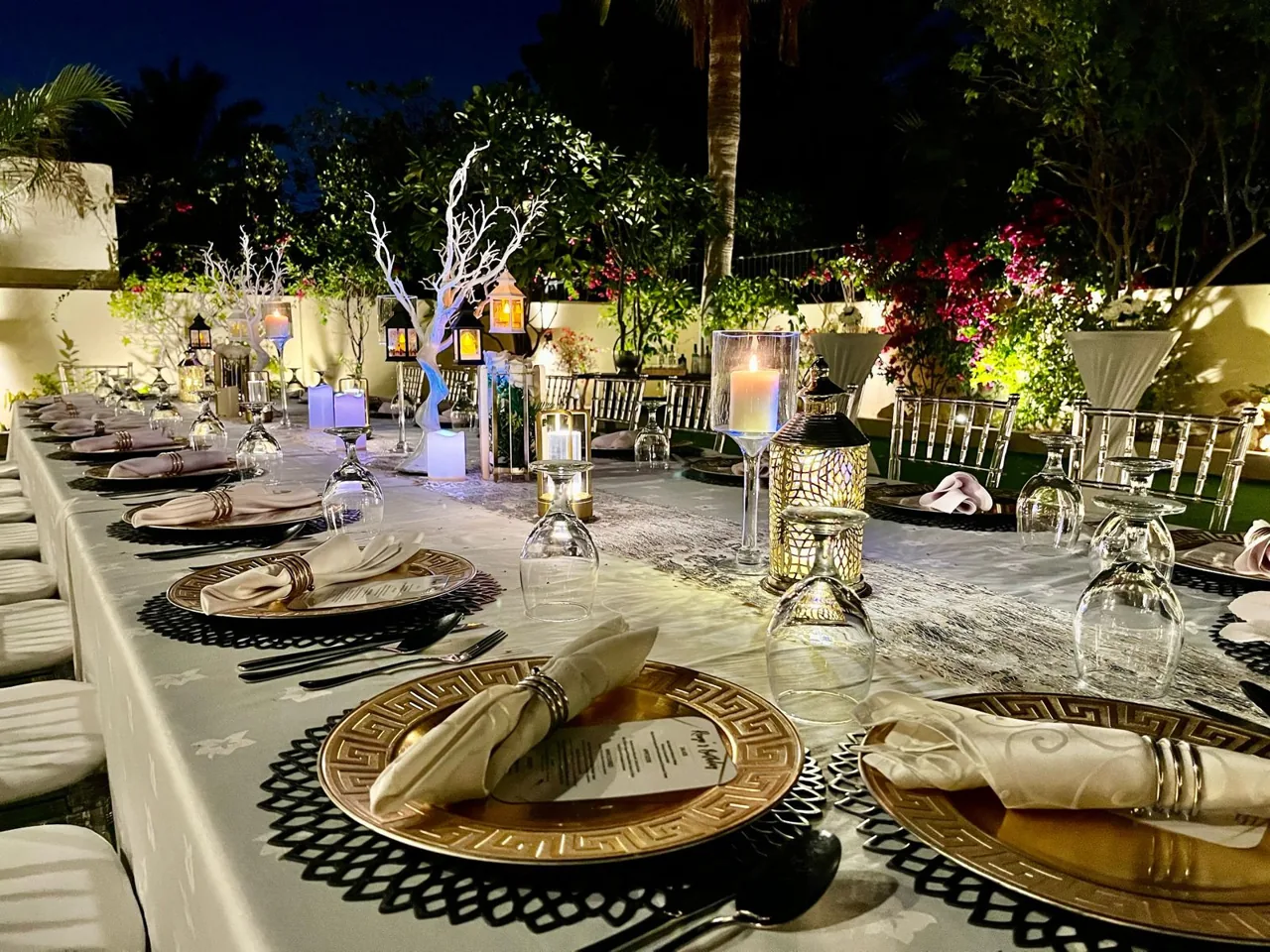
An evening table setting from myCHEF’s previous work.
In Weddings, Parties & Celebrations
A surprise dinner needs two plans: the meal plan and the arrival plan. The food may be ready while the guest of honour is still elsewhere, or a delivery may arrive at the moment you hoped to keep quiet. Agree who controls the information and what should happen if the timing changes.
When arranging private event catering in Dubai, explain that it is a surprise before confirming access and setup. Ask what can realistically be kept discreet at your venue. Staff, equipment, cooking sounds or aromas may be noticeable even when everyone follows the agreed route.
Give each person one clear responsibility
Nominate one host contact for catering decisions and one person to accompany the guest of honour. They can be different people, but they need an agreed way to communicate. Avoid making the person delivering the surprise responsible for answering a stream of setup questions at the same time.
- Host contact: authorises setup and communicates with the catering team.
- Arrival companion: provides a useful arrival update without requiring unsafe distractions while travelling.
- Guest coordinator: tells the other guests where and when to gather.
- Venue contact: confirms permitted access and any property procedures.
Share only the information each person needs. Do not send door codes or private access details to a large guest group simply because it is the easiest place to post an update.
Agree what arrivals will look like
Walk through where a vehicle will stop, which entrance is authorised and where equipment can be placed. Confirm these arrangements with the property or venue. A side entrance may seem discreet but still be unavailable for deliveries.
Think about what the guest of honour will see on arrival: boxes in the hallway, a prepared table through a window or several familiar cars outside. These are host-side planning questions. Do not ask suppliers to bypass security, misrepresent why they are entering or use an unauthorised route to preserve the surprise.
Use a cue that everyone understands
Write the intended reveal point in plain language. For example, the host contact confirms that the dining area is ready before the arrival companion brings the guest inside. That is a hypothetical coordination method, not a promise about service timing.
Distinguish an estimated arrival update from the instruction to start serving. Ask the catering team which parts of the menu depend on a confirmed serving cue. A message saying “nearly there” should not leave the kitchen guessing whether it means a few minutes or a substantial delay.
Prepare a fallback before the surprise begins
| Change | Decision to agree in advance |
|---|---|
| The guest arrives early | Who welcomes them, and can they enter without passing through the working area? |
| The arrival is delayed | Who tells the catering team and confirms the revised food plan? |
| A supplier is visible | Does the event continue with a smaller reveal rather than disrupting service? |
| Other guests arrive late | Does the reveal proceed at the agreed cue, and who handles their arrival? |
Discuss how the menu can respond to a delay. Follow the team's dish-specific handling advice; do not leave finished food waiting without an agreed plan. Additional staff time or a later finish must be confirmed rather than assumed.
Let dinner continue after the reveal
The reveal is one moment within the evening. Leave room for greetings, photographs and seating before the meal requires everyone's attention. The dinner party timeline helps with the wider sequence once the surprise is over.
Send the venue, guest count, desired reveal window and named contact with your event enquiry. Ask the written plan to distinguish setup access, the reveal cue, serving time and the agreed finish.
Prepared with AI assistance for myCHEF as practical planning guidance. Confirm the arrangements for your own booking in the written service brief.