By myCHEF Dubai Team|
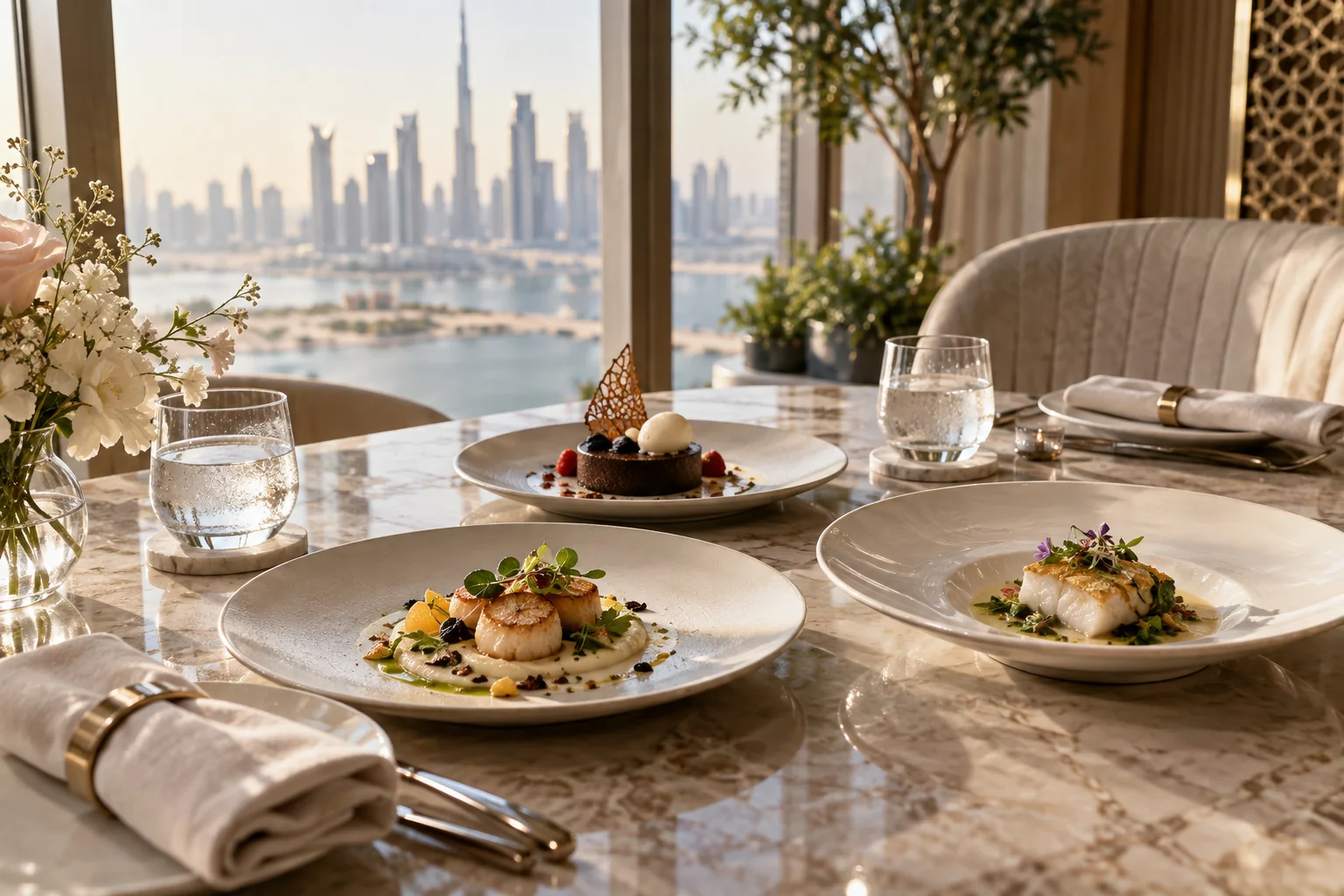
AI-generated illustration of a hosting concept.
A wedding menu tasting in Dubai should help you make decisions you can carry into the final event. It is an opportunity to assess flavour and presentation, but also to understand portions, alternatives, service style and how the dishes will be delivered for your guest count. The most useful outcome is an agreed record, not simply a pleasant meal.
Ask the supplier whether a tasting is available, what it includes, how it is charged and whether it relates to a confirmed or proposed booking. This guide describes how to use an agreed tasting; it does not promise a free session or a particular package. Start with wedding catering for the event proposal.
Wedding menu tasting in Dubai: set the decision agenda
Before the appointment, identify what you are choosing. You might be comparing two main courses, deciding between sharing and plated service, refining a vegetarian menu or confirming the overall sequence. A clear agenda prevents the tasting from becoming a large collection of dishes with no decision method.
Tell the caterer what is already settled: venue, estimated guest count, service format, cultural or family expectations, dietary requirements and the broad running order. If important details remain open, say so. The tasting menu should not imply that the entire event specification is final.
Ask which dishes will be tasted and whether the samples represent the proposed event portions and presentation. Some tastings use smaller samples to make comparison easier. That can be sensible, but you should know what you are evaluating.
Choose a small group of decision-makers. A larger group can bring useful perspectives, but it can also make every dish the subject of conflicting preferences. Agree who has final approval and how family feedback will be consolidated.
Bring a written brief, not only inspiration photographs
Photographs can communicate atmosphere and presentation, but they do not explain the guest experience you want. Add notes about how formal the meal should feel, how much time you want guests seated and which parts of the celebration matter most.
If a particular dish has family significance, explain why. Is the important feature its flavour, a regional preparation, the way it is served or the memory attached to it? The chef needs that context to propose an appropriate interpretation.
Share practical venue information too. Kitchen access, finishing space, service routes and equipment affect what can be delivered. A dish that looks excellent for four tasting plates still needs a credible event service plan.
Use the wedding menu planning guide to organise the food brief and the wedding checklist for the wider coordination questions. The tasting should sit within that planning process, not replace it.
Taste the sequence, not just isolated favourites
Consider how each course feels after the one before it. A rich starter, rich main and rich dessert may all score well individually while creating a meal that feels heavy as a whole. Look for changes in texture, flavour and intensity across the sequence.
Discuss the welcome food too. If guests will enjoy a substantial reception before sitting down, that affects the role of the first course. If the ceremony and photographs create a long gap before dinner, the earlier food plan needs to reflect it.
Pay attention to repeated ingredients and preparations. Repetition can be intentional, but it should add coherence rather than make the menu feel narrow. Ask the chef what each course contributes to the meal.
Do not select only the most dramatic plate. Choose the menu that suits the guests, venue and occasion. A slightly simpler dish with a strong service plan can be a better event choice than an elaborate one whose presentation depends on conditions the venue cannot provide.
Record feedback in specific terms
Write short notes while impressions are fresh. Describe flavour, texture, portion, appearance and the change you want. “Less sweetness in the sauce” is more useful than “make it more elegant”. “A smaller starter because the welcome food is substantial” connects a change to the event.
Separate personal taste from a service concern. You may dislike a particular ingredient while recognising that the dish is well prepared. That is a menu choice. A plate that is awkward to eat in the proposed setting is a different kind of issue.
Ask the chef to explain which adjustments are straightforward and which would materially change the dish. Removing one garnish may be simple; changing the main protein or cooking method may require a new version and a revised price.
Keep the final feedback consolidated. If several people attend, agree the instruction before sending it. The caterer should not have to choose between contradictory messages from different family members.
A practical tasting scorecard
This scorecard is a discussion aid, not a formal quality rating. Use a simple scale if helpful, but keep the written observation beside it. A number without context is difficult to act on.
| Area | Question to consider | Record to keep |
|---|---|---|
| Flavour | Does the dish suit the intended guests and menu sequence? | The exact seasoning or balance adjustment requested |
| Texture | Is the combination enjoyable and practical to eat? | Any element that needs a different finish |
| Portion | Does it fit the full meal rather than the tasting alone? | Whether the event portion differs from the sample |
| Presentation | Does it suit the occasion and service format? | A permitted reference photograph and agreed changes |
| Alternative | Is the corresponding dietary dish equally considered? | The complete alternative plate and service point |
| Delivery | How will this be served for the event guest count? | Equipment, staffing or timing questions still open |
At the end, identify the decisions made and the decisions deferred. A tasting can be successful even if one course remains open, provided the next step is clear.
Give alternatives equal attention
Ask to discuss or taste the relevant vegetarian, vegan or other confirmed alternatives, rather than approving only the main menu. A guest receiving an alternative should have a complete course that belongs to the same occasion.
Review the accompaniments and sauces, not just the central ingredient. If the main menu has several carefully composed elements, replacing it with an unplanned plate of sides is unlikely to create an equivalent experience.
Confirm how requirements will be collected and finalised, what the caterer can accommodate and how the correct dishes will reach the correct guests. Ingredient and handling questions must be resolved separately from whether the sample tastes good.
The mixed-diet dinner guide explains how a common menu structure can support different complete plates. For specific requirements, use the dietary enquiry page and obtain the team’s confirmation.
Ask how the dish scales to the wedding
A tasting takes place under different conditions from a large event. Ask how the caterer plans preparation, finishing and service for your guest count and venue. You are looking for a clear explanation of the process, not a vague assurance that everything will be identical.
Discuss where the food is prepared, what happens on site and how dishes move from the working area to the tables. If the venue has limited kitchen facilities or a long service route, understand how the menu accounts for that.
Ask whether the proposed presentation depends on specialist equipment or additional staff. Those requirements should appear in the event proposal. A tasting plate should not quietly introduce an unpriced service element.
If you are considering an outdoor reception, the villa kitchen planning guide offers useful questions about working space and fallback arrangements, while the venue team must confirm what is permitted for your wedding.
Compare plated, sharing and buffet formats fairly
Do not compare a plated tasting sample with a buffet proposal as though they describe the same experience. The formats differ in presentation, guest movement, service rhythm and equipment.
For plated service, ask how courses are coordinated and how dietary alternatives fit the sequence. For sharing dishes, check table space, portion distribution and replenishment. For a buffet, discuss the layout, queue flow and how the team maintains the spread.
The buffet layout guide can help you assess that option. If the wedding includes a standing reception before dinner, the canapé planning guide helps connect the opening food to the main meal.
Choose the format that supports the wedding you want, then refine the dishes within it. Trying to preserve every feature of several formats can make the plan unnecessarily complex.
Connect the menu with speeches and photographs
Share the intended running order with the caterer: ceremony, photographs, reception, seating, speeches, main courses, cake and any later food. The exact sequence may change, but the kitchen needs to know where the meal fits.
Ask which courses allow flexibility and which need a firmer service moment. A long unplanned speech can interrupt a dish already being finished. The wedding coordinator and service lead should agree who can pause or restart the sequence.
If you want a speech during a meal, consider what guests and staff will be doing at that point. Passing plates or clearing cutlery during a quiet moment may distract from it. A planned break can make both the food and the speech more enjoyable.
The dinner-party timeline guide illustrates the principle on a smaller scale. A wedding requires its own detailed coordination, but the underlying need for clear anchor moments is the same.
Clarify cake and late-evening food
Decide whether the wedding cake replaces dessert, follows it or serves mainly as a ceremonial moment. If a separate cake supplier is involved, identify who receives the cake, handles the supplier’s instructions and cuts and serves it.
Ask whether cake service is included in the catering proposal and what tableware or equipment is required. The tasting appointment is a useful time to identify these gaps, even if the cake itself is not part of the tasting.
If the celebration continues for a long evening, discuss whether later food is wanted and what role it should play. Treat it as a separate service stage with its own quantity, timing and staffing, rather than assuming the dinner buffet remains available indefinitely.
Keep the complete food experience visible when reviewing costs. A welcome reception, dinner, cake service and late food may be quoted in separate lines but together define what the guests receive.
Turn the tasting into an approved menu record
After the meeting, request a written summary of selected dishes, event portions, agreed adjustments, dietary alternatives and any items still awaiting confirmation. Include presentation references only where the supplier has agreed they represent the intended event service.
Record the date and version of the menu. If a dish changes later, update the record and confirm whether it affects the price, equipment or service sequence. A photograph in a message thread should not become the only evidence of an important decision.
Ask about ingredient substitutions and how they are approved. Seasonal availability or sourcing may affect an item, but the process should be clear. Essential dietary requirements must remain part of the review whenever a recipe or ingredient changes.
The quote comparison guide helps connect the food decisions with the commercial scope. The wedding cost guide offers broader context, while the accepted proposal establishes the actual booking terms.
What to do if one dish is not right
Explain the issue specifically and ask for the available options. You may choose another dish already discussed, request a defined adjustment or arrange a further review if the supplier offers it. Confirm whether any additional tasting or development work has a charge.
Avoid approving a dish simply to end the conversation, then expecting a fundamentally different version on the wedding day. It is better to leave a clear decision open than to create two different understandings of what was accepted.
Equally, recognise when the menu is settled. Repeated late changes can affect procurement, staffing and the coordination with other suppliers. Agree a sensible finalisation process and use it.
Send your event details and tasting questions through the wedding catering page or enquiry form. A productive tasting leaves you with confidence grounded in specific decisions: the dishes, the alternatives, the service plan and the written record that connects them.