By myCHEF Dubai Team|
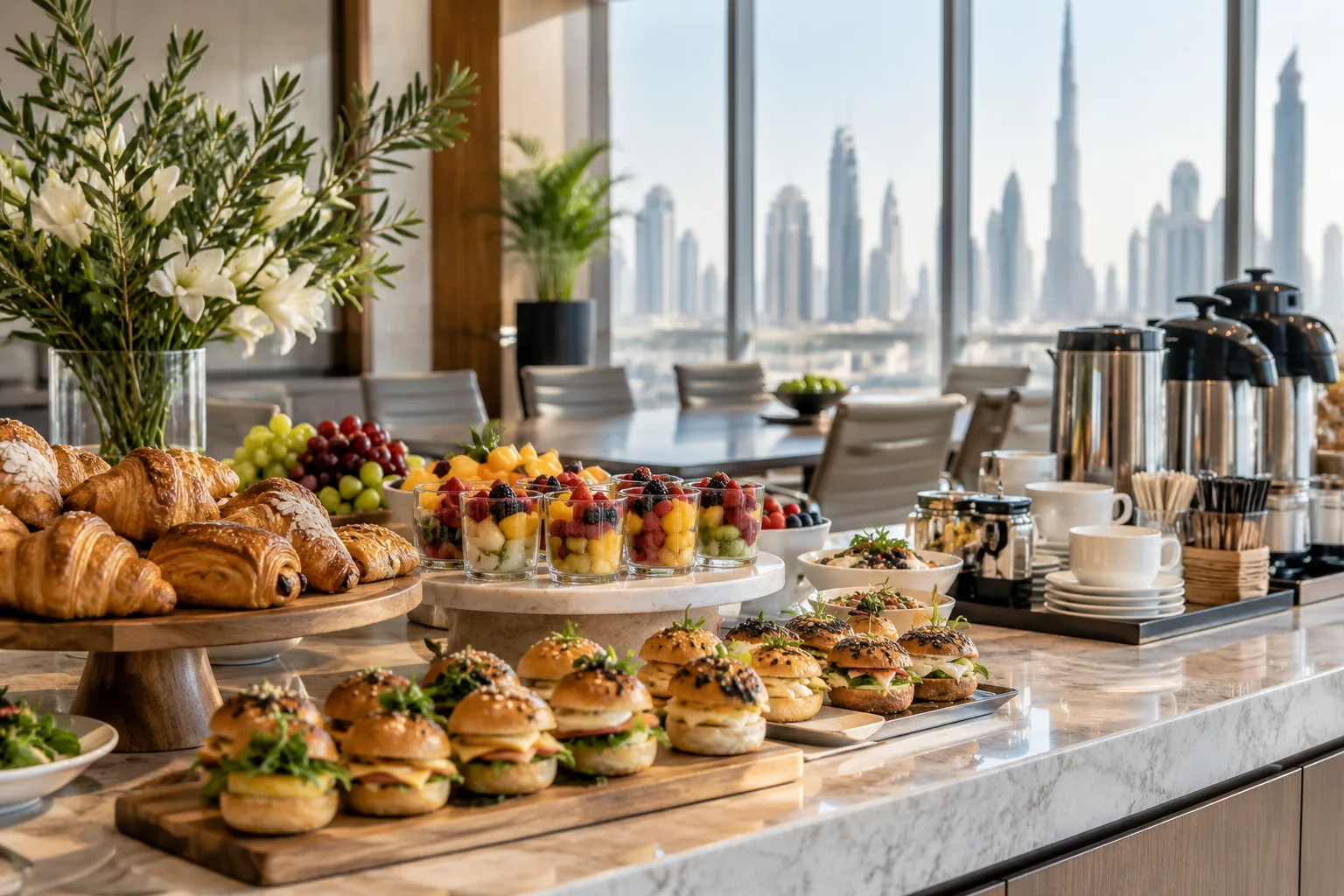
AI-generated illustration of a hosting concept.
Office breakfast planning in Dubai is a timing and service-flow problem as much as a menu choice. A generous spread can still disappoint if everyone reaches it at once, the coffee queue blocks the food or a delivery arrives after the meeting begins. Start with the arrival pattern and the building, then choose food that fits both.
This guide uses an illustrative breakfast for sixty colleagues before a 9am meeting. The figures are examples for planning, not a staffing promise or a package specification. For the service itself, explore breakfast catering; for a wider workplace programme, start with corporate catering.
Office breakfast planning in Dubai: define the occasion
An informal team breakfast, a client presentation and a conference registration morning need different approaches. One may allow people to graze over an hour. Another may require every guest seated and ready at a fixed time. A third may need food available for successive arrival waves.
Write down the purpose, attendance, arrival window and meeting start before requesting menus. Include whether people will eat standing, at desks or in a meeting room. Food that is convenient beside a coffee table can be awkward when a guest also has a laptop, a bag and presentation materials.
Decide whether breakfast replaces a meal or simply accompanies coffee. That affects the balance of savoury food, fruit, pastries and more substantial items. Avoid treating the number of menu choices as a measure of adequacy; several sweet pastries do not necessarily create the breakfast your group expects.
Name the organiser who can approve decisions on the morning. If the event owner will be presenting, another person should handle building access, delivery questions and any last-minute attendance changes.
Count arrivals, not just invitations
Use confirmed attendance where possible and identify how people are likely to arrive. A sixty-person office event with staggered arrivals is operationally different from a coach or a conference group arriving together.
For example, suppose forty people are expected in the busiest fifteen-minute period. The serving arrangement must accommodate an average of about 2.7 people per minute during that window. That arithmetic is not a universal service standard; it simply shows why a single slow point can create a queue even when the total guest count seems modest.
Ask the caterer how the proposed format handles the peak. The answer may involve pre-portioned food, duplicated pickup points, a separate drinks station or a different menu. Adding more food to the same narrow table will not fix a flow problem.
Keep a distinction between expected attendance and the quantity you finally confirm. Ask about the deadline for final numbers, minimum order terms and the treatment of late additions. Record the agreed quantity in the proposal so the organiser and supplier are working from the same number.
Build a breakfast people can actually eat
Choose a balanced selection with a clear role for each item. A savoury component can provide the centre of the meal, fruit can offer a lighter option, and pastries can add variety. More substantial dishes may suit a seated breakfast but create complications when guests are standing or moving between rooms.
Think about utensils, crumbs, sauces and the number of hands required. A small filled roll may be easier before a meeting than a dish needing a knife, fork and stable plate. Yoghurt or similar items require suitable service arrangements and a clear plan from the caterer for holding and presentation.
Offer variety through sensible alternatives rather than several versions of the same thing. If there is a vegetarian savoury option, give it equal prominence and enough quantity for those who need it. Collect dietary requirements early and confirm the actual ingredients and handling arrangements with the team.
For a longer event with lunch or a later break, plan the meals together. A heavy breakfast may be unnecessary if a substantial business lunch follows soon afterwards. If breakfast is the only food before a long programme, communicate that clearly in the brief.
Separate the coffee decision from the food order
Coffee is often the slowest part of the morning, especially when each drink is made individually. Decide whether you need a staffed coffee service, ready-to-serve options, existing office facilities or a combination. Each changes the equipment, staffing and queue pattern.
Tell the caterer which office machines are available and whether they are permitted for event use. A machine that serves a small team throughout the day may not cope with a sudden rush before a meeting. Do not assume the facilities team will supply cups, milk alternatives, water or cleaning support unless that has been agreed.
Place drinks away from the main food pickup where space allows. Guests waiting for a coffee should not block someone collecting a plate. Provide a practical point for condiments and finishing touches so people can move away from the serving point before stirring or adding sugar.
Include replenishment and clearing. Empty cups and used stirrers can accumulate quickly in a busy reception area. Decide who monitors supplies, handles waste and restores the area after the meeting begins.
Choose drop-off or staffed service deliberately
With a drop-off arrangement, the office takes responsibility for the agreed handover tasks and ongoing presentation after delivery. Someone needs to receive the order, check it, follow the handling instructions, replenish where appropriate and clear the area.
A staffed arrangement can provide active replenishment, guest assistance and clearing, subject to the confirmed scope. It may be useful when arrivals are concentrated, the organiser is occupied or the event includes a more formal service expectation.
The full-service versus drop-off comparison explains the broader choice. For this breakfast, ask a narrower question: who will do each task between delivery and the end of the food service? If the answer is “the organiser” for everything, check whether that person can realistically do it while welcoming guests.
Do not infer staffing from the word “catering”. The proposal should identify whether personnel remain on site, their roles and the service period. A delivery driver is not automatically a breakfast host, coffee attendant or clearing team.
Confirm building access before choosing a delivery time
Ask your building or office facilities team about the correct entrance, delivery registration, loading location and lift access. Procedures differ between properties, and the caterer needs the actual requirements for your location.
Work backwards from the time the station must be ready. Delivery at 8:15 does not necessarily mean breakfast is ready at 8:15. Allow for entry, unloading, movement to the correct floor, setup and a handover appropriate to the service.
Provide the tower name, floor, room, contact number and an alternative contact. If access depends on a booking or pass, confirm who completes it and when. Avoid leaving a supplier to discover a missing registration at the security desk while guests are already arriving upstairs.
Check practical restrictions on equipment, water access, electrical supply and waste handling. These are venue questions to resolve with authorised staff, not assumptions to make because a similar event worked in another building.
Use a simple station layout
Think in separate functions: plates or pickup, food, drinks, finishing items and clearing. They do not all need separate tables, but they should not force guests to reverse direction or cross a queue with a full plate.
| Function | Useful arrangement | Question for the venue or caterer |
|---|---|---|
| Food pickup | Clear beginning and exit | Can guests collect without blocking the doorway? |
| Dietary meals | Agreed identification and handover | Who helps the correct guest receive the confirmed meal? |
| Coffee and tea | Separate from the main food queue | What is the expected service method during the peak? |
| Water and finishing items | Easy to reach after collection | Can people step aside to finish their drink? |
| Used items | Discreet but obvious collection point | Who clears and replenishes during service? |
Walk the route as a guest before finalising the arrangement. Start at the entrance, collect food and a drink, then reach the eating area. If the route crosses itself or ends in a narrow corner, adjust the tables before the morning of the event.
The buffet layout planning guide offers more detail for a larger self-service arrangement. Keep breakfast proportionate: a compact, well-run station is often easier to use than a sprawling display.
A worked morning schedule
For a 9am meeting, an illustrative plan might have the station ready by 8:10, breakfast available from 8:15 and a clear invitation to move into the meeting room at 8:50. The supplier’s access and setup time must be agreed separately from those guest-facing times.
| Moment | Organiser action | Catering or venue action |
|---|---|---|
| Before supplier arrival | Confirm contact and access | Prepare the approved setup area |
| During setup | Verify the final count and dietary handover | Set the agreed food and drinks arrangement |
| Before 8:15am | Check the route and meeting room | Confirm presentation, supplies and service readiness |
| 8:15–8:50am | Welcome guests and monitor attendance | Replenish and assist within the booked scope |
| 8:50am | Invite guests to the meeting | Keep the route clear and manage remaining service |
| After the agreed finish | Receive the handover | Clear or leave items as specified in the proposal |
This example leaves a transition before the meeting. If your culture is more informal, a different pattern may work; if a senior client is presenting, the start may need to be firmer. Share the actual expectation with the caterer.
Make late arrivals part of the brief
Decide whether breakfast remains available after the meeting begins and who manages it. A late attendee should not have to interrupt the organiser to ask whether a dish is still intended for service.
Ask the caterer which items and service arrangements suit the planned duration. Follow the provided handling instructions; do not extend the display simply because food remains. If late arrivals need a separate meal, agree that option before the event rather than improvising with whatever is left.
For a hybrid meeting, confirm whether remote attendees affect the order. The invitation list may include people who will not eat on site. A final attendance check prevents unnecessary excess and makes the confirmed guest count more meaningful.
If additional visitors may join, ask about the practical limit and notice needed. An agreed allowance is clearer than an open-ended request to “bring extra just in case”.
Compare proposals on the complete morning
Check menu quantities, drinks, tableware, setup, staffing, access, clearing and collection. Two proposals with the same number of guests may describe very different amounts of work. The quote comparison guide provides a line-by-line framework.
Ask whether prices are stated per person or for the entire service, and how tax and optional items are shown. Keep your internal approval process aligned with the supplier’s deadlines so the order is not delayed while waiting for a purchase order or final sign-off.
For recurring office breakfasts, review the first event before repeating it. Note which items were popular, where the queue formed, how much food remained and whether the station was ready on time. Change the next order using those observations rather than automatically adding more variety.
The brief to send
Include the office address, building access contact, event purpose, confirmed or estimated attendance, arrival window, meeting start, eating format, dietary requirements and drinks expectations. Add photographs of the proposed station area if the supplier has not seen it.
State whether the office can provide tables, power, water, cups or clearing support, and mark anything still awaiting confirmation. Ask the supplier to identify the remaining decisions before issuing the final proposal.
Send that information through the corporate enquiry route. The most useful breakfast plan is one that lets colleagues arrive, eat comfortably and begin the meeting together—with the work behind that experience already assigned.