01 · Planning with myCHEF
Choose stations the venue can support
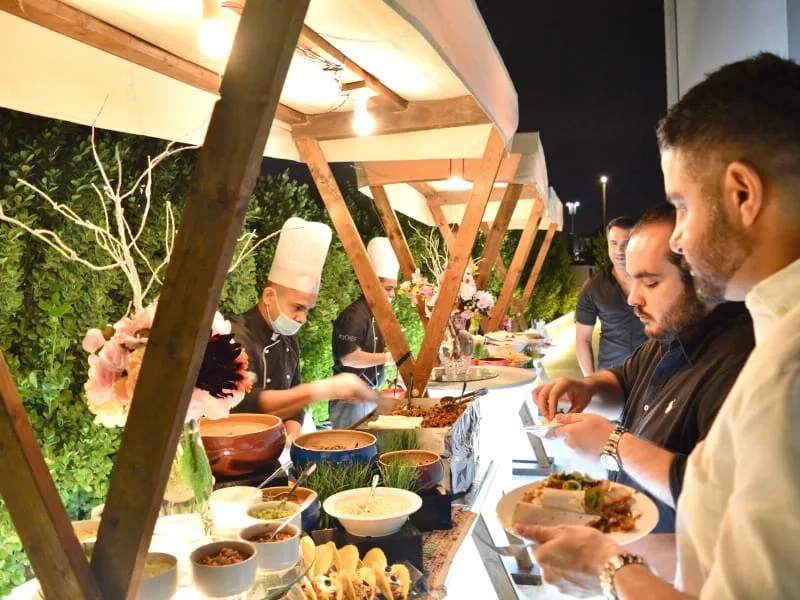
A live station needs more than a chef and a counter. Tell us about power, water, ventilation, the preparation area and any venue restrictions on cooking. The team must be able to work safely while guests watch or queue, with enough space to replenish ingredients and collect used plates.
Choose stations around the meal rather than adding every possible cuisine. Pasta may form a main course, a grill can anchor a buffet, and a dessert station can open later in the evening. The menu should allow guests to eat a complete meal without spending the whole service moving between queues.
Guest numbers, cooking speed and the length of the event determine the practical staffing and equipment. Agree which dishes can be adapted at the station and which dietary requirements need separate preparation. Compare the proposal with buffet catering if the venue cannot support the space or cooking facilities a station requires.
02 · Planning with myCHEF
Make the venue part of the catering conversation
Share the preparation space, power supply, water access and storage available at the venue. If the site has restrictions on outside caterers, cooking methods or deliveries, raise them before choosing a detailed menu. These details influence the equipment and service plan just as much as the number of guests.
Access can be particularly important in office towers, residential buildings and waterfront locations. Confirm loading arrangements, parking, lift access and the person who will receive the team. A clear arrival plan protects setup time and reduces disruption for your hosts, neighbours or colleagues.
For outdoor service, discuss shade, lighting and a workable alternative if conditions affect the plan. The final proposal should identify which facilities the venue provides and which items need to be arranged separately. Good preparation allows the service itself to feel relaxed, even when the logistics behind it are detailed.
03 · Planning with myCHEF
Keep the buffet easy to approach and enjoy
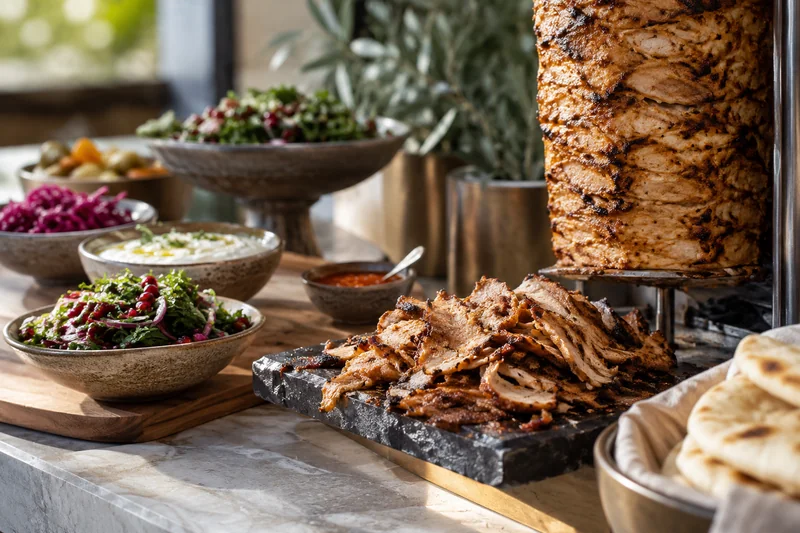
A buffet works best when guests can see the choices and move through the serving area comfortably. Think about where the queue may form, how plates will be collected and whether guests need access from one side or several points. The layout should suit the room rather than force everyone towards one crowded corner.
Group dishes in a logical order and make dietary information easy to find. Separate serving utensils and an agreed replenishment plan help the team keep the display organised. If guests will arrive in waves, discuss how the food will be presented throughout the service period.
The venue needs enough space for both guests and staff to move. A beautiful display is only useful if it can be maintained without interrupting the event. Confirm the equipment, station staffing and clear-down responsibilities in the proposal so the buffet remains a working service area as well as a visual centrepiece.
Your occasion, thoughtfully planned
Tell us what you have in mind.
Share your date, venue, guest count and menu preferences. We’ll discuss the service your occasion needs and confirm the details in a written proposal.
Start your catering enquiry