01 · Planning with myCHEF
Use the agenda to size each service period
The total delegate count is only the starting point. Tell us how many people will attend breakfast, each coffee break and lunch, and whether sessions finish together. A short break with simultaneous arrivals needs a different layout from a rolling lunch where guests leave smaller meetings at different times.
Choose food that fits the break. Easy-to-handle items and a clear drinks station suit a short interval; a longer lunch may allow a buffet or another substantial menu. Dietary alternatives should be identifiable and available without sending guests back through the queue or delaying the next session.
Agree setup and collection windows with the venue, including loading access and where equipment can remain between breaks. Water, hot drinks, cups, crockery and service staff should be specified for each period. A business lunch brief is more suitable for a single boardroom meal; a full conference needs the complete programme.

02 · Planning with myCHEF
Keep catering aligned with the business agenda
Share the event programme with the catering brief. Registration, meeting sessions, networking and presentations create different service opportunities. Food should support those moments: easy-to-eat options for a working break, a more relaxed selection for networking or a seated meal when guests have time to enjoy it.
Confirm who will approve the menu and who will coordinate access on the day. The billing contact may be different from the person at the venue, so include both roles where relevant. If your organisation needs particular supplier documents, purchase-order references or invoice details, raise them before the booking is finalised.
A practical service plan also considers the return to work. Collection, waste handling and clear-down should fit the venue's schedule. When the catering is connected to the agenda and responsibilities are clear, the team can deliver a professional experience without drawing attention away from the purpose of the event.
03 · Planning with myCHEF
Keep the buffet easy to approach and enjoy
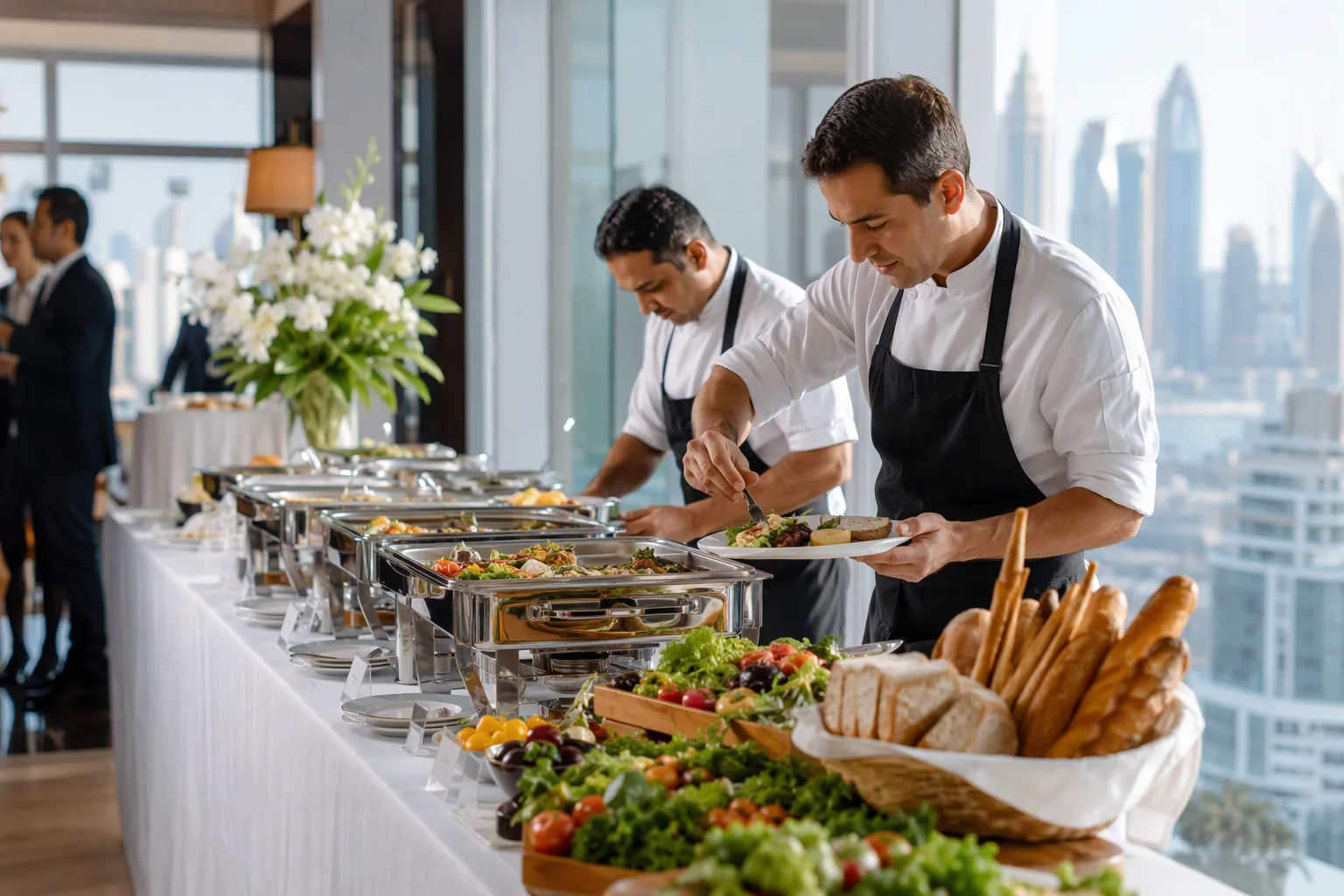
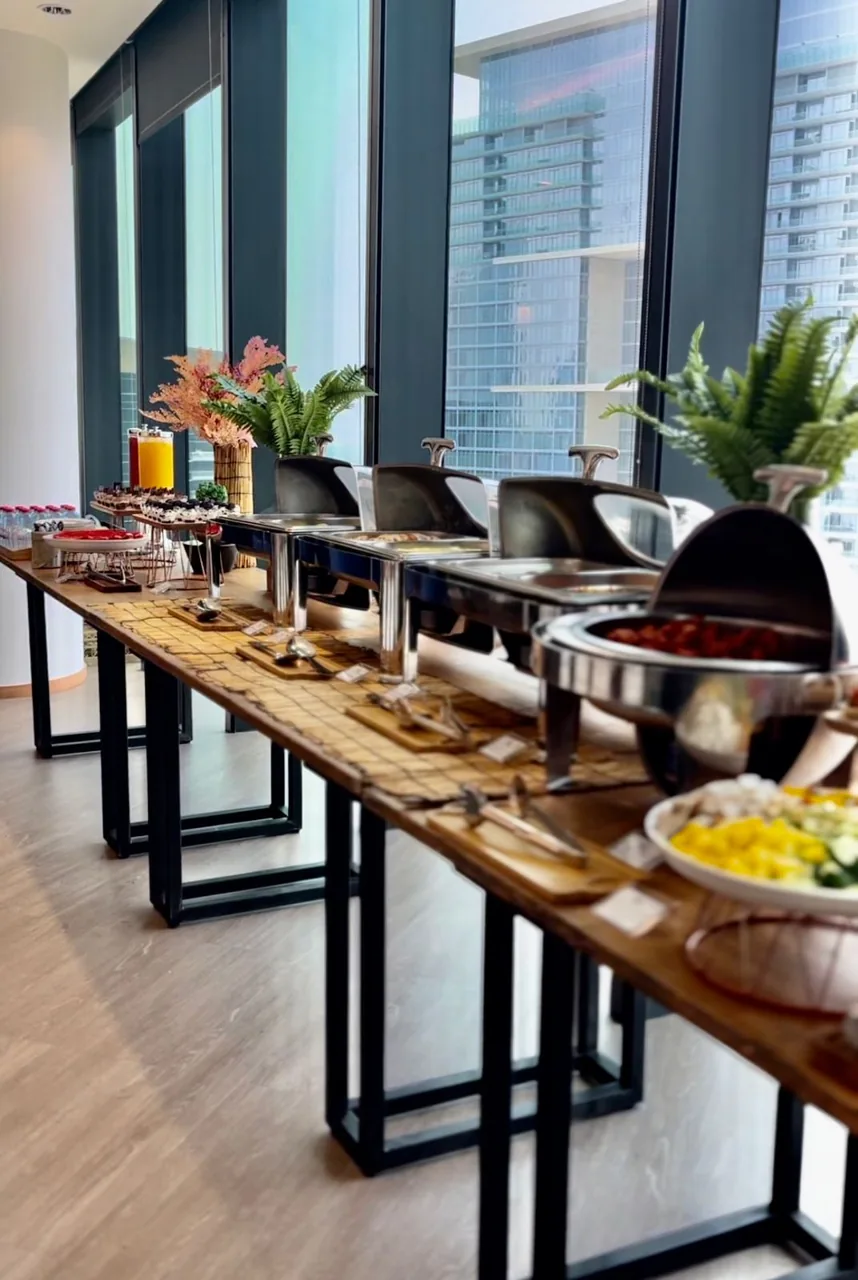
A buffet works best when guests can see the choices and move through the serving area comfortably. Think about where the queue may form, how plates will be collected and whether guests need access from one side or several points. The layout should suit the room rather than force everyone towards one crowded corner.
Group dishes in a logical order and make dietary information easy to find. Separate serving utensils and an agreed replenishment plan help the team keep the display organised. If guests will arrive in waves, discuss how the food will be presented throughout the service period.
The venue needs enough space for both guests and staff to move. A beautiful display is only useful if it can be maintained without interrupting the event. Confirm the equipment, station staffing and clear-down responsibilities in the proposal so the buffet remains a working service area as well as a visual centrepiece.
Your occasion, thoughtfully planned
Tell us what you have in mind.
Share your date, venue, guest count and menu preferences. We’ll discuss the service your occasion needs and confirm the details in a written proposal.
Start your catering enquiry