By myCHEF Dubai Team|
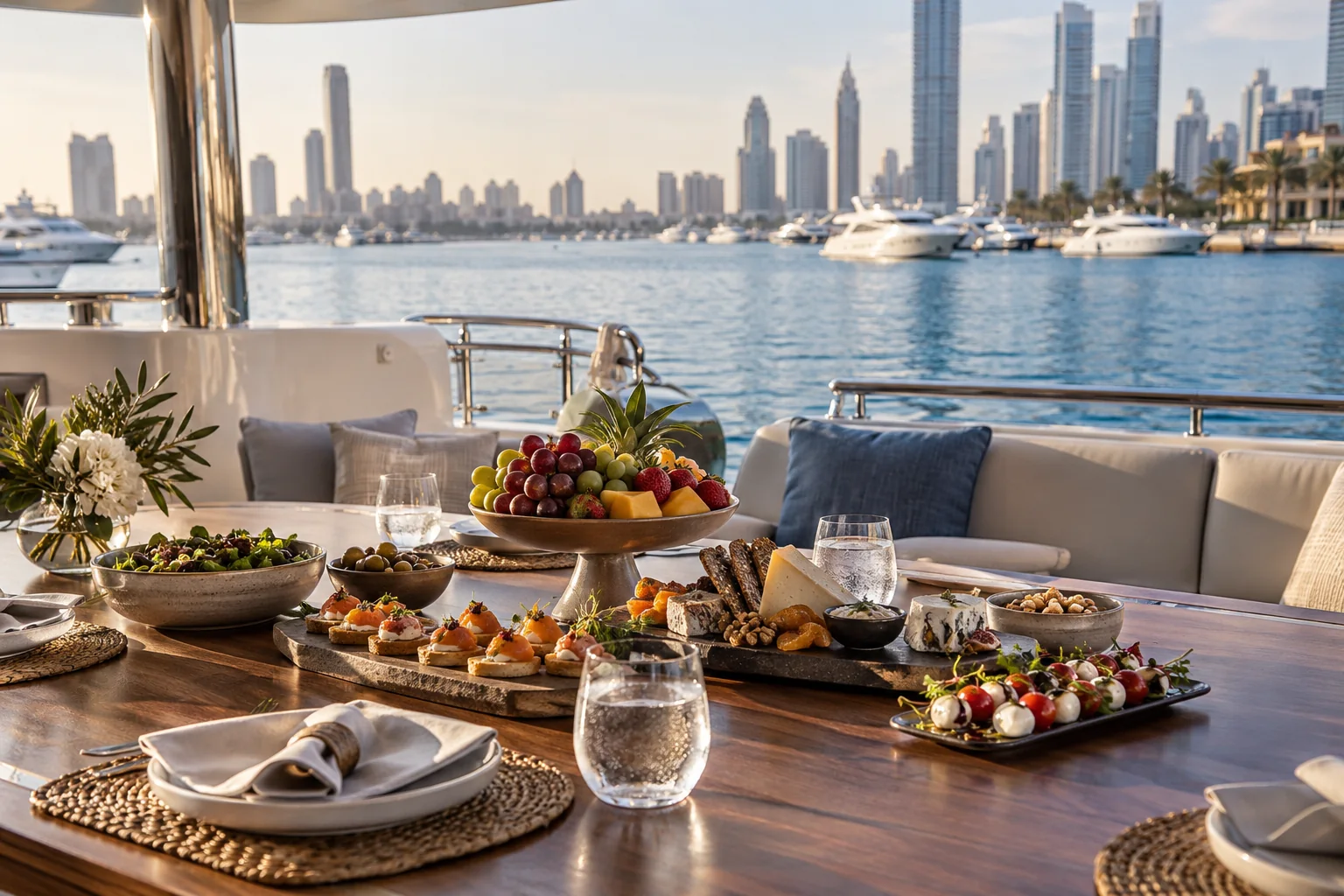
AI-generated illustration of a hosting concept.
A yacht party food timeline helps a short Dubai charter feel generous rather than rushed. Three hours can include boarding, a crew briefing, movement around the boat, sightseeing, food, a birthday moment and the return to the marina. The meal needs to fit that sequence instead of competing with every other reason your guests came aboard.
This guide uses an illustrative three-hour charter. The captain and charter operator control vessel operations, access and safety decisions; the catering plan must work within their instructions. myCHEF’s yacht catering service concerns the food and agreed hospitality scope, with the charter and vessel arrangements confirmed separately.
Build the yacht party food timeline from the charter terms
First confirm what the booked three hours actually include. Ask the operator when guests may board, when suppliers can load, when the vessel is expected to depart and when everyone must disembark. Do not assume that supplier setup time is included before the guest booking.
The catering team also needs the exact marina, berth or meeting instructions supplied by the operator, a named vessel contact and the approved loading route. A vague “Dubai Marina” location is not enough for coordinating food, equipment and guests.
Ask whether the planned route includes stops or other activities and which parts of the journey are suitable for the proposed service. The operator should advise on vessel-specific constraints. The food plan can then identify flexible windows rather than demanding that a particular course be served at an unsuitable moment.
Write the operating times and the hospitality times in the same document, while keeping responsibility clear. A change to departure may affect the menu sequence, but the catering team does not decide when the yacht can sail.
Choose the meal role before the menu
Is the food a light part of a sightseeing trip, the main birthday meal or a substantial dinner on the water? Tell guests which experience to expect. A short invitation mentioning “food aboard” can mean anything from a few bites to a full meal.
For a shorter charter, food that can be served in a clear, manageable sequence may fit more comfortably than a long tasting menu. The right choice still depends on the vessel, facilities and the agreed team. Ask the chef to explain which dishes suit the actual setting.
Consider where guests will sit or stand. A yacht’s passenger capacity does not automatically describe how many people can sit around one dining table. Confirm the dining arrangement with the operator before planning a plated meal for the full group.
Use the yacht menu ideas guide for food inspiration, then test the preferred format against the available space and time. A menu should earn its place in the charter plan, not simply look attractive in a photograph.
Keep boarding food simple
Boarding is a busy transition. Guests may be finding the vessel, meeting the crew, putting away bags and listening to instructions. Avoid making an elaborate food service the first thing everyone has to navigate.
Discuss a simple welcome offering that can begin when the operator and event lead say it is appropriate. The team should know whether guests will gather in one area or move around the boat. Drinks, bags and food should not compete for the same small surface.
If some guests are likely to arrive later, establish the operator’s policy and communicate it in the invitation. The catering plan cannot solve a missed departure. One host contact should manage attendance so the crew and catering team receive a consistent update.
Do not begin serving merely because the food is ready. The first priority is an orderly boarding process under the crew’s direction. A slightly later, calm opening can be more enjoyable than a tray circulating while guests are still trying to get settled.
A three-hour example, measured from the agreed start
The following sequence is a planning example, not an operational instruction. The charter operator and caterer should approve the actual windows for your vessel, route and menu.
| Elapsed time | Guest experience | Planning decision |
|---|---|---|
| 0–20 minutes | Boarding and settling | Follow the crew’s instructions; begin hospitality when cleared |
| 20–45 minutes | Welcome food and conversation | Keep service convenient while guests find their preferred spaces |
| 45–90 minutes | Main food window | Use the agreed format during a suitable operating period |
| 90–120 minutes | Sightseeing or a planned activity | Avoid forcing a competing formal course into this period |
| 120–145 minutes | Cake, dessert or a short toast | Coordinate the moment with the operator and service lead |
| 145–165 minutes | Relaxed final hospitality | Clear progressively and follow the agreed food handling plan |
| 165–180 minutes | Return and disembarkation preparation | Follow crew direction and complete the handover without rushing guests |
Some charters will need a very different order. A sunset moment, an activity or a route change may move the main food window. The useful feature is the division into manageable phases, not the precise minute attached to each one.
Keep the final part of the charter realistic. A large dessert service started just before disembarkation can leave guests choosing between eating and gathering their belongings. Plan the celebratory moment early enough to enjoy it.
Match the food to the available service surfaces
Ask for current photographs or specifications of the dining area, galley and any approved service station. Confirm what belongs to the vessel and what needs to be brought aboard. Do not assume that a yacht includes enough tableware, refrigeration or preparation space for an external catering menu.
A practical menu considers portion format, stability and ease of eating. Guests may move between spaces, and not every area will have a table at the right height. Items requiring several utensils or producing awkward waste may need a different presentation.
The chef and operator should agree where food can be prepared, finished and served. Any cooking equipment must be specifically approved for the vessel. The presence of a deck or an attractive open space is not permission to install a cooking station there.
If the facilities do not suit the preferred menu, revise the menu or service format. Do not rely on a last-minute workaround that the crew has not reviewed.
Plan dietary meals before loading
Collect dietary information with the guest confirmations and share it with the caterer before the menu is accepted. The boat is an especially inconvenient place to discover that a guest’s meal was never included or that an ingredient needs replacing.
Ask the team to confirm which requirements it can accommodate and how the correct meals will reach the intended guests. If alternatives are included in shared platters, ensure the allocation considers other guests choosing them too.
Keep essential requirements distinct from preferences. The mixed-diet dinner guide explains how to build a shared menu structure while treating necessary alternatives as complete meals. For a yacht event, the same thinking must also fit the vessel’s handling and service arrangements.
Avoid adding an unreviewed dish from another supplier at boarding and assuming the caterer can incorporate it. If guests are bringing food, discuss that in advance with both the operator and the catering team so responsibilities remain clear.
Give the cake its own logistics plan
A birthday cake affects more than the menu. Confirm who supplies it, how it reaches the vessel, the storage and handling instructions from the supplier, the size of the serving space and the equipment required to cut and distribute it.
Ask the operator about decorations, candles and any restrictions. Do not assume that something used at a home party is permitted on a vessel. The host should resolve those questions with the authorised contact before the day.
Decide whether the cake replaces dessert or follows a separate sweet course. If the main food is substantial, a second large dessert may be unnecessary. The birthday catering page can help frame the food brief, while the charter operator confirms what can happen aboard.
Keep the cake moment short enough to fit comfortably in the journey. A toast, photographs, candles if permitted, cutting and serving each take time. Treat the complete sequence as one planned activity rather than allocating only a moment for the reveal.
Coordinate the suppliers through one lead
Identify a host-side event lead who can communicate with the charter operator and catering contact. That person should have the final guest count, the approved running order and the authority to make ordinary decisions within the booking.
If the celebration has a photographer, decorator or entertainment supplier, include their access and activity times in the plan. Several suppliers arriving independently with different assumptions can create a crowded boarding area and conflicting priorities.
Keep operational communication separate from the guest invitation. Guests need a clear meeting point, arrival instruction and contact. Suppliers need the loading process, approved equipment, service windows and responsibility for removal after the event.
The catering quote comparison guide is useful for confirming what the food proposal includes. The charter agreement remains a separate document with its own terms and responsibilities.
Agree how delays change the food sequence
Ask both suppliers what happens if departure is delayed, the route changes or the operator adjusts the plan. Avoid assuming that a delayed start automatically extends the charter or the catering team’s booked hours.
For the food, identify which moments can move and which may need a different sequence. The chef should confirm how dishes are managed under the revised timing. Follow their handling instructions rather than leaving a display open indefinitely because the itinerary has changed.
The host may need to choose between priorities. If an activity runs longer, perhaps the formal toast becomes shorter or dessert is served in a simpler format. Make those choices with the event lead and operator, not through separate instructions to individual staff.
Keep a clear hierarchy: vessel operations and crew instructions first, then a revised guest experience within what is possible. A flexible menu plan helps preserve the celebration without pretending every original detail must happen unchanged.
Include the end of the charter in the quote
Confirm who clears food service items, removes hired equipment and handles waste under the operator’s requirements. Ask when suppliers can unload after guests disembark and whether access arrangements need to be booked again.
If any food is handed to the host, the caterer should confirm what can be retained and provide the appropriate instructions. Do not assume that all displayed food is suitable to take away. The handover should be specific to the dishes and how they have been managed.
Check whether the catering service period includes boarding setup and post-event work or whether these are separate parts of the scope. Comparing only the three guest hours can hide meaningful differences between proposals.
The same applies to tableware and presentation items. Identify what is supplied by the yacht, by the caterer and by the host, and who is responsible for returning each item.
A concise brief for the catering team
Send the date, operator, vessel details, marina, guest count, charter start and finish, approved supplier access, dining arrangement and kitchen information. Add the intended food role, dietary requirements, cake plan and any important activity or sightseeing moment.
Ask the team to propose a food sequence that fits the operator’s confirmed windows. A useful reply should identify the main service period, what happens at boarding, how dietary meals are handled and what the final handover includes.
Start the conversation through the yacht catering page or enquiry form. The aim is a charter where the food feels naturally part of the occasion: enough time to eat, enough freedom to enjoy the water and no need to rush the celebration into the final minutes.