Planning an Iftar Menu: Timing, Portions and Service
An iftar menu plan should make the first service ready at the agreed time. Balance dishes, portions and replenishment, and verify the local date and prayer time when arranging the event.
An iftar menu plan should make the first service ready at the agreed time. Balance dishes, portions and replenishment, and verify the local date and prayer time when arranging the event.
For the service options, explore catering services in Dubai. Use this guide to prepare the details for your enquiry.
About this guide
This guide is published by myCHEF, a provider of private chef and catering services. It compares service formats and practical selection criteria. Individual providers should be assessed through their current proposals, relevant documentation and suitability for your occasion.
Plan the first service
Dates, water and soup should be ready before guests need them. Ask how the team works backward from the published prayer time for your date and location, including delivery, setup and checks before service.
Work backwards from the agreed first-service time.
Choose a menu and a flow
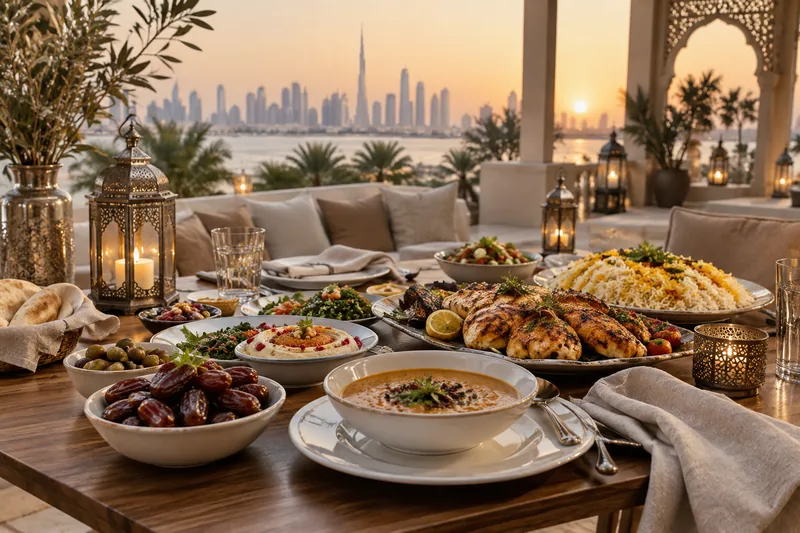
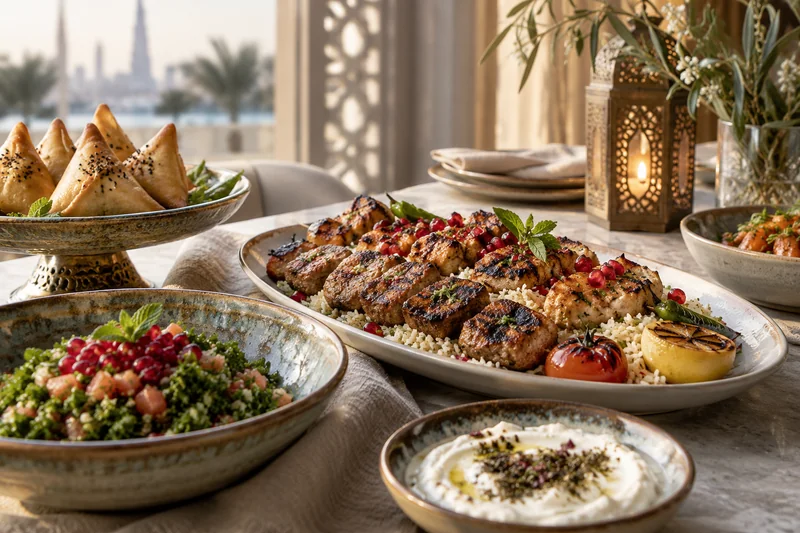
A family sharing table, buffet and plated meal offer different levels of structure. Mezze, grills, rice dishes and desserts can be combined without making the service feel rushed. Confirm portions, children’s meals and when the main dishes will be served.
Review dietary and practical details
Discuss halal sourcing and any required supplier documentation separately from allergy controls. For a workplace or larger venue, check access, serving space and the time available for clearing. Request a complete proposal for the actual menu and service rather than relying on a generic Ramadan headline price.
Plan hot dishes and replenishment as part of the same schedule.
Questions to ask before confirming
Request a written menu and scope, confirm the guest count and service hours, and check which staff, equipment and extras are included. Share dietary requirements before approving the menu. Review the payment schedule, change deadlines and cancellation terms, and identify the contact who will coordinate the booking.
Use your completed brief
If iftar catering suits your plans, explore the service details and published options below. Share your date, Dubai location, guest count and preferences so the team can assess availability and prepare a tailored proposal. The written booking confirms the final menu, responsibilities and price.
Tell us your date or preferred schedule, the number of people and your Dubai area. We will confirm what is possible before preparing a written proposal.
A comparison becomes more useful when each proposal answers the same brief. Give providers a consistent guest count, venue, service time and menu direction. Ask them to identify preparation, delivery, equipment, staffing and clear-down separately enough for you to understand the complete scope.
Look for evidence relevant to your occasion. A portfolio may show a style you like, but ask how that format would work at your venue and for your group. If a particular credential or operational capability is essential, request the relevant information rather than assuming it from general marketing language.
There is no universal best option for every event. Compare the clarity of the proposal, the suitability of the menu and the practical plan alongside the price. A provider who understands the brief and explains responsibilities clearly gives you a stronger basis for deciding how your event will be catered.
02 · Planning with myCHEF
Plan around the occasion and the date
Seasonal celebrations often bring particular expectations about food and timing. Tell us which dishes or traditions matter most to your guests and which elements you are happy to adapt. That helps the menu feel connected to the occasion without assuming every household celebrates in the same way.
Share your preferred date and service time early, especially when the request falls on a widely celebrated day. Availability, ingredients and staffing need to be confirmed for the actual booking. A published menu is a useful starting point, but it should not be treated as a reservation or a guarantee of the same arrangement on every date.
Consider the full schedule, including arrivals, any meaningful moment before eating and the point when guests will leave. The right catering plan combines familiar favourites with a service rhythm that gives people time to enjoy being together.
Explore iftar catering and agree the serving schedule around your gathering.
03 · Planning with myCHEF
Build the service schedule around your guests
Work backwards from the time guests should begin eating. The team may need access earlier for unloading, setup and preparation, particularly when equipment or several service areas are involved. Share the programme before the menu is finalised so the catering plan can support it.
Identify moments when service should pause, such as a speech, presentation or ceremony. For an office event, confirm the length of each break and whether everyone will arrive at once. For a private celebration, allow for the welcome period and any cake or toast that needs its own place in the sequence.
Agree a contact for changes on the day. Small timing adjustments may be manageable, while a substantial extension can affect staffing and the booked hours. Clear communication helps the team respond sensibly and keeps the food connected to the occasion rather than running on a separate timetable.
04 · Planning with myCHEF
Review ingredient requirements across the whole menu
Include halal requirements in the initial brief and explain any specific expectations about sourcing or preparation. Ask about the proposed ingredients and raise questions about sauces, stocks, desserts or other components that may not be obvious from the menu title.
If your household or organisation has particular expectations about alcohol in cooking, documentation or shared equipment, discuss them explicitly. A general description of a menu cannot replace a specific assessment of those requirements. The culinary team needs to understand what is essential before the selection is confirmed.
This detail does not need to make the menu feel restrictive. Sharing dishes, plated courses and reception bites can all be considered within a clear brief. Review the final choices together so you understand what will be served and how the agreed requirements are reflected throughout the meal.
Read about our approach to halal catering and include your ingredient requirements in the menu brief.
05 · Planning with myCHEF
Keep the buffet easy to approach and enjoy
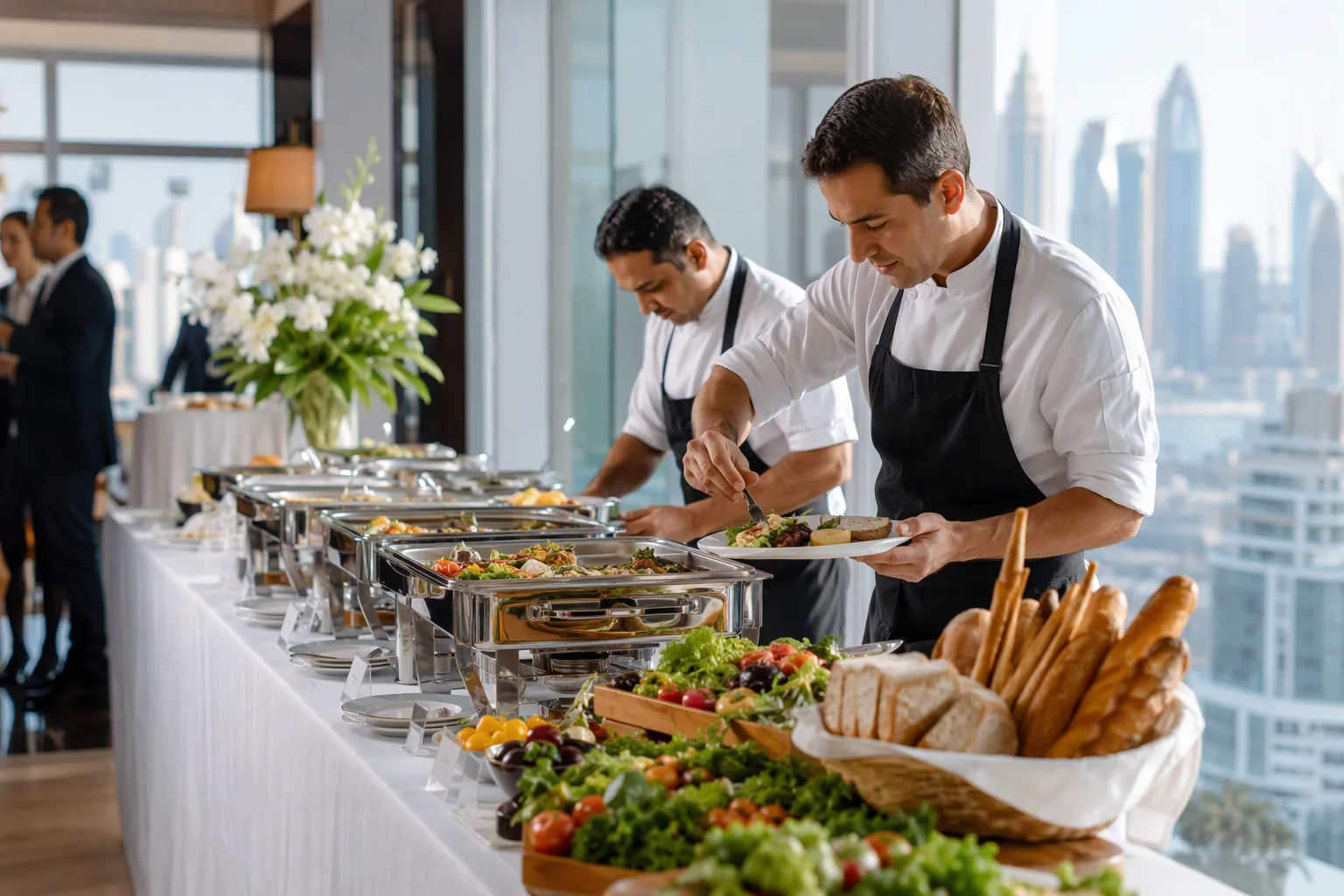
A buffet works best when guests can see the choices and move through the serving area comfortably. Think about where the queue may form, how plates will be collected and whether guests need access from one side or several points. The layout should suit the room rather than force everyone towards one crowded corner.
Group dishes in a logical order and make dietary information easy to find. Separate serving utensils and an agreed replenishment plan help the team keep the display organised. If guests will arrive in waves, discuss how the food will be presented throughout the service period.
The venue needs enough space for both guests and staff to move. A beautiful display is only useful if it can be maintained without interrupting the event. Confirm the equipment, station staffing and clear-down responsibilities in the proposal so the buffet remains a working service area as well as a visual centrepiece.
06 · Planning with myCHEF
Compare the complete proposal
Read the price together with the menu and service scope. Two proposals can have different totals because one includes equipment, staffing or a longer service period that the other does not. Compare them against the same guest count and requirements before deciding which is the better fit.
Check the minimum order, included hours, delivery or transport arrangements and how applicable VAT is shown. If the menu uses a starting price, ask which choices could change it. Premium ingredients, additional stations, extended service and extra hospitality support may need separate pricing.
The written proposal should also explain the payment schedule and the terms for changes or cancellation. Use the terms attached to your booking, as a private occasion and a corporate contract may have different arrangements. A clear comparison gives you confidence in the decision and helps avoid assumptions about what a headline price includes.
07 · Planning with myCHEF
A clear brief gives the menu a better starting point
Start with the date, venue and number of guests, then describe how you want the occasion to feel. A working lunch, an evening reception and a family celebration need different menus and service rhythms. Tell us when people will eat, whether they will be seated or standing and which parts of the event you would like myCHEF to handle.
Include essential dietary requirements and the facilities available at the venue. A brief does not need to be long, but it should distinguish what is essential from what would simply be nice to have. If you have a spending range, share it alongside the scope so the proposal can prioritise the right elements.
We can then discuss a suitable format, food selection and staffing plan. Your written proposal brings those decisions together, giving you a clear reference for what is included before you confirm the booking.
When the essentials are ready, send your event brief with the date, location, guest count and menu preferences.
Your occasion, thoughtfully planned
Tell us what you have in mind.
Share your date, venue, guest count and menu preferences. We’ll discuss the service your occasion needs and confirm the details in a written proposal.