MYCHEF · A GUIDE TO HOSTING
A Host’s Guide to Planning a Private Dinner in Dubai
Start a private dinner plan with the people at the table, the space available and the pace of the evening. Use this guide to organise the menu, kitchen, guest requirements and service handover.
A personal brief. A suitable chef. A clear written proposal.

INTIMATE, CHEF-LED DINING
Start With the Setting and Guest List
Private dining offers a personal way to host in Dubai, whether in a villa, apartment, chartered yacht or agreed outdoor setting. You can shape the menu, pace and service around your guests while the chef handles the cooking.
What to check: the named chef, an itemised quote, and who buys the ingredients. Dietary notes go into the first menu draft. A dinner for two at home is still catering: a named chef, cooking at the address you give us.
This guide explains what private dining means in Dubai, how it works, what it costs, and how to choose the right private chef for your occasion. For guests looking for a curated multi-course journey, our tasting menu Dubai service offers a chef’s table experience designed around your table and your tastes.
DEFINED
What Is Private Dining in Dubai?
Private dining is a chef-led experience prepared and served in a location of your choice. Unlike traditional catering, which often focuses on volume and buffet-style service, private dining is curated around a specific menu, atmosphere, and guest list.
The chef designs the meal, prepares it on-site or nearby, and is supported by service staff so hosts can focus on their guests rather than the kitchen.
Private villas and residences in Emirates Hills, Palm Jumeirah, Jumeirah Islands, and Al Barari
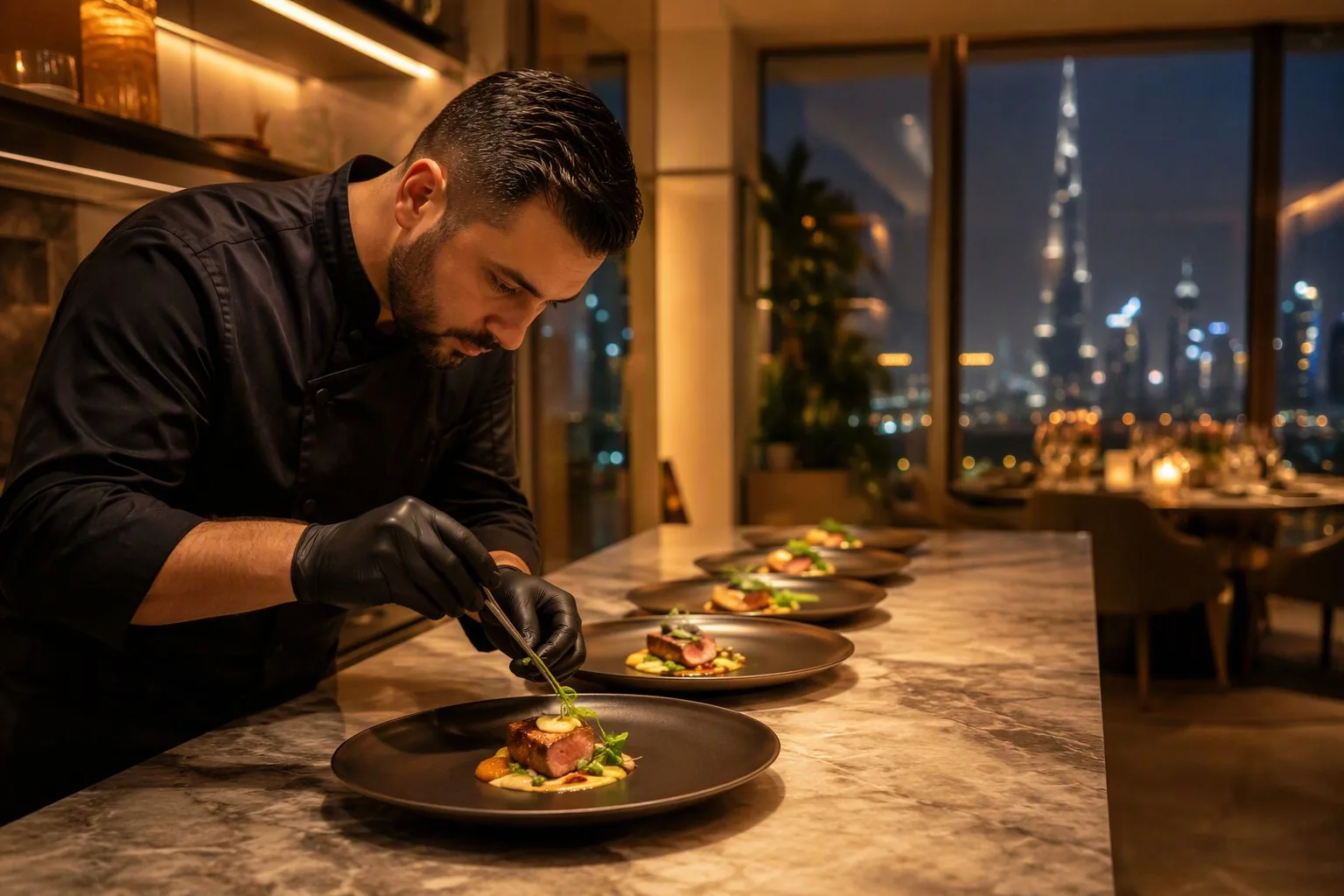
Penthouses and apartments with skyline views for intimate dinners
Yachts and boats departing from Dubai Marina, Jumeirah Beach, or Palm Jumeirah
Desert camps and outdoor estates for larger celebrations and cultural experiences
Corporate offices and boardrooms for executive dining and client entertainment
EXPERIENCE FORMATS
Types of Private Dining Experiences
Chef's-Table Dinners
A single chef prepares a multi-course tasting menu for 6 to 20 guests, introducing each course with a theme, season, or cuisine focus.
Family-Style Celebrations
Larger groups share platters and bowls at the table: ideal for mixed-age groups, Eid gatherings, birthdays, and relaxed weekend entertaining.
Canapé Receptions
Bite-sized dishes passed among guests during standing receptions. Ideal for pre-wedding events, product launches, art openings, and networking.
BBQ and Poolside Dining
Casual but refined outdoor dining with grilled meats, seafood, salads, and live carving stations, especially popular October through April.
Yacht and Offshore Dining
A private chef boards the yacht before departure and prepares meals during the cruise, adapting service to the compact galley and movement of the vessel.
Themed Cultural Menus
Menus built around Emirati, Levantine, Indian, Mediterranean, or Japanese cuisines, designed to reflect the occasion or heritage of the guests.
SELECTING THE RIGHT CHEF
How to Choose a Private Chef in Dubai
Selecting a private chef is about more than a beautiful portfolio. Here are the factors worth evaluating before you book.
Culinary Background and Specialisation
Ask about formal training, cuisine expertise, and experience with events similar to yours. A chef who excels at 20-person tasting menus may not be the right fit for a 200-person buffet.
Menu Flexibility and Tastings
A strong private chef will offer a consultation, propose menus, and often provide a tasting before the event: especially important for weddings and milestone celebrations.
Front-of-House Support
Good food needs good service. Confirm whether the chef brings service staff, bartenders, and cleaners, or whether you need to arrange these separately.
Licensing, Hygiene, and Insurance
In Dubai, food preparation and service should meet local municipality requirements. Reputable chefs operate with the necessary permits and hygiene protocols.
Communication and Reliability
The best private chefs are responsive, detail-oriented, and transparent about timing, ingredients, and costs. Trust your instinct during the first conversation.
MENU PLANNING
What to Expect From the Process
Initial enquiry: date, location, guest count, occasion, and any dietary requirements
Menu proposal: 2–3 menu options tailored to your preferences
Tasting: sample key dishes before committing to the final menu
Final confirmation: locked menu, headcount, timing, and service details
Event day: chef and team arrive, prep, serve, and clear
Dietary Accommodations
Dubai's population is diverse, and dietary requirements are common. A professional private chef should comfortably handle a wide range of needs. Be specific about allergies and cross-contamination concerns during the consultation. For guests who require fully halal menus prepared and served in a private setting, explore our dedicated halal private dining Dubai service.
Start Planning My MenuPRICING OVERVIEW
What Affects Private Dining Pricing
Menu complexity, guest numbers, staffing, equipment and the venue shape the proposal. For current options, explore private dining experiences in Dubai, then use the factors below to compare what is included.
| Factor | How It Affects Cost |
|---|---|
| Guest count | Larger groups benefit from economies of scale; very small groups may have a minimum spend |
| Menu complexity | Tasting menus and premium ingredients increase per-person pricing |
| Staffing | Servers, bartenders, and cleanup teams add to the total |
| Location | Remote venues or yacht catering may include transport and loading fees |
| Service style | Plated service requires more staff than family-style or buffet |
Always request an itemised quote so you understand exactly what is included.
POPULAR USE CASES
Best Occasions for Private Dining
Birthdays and anniversaries: fully customised menus and timing
Proposals and romantic dinners: privacy and personal touches
Ramadan iftars and Eid gatherings: large-format shared dining
Wedding-related events: bridal showers, rehearsal dinners, post-wedding brunches
Corporate dinners and board meetings: discreet, professional service
Yacht charters: food planned around the galley and boarding
Holiday entertaining: Christmas, New Year's, and Diwali celebrations at home
PRIVATE DINING VS. LUXURY CATERING
Which Service Do You Need?
| Private Dining | Luxury Catering |
|---|---|
| Smaller, chef-led groups | Larger events and celebrations |
| Curated multi-course menus | Buffet, stations, or plated banquet service |
| On-site preparation and plating | Often prepared off-site and finished at venue |
| Highly interactive and personal | Scalable for hundreds of guests |
| Ideal for 6–40 guests | Ideal for 40–500+ guests |
Many events blend both. A wedding might use luxury catering for the reception and private dining for the rehearsal dinner. A corporate retreat might use catering for lunch and a private chef for the evening.
Related Services & Guides
Private Chef Dubai
Personal chef service for intimate dinners and daily dining in Dubai.
Luxury Dining Dubai
Premium dining experiences designed for villas, yachts, and penthouses.
Yacht Catering Dubai
Compact, elegant menus designed for Dubai yacht events.
Villa Catering Ideas
Menu formats and setups designed for Dubai villas and homes.
Wedding Catering Dubai
Multi-course and banquet-style catering for Dubai weddings.
Dubai Catering Prices Guide
A practical breakdown of catering costs per person in Dubai.
Private Dining FAQ
Two to four weeks is typical. For peak dates: public holidays, New Year's Eve, and Ramadan: we recommend booking earlier to secure your preferred chef and menu.
Most private residences, villas, and yachts can accommodate a private chef. The chef will assess kitchen facilities, power, water, and access during the consultation.
Usually no. Professional private chefs bring their own tools, service ware, and often linens. This should be confirmed in your itemised quote.
Yes. Family-friendly menus, earlier timings, and simpler dishes are easy to arrange. Be sure to share ages and any preferences during the planning call.
Discuss this during the consultation. A professional chef will have protocols for allergen-free preparation and cross-contamination control.
Private dining is usually planned around a seated group, the menu sequence and the pace of service. Larger events may require a different format, staff plan and equipment. Compare the complete written scope rather than a headline price.
Yes. Boardroom lunches, client dinners, and executive entertaining are well suited to private dining because the setting is discreet, the menu is tailored, and service is highly attentive.
Private Dining Dubai: Plan Your Private Dining Experience
Tell us about your occasion, location, and guest list. We will design a bespoke menu and service plan around the people at your table.
Make it personal · The details that matter
A practical guide to hosting a private dinner in Dubai
Private dining in Dubai gives you room to shape the meal around your guests, but a successful occasion still depends on a few connected decisions. The venue affects the menu, the menu affects staffing and the service format affects the table. This guide brings those choices together so you can plan in a sensible order. Start with the atmosphere you want, then work through the practical details that make it possible to enjoy the evening rather than manage it from the kitchen.
01 · Your myCHEF experience
Use three decisions to give the brief direction
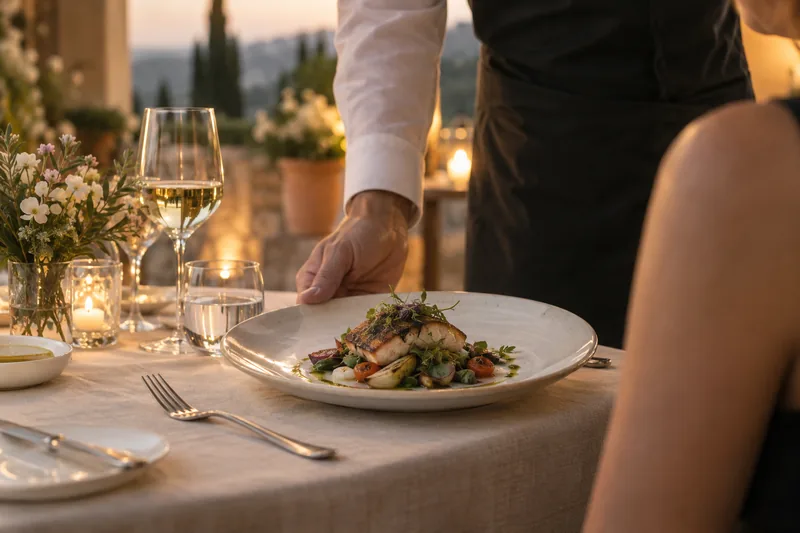
First, decide where guests will eat and how they will gather. Second, choose a broad menu direction and note essential dietary requirements. Third, identify the work you want the team to handle, from cooking to service and setup.
Those decisions create a useful starting point even if you have not selected individual dishes. Share your date and budget alongside them, and ask for a proposal that connects the menu with the practical support required. You can then refine the details with a clear understanding of the format instead of revisiting the whole plan whenever an extra is added.
02 · Your myCHEF experience
Match the service to the way your guests gather
Some occasions revolve around conversation at one table; others work better when guests move around and eat at their own pace. Describe how you imagine the gathering before choosing individual dishes. Food that is comfortable to eat standing may need different portions and presentation from a meal designed for a seated place setting.
Sharing service can encourage conversation, while plated courses create a more defined sequence. A mixed format may begin with small bites and move to a seated main course. Each option has implications for staff, crockery and the kitchen, so discuss the complete flow rather than deciding the menu and service separately.
Think about the guests who may need a quieter seat, an earlier meal or a simple alternative. A considerate arrangement makes them part of the occasion without requiring a complicated last-minute change. Once the format is clear, the chef can recommend dishes that suit it and the team can price the practical support needed.
Discuss the style of your occasion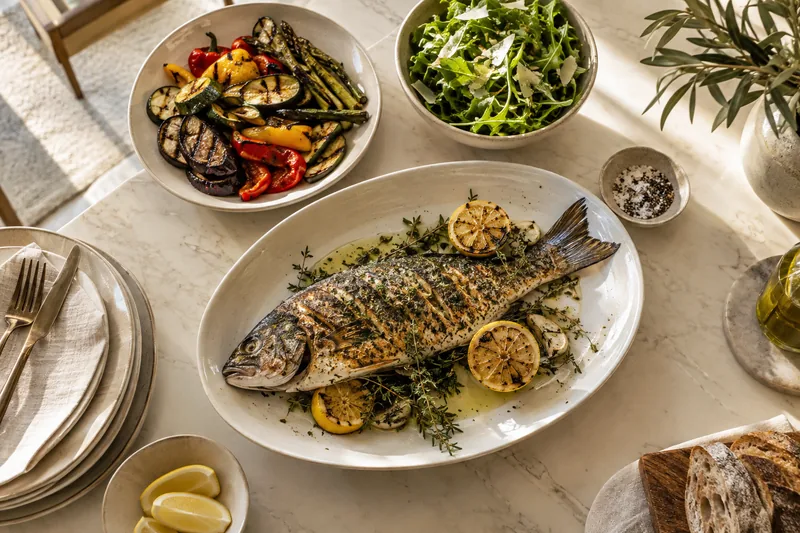
03 · Your myCHEF experience
Choose courses that belong together
A memorable dinner menu is more than a list of favourite dishes. Think about how the courses follow one another: a fresh beginning, a satisfying main course and a finish that complements what came before. Repeating the same rich ingredient or cooking style throughout can make a meal feel heavier than intended, even when each dish is good on its own.
Share your must-have dishes and let the chef recommend the supporting courses. If a particular main course is the centrepiece, the starter and dessert can be chosen to balance it. The menu should also respect the kitchen and service team, especially when several plates need to reach the table together.
Consider the pace you want. A relaxed family gathering, a birthday dinner and an interactive tasting menu may all use different course structures. Agreeing the format early makes it easier to discuss portions, staffing and timing. The most persuasive menu is one that sounds enjoyable to your guests and can be delivered comfortably in the setting.
Explore dishes for your occasion
04 · Your myCHEF experience
Make the table work as well as it looks
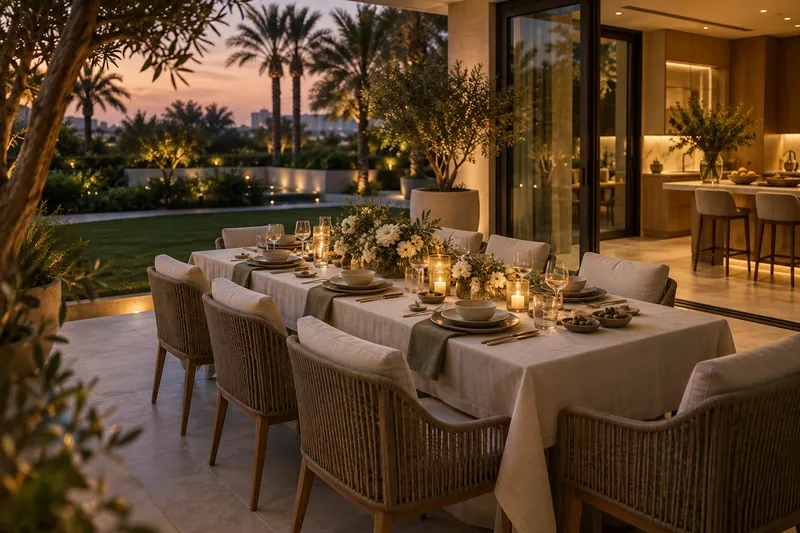
A beautiful table should still leave room to eat comfortably. Consider the number of plates, glasses and serving dishes before deciding on flowers or decorative pieces. A sharing menu needs space in the centre; a plated menu may need room for several pieces of cutlery or a separate bread plate. The menu and table layout should be planned together.
Check what is available at the property and what needs to be arranged. Crockery, serving platters, linen and glassware are not interchangeable with kitchen equipment, and they should not be assumed to be included unless your proposal says so. Tell the team if you want a particular style, colour palette or level of formality.
Lighting and access matter, too. Guests need to see the food, and staff need a safe route between the table and kitchen. A simple, thoughtfully arranged setting can feel more welcoming than an overcrowded display. Confirm setup and clear-down responsibilities so the presentation remains practical throughout the occasion.
Discuss your table and service requirements
05 · Your myCHEF experience
Keep dietary variations manageable and well briefed
When guests have different requirements, a clear list is more useful than a series of last-minute messages. Record the requirement, how many people it applies to and whether it is a preference or an essential restriction. Where an allergy is involved, disclose it directly so the team can assess ingredients and kitchen conditions before accepting the request.
The menu can sometimes share a common foundation with a few carefully planned variations. Serving a sauce separately or choosing a side that suits several guests may make the experience simpler. In other cases, a distinct alternative dish is the better choice. The chef should recommend what is workable rather than assuming every recipe can be adapted successfully.
For plated service, agree how the correct dish will reach the correct guest. A seating plan or discreet identification method can help. Update the team if the guest list changes, and make sure the final menu reflects the confirmed requirements. Good preparation makes inclusive hosting feel natural at the table.
Share your guests’ menu requirements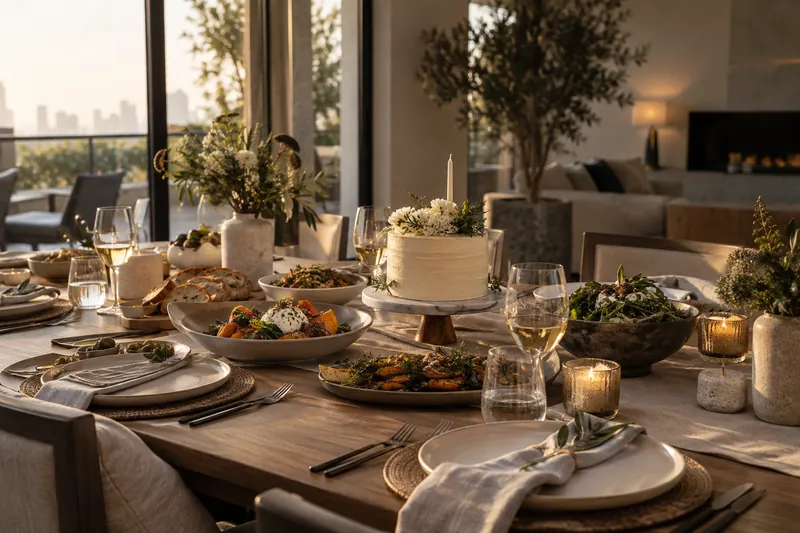
06 · Your myCHEF experience
Give every person in the service a clear role
Cooking, carrying plates, pouring drinks and clearing a table are different jobs. For a quiet household visit, you may need only a chef. For an occasion with several courses or guests arriving together, an assistant or service professional can help the kitchen and dining area run at the right pace. Staffing should follow the work, rather than a fixed assumption based only on headcount.
Discuss who will greet guests, replenish water, serve each course and clear used plates. If the chef is expected to do all of those tasks while cooking, the menu and timing need to allow for it. Extra support can be especially useful when the kitchen is far from the dining table or the meal involves several dietary variations.
Your proposal should identify the included roles and service hours. Additional hospitality, equipment and event coordination should be agreed as part of the scope. That clarity lets everyone focus on their responsibilities and gives you a more relaxed experience as host.
Explore hosted dining arrangements
07 · Your myCHEF experience
Confirm the practical details before the date is secured
A promising menu is only one part of a booking. Before confirming, review the date, address, guest count, arrival time, service hours and included roles. Make sure the dietary brief and any essential equipment requirements are reflected in the proposal rather than left in separate messages that can be overlooked.
Read the payment schedule and the terms that apply to your particular service. A recurring household plan and a one-off event may have different arrangements for changes, cancellation and outstanding balances. Use the terms attached to your booking rather than assuming a policy from another service or an earlier quotation automatically applies.
Keep one agreed version of the menu and scope. If you change the number of guests, request a new dish or move the meal time, ask for confirmation of any effect on staffing, availability and price. This creates a clear reference for you and the team and helps the chef prepare for the service you actually expect.
Read the private client booking termsYour next step
Let’s shape the details around you.
Share your date or preferred cooking schedule, Dubai location and the number of people you are planning for. Tell us what you would most like help with, and we will discuss a suitable menu and service arrangement before confirming the details in writing.
Discuss my requirementsBack to the guidePrevious Work · myCHEF
A closer look at our previous tables.
Private tables, place settings and garden arrangements from our event work. Share the details you would like us to plan for your occasion.
Garden dining table with candles, glassware and greenery at night
Long garden tables set for a daytime outdoor celebration
Round dinner tables set in a garden beneath string lights
Long outdoor dining table with flowers and white chairs beside a villa
Monochrome table setting with dark napkins and fresh flowers
Long garden dinner table set with white chairs at night