
By myCHEF Dubai Team|
New-parent household meal support is planned cooking with the aim of keeping everyday meals manageable while you care for a baby. A useful household chef new parents meal brief tells the cook who needs feeding, which meals to cover, what dietary instructions apply and how your home operates. Start with those details, rather than a long menu wish list.
- A household chef new parents meal brief should define meal coverage, dietary instructions, kitchen access and handover.
- myCHEF suits new parents seeking household chef support for home-cooked meals and weekly meal preparation.
- Choose household cooking for recurring meals; use private dining or catering for a celebration.
- Agree shopping, containers, cleaning and storage instructions before confirming the cooking arrangement.
Why meal support matters for new parents
The useful outcome is not simply a fridge containing food. It is a meal you can identify, serve and enjoy without another round of decisions. Your brief should account for interrupted schedules, different appetites and anyone else eating at home.
Start by comparing the formats in the Dubai meal preparation guide. Use it to distinguish home cooking from prepared-meal services, then decide which tasks you want someone else to handle.
myCHEF household chef services suit new parents who want home-cooked meals and weekly meal preparation. The service is a practical fit when you want cooking organised around your household, rather than a menu chosen separately each day. Kitchen access and a clear scope still need agreement.
Keep the purpose narrow. Feeding your family throughout the week is household meal support. Hosting a welcome lunch, naming celebration or dinner for visiting relatives is a separate private dining or catering brief, even when the guest list is small.
Build your household chef brief
You can write the brief yourself in a shared note. Ask your partner or another household member to check it before sending it, so the cook receives one agreed set of instructions.
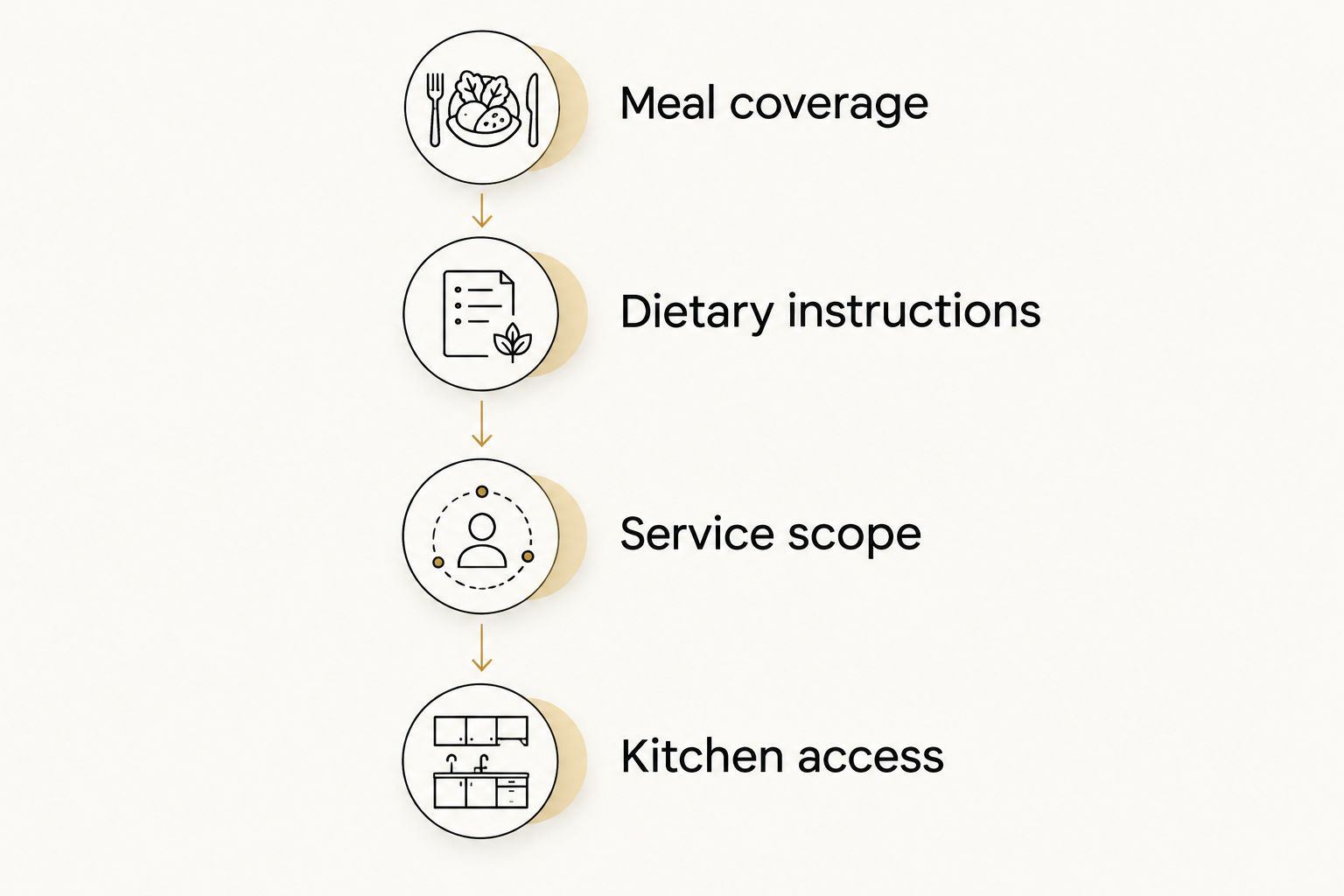
Work through four essentials: meal coverage, dietary instructions, service scope and kitchen access. Then add the menu and handover details. This order prevents an attractive menu from concealing practical gaps.
Define your meal coverage
Start with the meals that create the most work, not every possible eating occasion. Write down who eats at home and whether those people need the same dishes. Include older children and visiting relatives when they genuinely belong in the recurring plan.
Separate meals from portions. As an illustrative example, 2 adults needing 4 lunches and 4 dinners each require 16 adult portions. That is a planning calculation, not a recommended package or a promise about what one cooking visit produces.
Identify the priority if the full list cannot fit the agreed scope. Lunches that otherwise go unplanned deserve a different brief from dinners you want served freshly cooked.
- Meal coverage: name the lunches, dinners or breakfasts you need covered.
- Household members: list adults, older children and regular visitors separately.
- Portion preferences: describe smaller appetites, larger meals and shared dishes.
- Priority meals: identify what must be ready first.
Record your dietary instructions
Write a single dietary note instead of relying on conversations during cooking. Distinguish allergies from preferences, and identify whose instructions apply to each meal. A dish that suits one parent does not automatically suit everyone eating at home.
Keep medical advice separate from menu preferences. Give the cook any relevant instructions from your qualified healthcare professional; do not ask a household chef to prescribe a postnatal diet or promise changes to recovery, milk supply or weight.
For an allergy, discuss ingredient checks, equipment and preparation arrangements before confirming the service. Do not assume that omitting an ingredient resolves every concern. Infant feeding is also a separate requirement, not an automatic part of an adult meal plan.
- Dietary instructions: attach relevant written guidance rather than summarising from memory.
- Allergies: identify the person affected and the ingredient involved.
- Preferences: record halal requirements, vegetarian choices and disliked ingredients.
- Separate meals: identify anyone who needs a different preparation.
Agree the service scope
First, list the jobs you can handle yourself or share with family: selecting dishes, buying groceries, clearing worktops and washing containers. Then identify which jobs you want included in the cooking arrangement.
myCHEF provides vetted chefs for home-cooked meals and weekly meal preparation. That offers a route to delegated cooking, but your brief still needs to define the work. Do not treat shopping, serving, packing or additional household tasks as included unless they appear in the agreed scope.
Ask for a written explanation of inclusions and exclusions. Confirm how changes to the menu, portions or cooking schedule will be handled before they become same-day requests.
- Service scope: distinguish cooking from shopping, packing and serving.
- Ingredients: agree who purchases them and approves substitutions.
- Equipment: confirm responsibility for containers and any additional utensils.
- Cleaning: specify the cooking-area tasks expected after preparation.
- Changes: agree how you will request revised dishes or portions.
Prepare your kitchen access
Check the kitchen yourself before arranging a visit. Describe the hob, oven, fridge space and useful equipment accurately. A cook needs to know what is available, not simply that the home has a kitchen.
Dubai apartment and villa arrangements also belong in the brief. Check your building's access procedure, parking arrangements and any permissions relevant to your property. State who will admit the chef and which route reaches the kitchen.
Set boundaries around the household routine. Identify rooms that are private, where deliveries should go and when you prefer quieter preparation. These are requests to agree, not assumptions about what a service guarantees.
- Kitchen access: explain entry, parking and the route to the cooking area.
- Appliances: list available equipment and anything that is not working.
- Storage space: clear room for ingredients and prepared containers.
- Household boundaries: identify private areas and preferred working arrangements.
- Contact person: name the adult responsible for access and decisions.
Choose a manageable menu
Begin with familiar dishes your household already enjoys. Write down what you actually eat before requesting variety. Repeated favourites are useful when the aim is dependable meals rather than a different dining experience every evening.
Choose dishes according to how you will serve them. A component-based meal lets household members combine rice, vegetables and a protein differently. A plated dish suits a shared mealtime but needs a clearer serving schedule.
An illustrative menu could include a lentil soup, a chicken dish with rice, roasted vegetables and a chickpea-based vegetarian option. This is a planning example, not a myCHEF menu or a nutritional prescription. Confirm ingredients and preparation with the cook.
- Familiar dishes: start with meals you already enjoy eating.
- Serving format: choose shared dishes, individual portions or separate components.
- Texture preferences: explain whether sauces and toppings should remain separate.
- Substitutions: list acceptable alternatives for ingredients you avoid.
- Menu approval: nominate one person to confirm the final selection.
Specify the handover
Plan what happens after cooking, especially if another adult will serve the meals. Decide where prepared food belongs, how containers should be identified and who receives the storage and reheating instructions.
Request guidance appropriate to each dish rather than applying one storage rule to everything. Agree how preparation dates, ingredients and intended serving order will be recorded. Do not leave anyone guessing which container belongs to which person.
Use the first agreed menu to improve the next brief. Record what was eaten, what remained and what was awkward to serve. That feedback is more useful than asking for greater variety without explaining the problem.
- Labels: request dish names, preparation dates and relevant ingredient information.
- Instructions: agree dish-specific storage and reheating guidance.
- Placement: specify where containers and supporting notes should go.
- Feedback: record leftovers, portion fit and serving difficulties.
Which meal support format fits your household?
Choose the format according to the work you need removed. Household cooking, delivered meals and informal family support solve different parts of the problem. None removes the need to explain dietary requirements or arrange a reliable handover.
| Option | Best for | Main advantage | Key limitation |
|---|---|---|---|
| myCHEF household chef support | Parents seeking home-cooked meals and weekly preparation | Delegates cooking to a vetted chef | Requires agreed kitchen access and a defined scope |
| Prepared-meal delivery | Parents who do not want cooking visits | Moves preparation outside the home | Menu choice, dietary suitability and delivery arrangements need checking |
| Cooking by a household member | Families who prefer direct control | Keeps menu decisions within the household | Leaves planning, shopping and cooking with the family |
| Meals from relatives or friends | Households receiving occasional help | Provides support without arranging a cooking visit | Contributions need coordination to prevent gaps or duplication |
You can combine formats. A relative might provide a familiar dish while a chef handles recurring lunches. Keep one shared record so each contributor knows what is already covered.
Choose recurring household cooking for recurring meals. Do not book an event-style service simply because relatives are staying with you; separate their everyday meals from any celebration you plan to host.
What should you compare in proposals?
Compare scope before comparing the total quoted. Two proposals are not equivalent if one includes ingredient purchasing and packing while the other covers cooking alone. Ask each provider to respond to the same brief.
Price drivers to discuss include cooking frequency, portion requirements, menu complexity, shopping responsibilities and additional staffing. Kitchen equipment and access arrangements also need review because they shape how the work is organised.
Use the provider's current service information for actual rates and terms. Keep bespoke quotations separate from advertised plans, and confirm what happens when you change the agreed requirements.
- Check that both proposals cover the same meals and portions.
- Identify ingredients, containers and equipment responsibilities.
- Confirm the expected cooking, packing and cleaning tasks.
- Ask how dietary requirements will be handled.
- Record scheduling, cancellation and change terms before agreeing.
Common briefing mistakes new parents make
Asking for healthy food without defining it
Healthy is not a complete cooking instruction. Replace it with specific preferences, ingredient restrictions and any relevant professional guidance. This gives the cook usable information without asking for medical judgement.
Counting dishes instead of portions
A list of meals does not tell the cook how many people each dish must feed. State the diners and intended eating occasions. Otherwise, you risk agreeing a menu that does not match the household's coverage.
Combining everyday meals with visitor entertaining
A recurring lunch plan and a celebration require different arrangements. Brief them separately so serving, staffing and timing are clear. Do not assume household meal preparation includes hosting a gathering.
Forgetting the person who reheats the food
The adult serving lunch might not have spoken to the chef. Put dish identification and serving instructions where that person can find them. A useful handover should not depend on remembering a conversation.
Related guides
FAQ
What should I include in a household chef brief for new parents?
Include household members, meal coverage, portions, dietary instructions, kitchen access and the tasks you want covered. Add shopping responsibilities, containers and handover instructions so the proposal addresses the whole arrangement.
Is a household chef better than meal delivery for new parents?
A household chef fits parents who want cooking organised around their home; delivery fits parents who prefer no cooking visit. Compare dietary suitability, menu choice and the work that remains with your household before deciding.
Can myCHEF help with weekly meal preparation for new parents?
myCHEF provides vetted chefs for home-cooked meals and weekly meal preparation. Share your household brief to discuss the service scope, menu requirements and practical arrangements.
How many portions should I ask a chef to prepare?
Calculate portions from the people eating and the meals you want covered. For example, 2 adults having 4 lunches and 4 dinners each need 16 adult portions; adjust the brief for different appetites and other household members.
Can a household chef design a medical postnatal diet?
Use a qualified healthcare professional for medical dietary advice, then give the chef the relevant written instructions. Household cooking is not a substitute for clinical guidance.
Do I need to buy ingredients before the chef arrives?
Ingredient purchasing depends on the agreed service scope. Confirm who shops, who approves substitutions and which ingredients or equipment you need to provide before the cooking visit.
Should meals for visiting relatives be included in the same brief?
Include relatives in the household brief when they need ordinary meals during their stay. Treat a hosted dinner or celebration as a separate private dining or catering requirement.
Make the next meal easier to serve
The most useful test of your brief is simple: can another adult find and serve the right meal without asking you? If not, improve the labels, portion plan or handover before adding more dishes.
To discuss household meal support with myCHEF, send your preferred start date, Dubai location, household diner count and the service required. Include the meals you want covered, dietary instructions and kitchen access details. Ask for a proposal that separates agreed inclusions from additional requests.