
By myCHEF Dubai Team|
An expat family household chef brief is a written plan for your household’s meals, routines and kitchen arrangements, with the aim of making everyday cooking fit family life. Include who eats, which meals need preparing, familiar dishes, dietary requirements and responsibilities. Separate recurring household cooking from a single dinner party so you request the right service.
- An expat family household chef brief should define meals, dietary requirements, kitchen access and responsibilities before menu design.
- myCHEF suits families seeking vetted chefs for home-cooked meals and weekly meal prep.
- Separate food allergies from preferences, and describe familiar dishes rather than naming cuisines alone.
- Compare household cooking and weekly meal prep by schedule, storage needs and the work left to you.
Why household cooking needs a family-specific brief
A household brief answers a different question from an event menu: what needs to happen repeatedly so your family can eat as planned? A beautifully written menu is incomplete if nobody has agreed who buys ingredients or whether dinner should be ready to serve or stored for later.
For the distinction between an individual dining occasion and ongoing cooking, the home-dining guide covers the former. This article focuses on briefing a chef for your everyday household routine.
An expat family’s brief should explain what familiar food means to that particular household. Country names and cuisine labels do not communicate a preferred breakfast, a child’s accepted textures or how you usually serve dinner.
myCHEF household cooking suits families seeking vetted chefs for home-cooked meals and weekly meal prep. The brief gives menu planning a clear starting point; it does not replace confirmation of the service scope.
How to write your household chef brief
Start with a shared document or a sheet of paper. You do not need a template or an app. Write down the household routine first, then add food preferences and practical arrangements.
Define who eats and which meals matter
List everyone whose food the chef needs to prepare, including family members who eat at different times. Describe portions in practical terms rather than assuming an adult and a child need the same serving.
Separate recurring meals from occasional requests. School lunches, an adult’s packed lunch and a family dinner each need different packaging and timing. Visiting relatives also change the brief, even when they prefer the same dishes.
Give each meal a clear purpose: ready to eat, ready to reheat or ready to pack. That distinction helps you compare proposals without treating every prepared dish as an equivalent service.
- Name the regular diners and any expected visitors.
- List the meals you want covered on each cooking day.
- Note separate eating times and packed-lunch requirements.
- Describe portion preferences and whether you want leftovers.
- Mark occasional requests separately from the regular schedule.
Map your weekly routine before choosing a menu
Write your actual routine, not an idealised week. Note school collection, office days, evening activities and any meals you normally eat outside the home. A chef cannot plan the right quantities from a guest count alone.
For myCHEF household cooking enquiries, this schedule helps distinguish home-cooked meals from weekly meal preparation. Ask how the proposed arrangement fits your routine rather than assuming a particular visit pattern, shopping service or serving arrangement is included.
Use a simple weekly grid. Put the meal time and intended use beside each entry, then flag the days when your plans regularly change. Choose the cooking schedule before approving a rotating menu.
- Identify the meals that currently create the most work.
- Mark when someone can provide kitchen access.
- Distinguish immediate serving from preparation for later.
- Record days when family members eat separately.
- Agree how schedule changes should be communicated.
Separate dietary requirements from preferences
Make dietary requirements easy to find. Do not bury an allergy inside a list of favourite dishes or describe an avoidance as simply being a picky eater. State the ingredient concerned and the preparation questions you need answered.
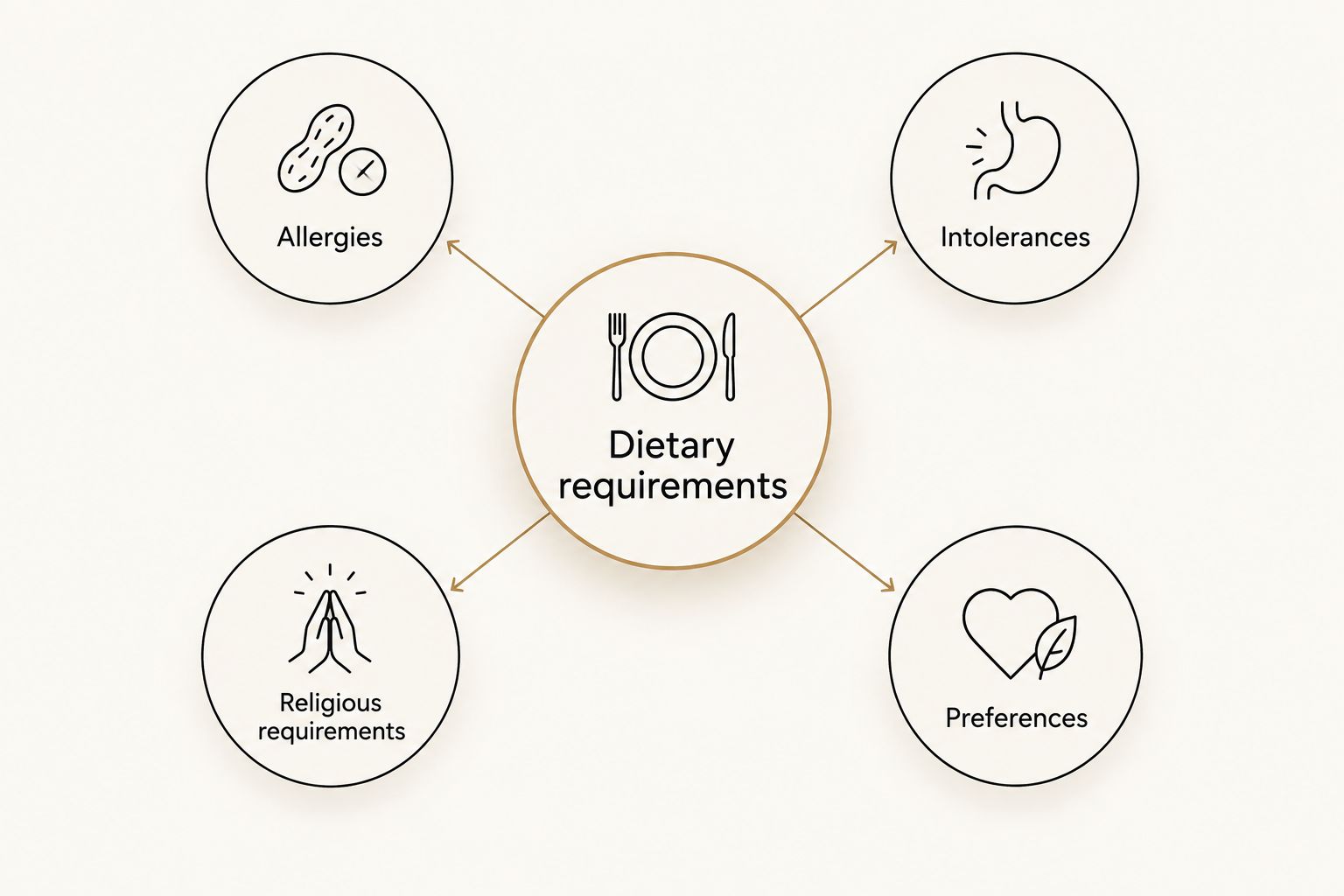
Keep religious requirements, allergies, intolerances and preferences in separate fields. If you need particular sourcing or ingredient checks, request confirmation. A cuisine name or a dish description does not establish whether those requirements have been met.
For medically prescribed eating plans, share the relevant instructions from your clinician. Ask whether the chef can follow them; do not expect household cooking to provide medical advice or promise health outcomes.
- List allergies and the questions you need answered about preparation.
- Identify intolerances separately from disliked ingredients.
- Explain religious requirements and any sourcing expectations.
- Include relevant clinician instructions where applicable.
- Request ingredient clarification before approving unfamiliar dishes.
Describe familiar dishes in usable detail
Start with meals your family already enjoys. For each dish, explain the version you mean: spice level, sauce texture, preferred accompaniments and whether components should be served separately. A photograph or an existing recipe can communicate more than a broad cuisine label.
For children, describe accepted ingredients and presentation without assuming they need a completely separate menu. Ask whether a shared meal can be adapted, such as keeping a sauce separate or adding seasoning at the table.
Balance familiarity with variety. Mark dependable meals as regular options and new dishes as trials. This gives the chef room to suggest alternatives without replacing everything your family recognises.
- Name familiar dishes and describe the version your household likes.
- Note spice, texture and sauce preferences.
- Explain which meal components should remain separate.
- Identify ingredients you welcome and those you avoid.
- Mark new dishes for approval rather than automatic rotation.
Record kitchen access and available equipment
Describe the kitchen as it is. Include working appliances, usable cookware, preparation space and storage. If the chef will prepare food for later, explain where containers can go and who will organise the fridge before the visit.
Dubai access arrangements belong in the brief too. Ask your building or community contact about visitor registration, parking and entry procedures, then pass on the confirmed instructions. Do not assume the chef can resolve access at the door.
Specify any shared-kitchen constraints. Another household member preparing breakfast, limited worktop space or an appliance awaiting repair affects the cooking plan. A short inventory prevents the menu from depending on equipment that is not available.
- List the working hob, oven and other relevant appliances.
- Describe cookware, utensils and preparation space.
- Confirm fridge, freezer and container arrangements.
- Share verified parking and building-access instructions.
- Note any periods when the kitchen is unavailable.
Assign shopping, storage and cleanup responsibilities
Write down who does each task. Shopping, ingredient approval, cooking, packaging and cleanup are separate responsibilities. Do not infer that a proposal includes them all because it uses the phrase private chef.
Ask myCHEF to confirm the household cooking scope against your brief. A tailored proposal should identify the requested work and any exclusions; your checklist helps you see what remains your responsibility.
Budget discussions should focus on scope before figures. The meals requested, menu complexity, ingredient choices, shopping arrangements and work beyond cooking all belong in the comparison. Ask for these to be itemised so you can compare like with like.
- Name who buys ingredients and approves substitutions.
- Agree who supplies and organises food containers.
- Request storage and reheating instructions for prepared meals.
- Define the kitchen cleanup you expect.
- Clarify serving, table setting and washing-up responsibilities.
- Ask what is excluded from the proposed service.
Keep recipes and feedback in one place
Use one shared folder or notebook for approved recipes, menu decisions and feedback. This is the manual starting point. A service enquiry becomes more focused when you can share a concise record instead of reconstructing preferences through scattered messages.
Keep feedback specific: the sauce was too spicy, the portion was too large or the lunch was difficult to pack. Then record the agreed change. Do not make the chef guess whether a dish should be adapted or removed entirely.
Choose a format that everyone responsible for meals can maintain. Keeping a dated menu log alongside organising family recipes separates what your family likes from what has actually been agreed for the next cooking visit.
- Store approved recipes and reference photographs together.
- Record menu decisions in the same document.
- Describe feedback by flavour, texture, portion or practicality.
- Mark dishes as repeat, adapt or remove.
- Keep the current brief separate from older versions.
Which cooking arrangement fits your family?
Compare the arrangement against the job you need done. Recurring household cooking, batch preparation and event dining are different requests, even when the same family uses all of them.
A single celebration belongs in a private-dining or catering brief, not the regular household schedule. Keep it separate so the event’s menu, serving needs and cleanup do not become assumed weekly inclusions.
| Option | Best for | Main advantage | Key limitation |
|---|---|---|---|
| Family cooking with a written plan | Households wanting to retain cooking themselves | Direct control over meals and changes | Shopping, preparation and cleanup remain with you |
| Recurring household cooking | Families needing meals prepared around regular routines | A brief can account for individual preferences and meal times | Access, responsibilities and the visit schedule still need agreement |
| Weekly meal prep | Families wanting prepared meals for later use | Concentrates preparation into an agreed routine | Requires storage, containers and clear reheating instructions |
| Private dining or catering | A single dinner, party or celebration | Gives the occasion its own menu and service brief | Does not address the ongoing household meal routine |
Use the same questions for every proposal. Who shops? What meals are covered? What happens after cooking? A longer dish list is not automatically a better fit if it leaves your main household task unresolved.
A sample brief you can adapt
The following is an illustrative household scenario, not a myCHEF package or a recommended visit schedule. Replace every detail with your actual needs before sending it.
- Household: 2 adults and 2 children; ask about portions individually.
- Meals: 5 weekday dinners, with selected portions reserved for adult lunches.
- Timing: Dinner ready to serve on cooking days; other meals prepared for later use.
- Preferences: Familiar family meals, mild seasoning and sauces served separately where requested.
- Dietary requirements: List each requirement by diner and request preparation confirmation.
- Kitchen: Provide an appliance inventory, storage details and access instructions.
- Responsibilities: Request written confirmation of shopping, containers, cleanup and reheating guidance.
Attach familiar recipes if they explain your preferences. Leave room for the chef to suggest a workable menu rather than prescribing dishes that do not fit the agreed preparation time or equipment.
Common mistakes expat families make in a chef brief
Using nationality as the whole food brief
A request for food from home leaves recipes, seasoning and serving style open to interpretation. Name the dishes and explain the versions your family enjoys. Include examples from different family members rather than letting one person’s preferences represent everyone.
Writing only for the adults
A menu that ignores children’s meal times, textures or lunch requirements leaves extra preparation with the household. Describe those needs explicitly. Ask about shared dishes with adaptations before requesting separate menus by default.
Combining weekly meals with entertaining
Adding a birthday dinner to the regular meal list obscures the extra work. Give celebrations their own brief, including serving arrangements and the occasion’s guest count. Do not use household size to decide whether an event needs private dining or catering.
Leaving substitutions and handover undefined
An ingredient substitution can affect preferences and dietary requirements. Name the person who approves changes and agree how prepared food is handed over. Include containers, instructions and cleanup in that conversation, not just the menu.
FAQ
What should an expat family household chef brief include?
An expat family household chef brief should include diners, meals, schedules, dietary requirements, preferred dishes, kitchen facilities and responsibilities. State who handles shopping, containers, cleanup and menu changes.
Should I choose household cooking or weekly meal prep?
Choose household cooking when your priority is meals prepared around your routine; choose weekly meal prep when your priority is food prepared for later use. Confirm the proposed schedule, storage needs and reheating arrangements before deciding.
How do I explain my children's food preferences to a chef?
Describe accepted ingredients, textures, seasoning and presentation rather than simply saying your children are fussy. Explain whether sauces should stay separate and whether shared family dishes can be adapted.
Can I include food allergies in the same list as dislikes?
Keep allergies separate from dislikes so they are clearly identified as preparation requirements. Name the ingredient and ask how the chef will address your stated needs before approving the menu.
Does a household chef automatically handle grocery shopping?
Do not assume grocery shopping is included. Ask who purchases ingredients, approves substitutions and checks what is already in the kitchen, then record the agreement in the service scope.
Should I put a dinner party in the weekly household brief?
Give a dinner party its own private-dining or catering brief. A single occasion needs separate decisions about guests, menu, serving and cleanup, even when it takes place in your home.
What should I send myCHEF with a household cooking enquiry?
Send myCHEF your preferred start date, Dubai location, household diner count and the cooking service you need. Include your meal schedule, dietary requirements and kitchen details so the enquiry reflects your routine.
Related guides
Put the handover in writing
The brief should describe what you expect to find when cooking is finished. Dinner on the table, packed lunches and labelled containers in the fridge are different outcomes. Agree the outcome, not just the dishes.
To discuss household cooking with myCHEF, send your preferred start date, location, diner count and service required. Add the meals you want covered and your draft brief; ask for confirmation of inclusions, exclusions and practical arrangements before approving the plan.