
By myCHEF Dubai Team|10 min read
This guide helps you prepare a practical brief. For service options and the next step, explore private dining experiences in Dubai.
Build a plated dinner running order by working backwards from when guests should receive each course, then assigning an owner and a release cue to every task. Include kitchen access, guest seating, dietary checks, speeches, service, clearing and the agreed finish. Your plated dinner running order checklist should tell the team when to proceed—and when to wait.
- A plated dinner running order checklist connects kitchen preparation, guest seating, course service and clearing.
- Give every course a release cue, not just a target time.
- Match dietary meals to named guests and seats before service begins.
- myCHEF provides vetted chefs for private dining and catering; confirm the staffing and arrangements for your event.
How do you build a running order for a plated dinner?
Start with the guest experience, then add the work needed to deliver it. A menu tells the kitchen what to cook; a running order tells the whole team how the evening should unfold.
For a home celebration, the guide to private chefs for villas in Dubai is a related starting point for choosing the setting and service approach. Once those decisions are settled, build the operational plan around your actual kitchen, menu and guest arrangements.
Establish the dinner brief
Write down the event date, location, guest count, menu format and desired finish. Add anything that interrupts normal service: a welcome address, presentation, birthday cake or entertainment.
Separate firm commitments from preferences. A venue access restriction is different from an approximate arrival time, and the running order should make that distinction visible.
Map the guest list to the table
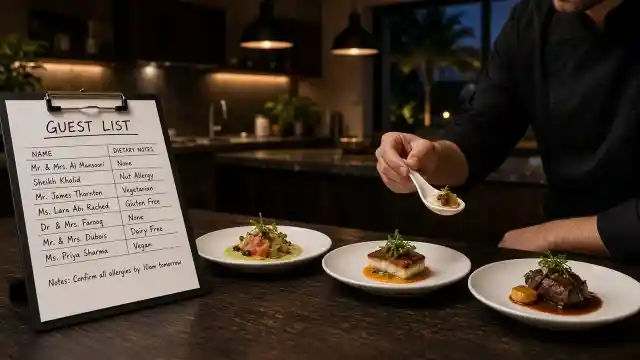
Attach dietary information to named guests rather than recording a loose total of alternative meals. Add table and seat references once the seating plan is agreed.
Use the same guest references across the seating plan, kitchen list and service briefing. If someone changes seats, tell the person directing service before the next course leaves the kitchen.
Work backwards from course service
Ask the chef what must happen before each dish can leave the kitchen. Record preparation, final cooking, plating and the handover to servers as separate actions where the distinction matters.
Do not assign standard intervals to every menu. A dish finished immediately before serving needs a different sequence from one prepared ahead and assembled at the last moment.
Add an owner and a release cue
Every action needs a responsible role and a clear trigger. For example, the first course can be released when guests are seated, dietary plates are identified and the service team is ready.
A target time is a planning aid; a release cue is permission to act. Record both so the team does not serve simply because the clock reaches the scheduled time.
Agree the exceptions
Decide who handles late guests, extended speeches, seat changes and delayed courses. Give the kitchen a named contact who can approve changes rather than several hosts issuing competing instructions.
Keep the latest running order in one shared document. Older versions should not remain in use on the evening.
What should your plated dinner running order checklist include?
Use a working table rather than a paragraph of instructions. Each row should describe an action that someone can complete, confirm or pause.
The template below is a planning framework, not a fixed timetable. Add agreed clock times after the chef and whoever directs service have reviewed the menu and venue.
| Stage | Action to record | Responsible role | Release cue or check |
|---|---|---|---|
| Venue access | Admit the team and receive equipment | Host or venue contact | Access arrangements confirmed |
| Kitchen setup | Check workspace, equipment and ingredients | Chef | Agreed facilities ready |
| Team briefing | Review menu, seats and dietary meals | Service lead and chef | Everyone has the current plan |
| Guest arrival | Welcome guests and monitor attendance | Host or designated greeter | Arrival updates reach service lead |
| Seating | Confirm places and any changes | Service lead | Guests seated; dietary seats checked |
| First course | Finish, plate and serve | Chef and service team | Kitchen and dining room both ready |
| Clearing | Remove used plates and reset as required | Service team | Guests finished; next course coordinated |
| Main course | Finish, plate and serve | Chef and service team | Speech finished; correct meals identified |
| Dessert or cake | Present and serve the agreed final course | Chef, host and service team | Presentation cue confirmed |
| Close | Complete the agreed clearing and handover | Designated team member | Host checks the agreed scope |
Write roles first, then add names when staffing is confirmed. The person directing service needs to know who can authorise a course, who communicates with the kitchen and who handles the host's requests.
Do not leave dietary checks inside a general instruction such as ‘serve dinner’. Give them a visible place in the running order and briefing.
Should you use fixed times or service cues?
Use agreed times to coordinate the evening and readiness cues to release food. Neither approach works well alone: a timetable without checks ignores conditions in the room, while an entirely flexible plan leaves speeches and kitchen preparation difficult to coordinate.
| Approach | Best for | Advantage | Limitation |
|---|---|---|---|
| Fixed-time schedule | Dinners with firm presentation or venue timings | Gives hosts and suppliers a shared sequence | Needs an agreed response when the event slips |
| Cue-led schedule | Informal dinners with flexible conversation | Connects service to guest and kitchen readiness | Requires clear communication and decision-making |
| Combined schedule | Plated dinners balancing hospitality and event commitments | Pairs target times with permission to serve | Needs both fields maintained in the same document |
Choose a combined schedule for a plated dinner with speeches or presentations. Write the target service time beside the readiness condition, then identify who gives the final instruction.
For example, ‘main course after the welcome speech’ is incomplete. The kitchen also needs to know who reports that the speech has finished and whether guests are seated before plating begins.
Why does a plated dinner running order vary?
The sequence should reflect the event you are hosting, not a generic banquet template. Review these factors before accepting a draft:
- Menu and finishing method: Ask which dishes need immediate finishing and which can be prepared ahead. Build the handover around the chef's answer.
- Kitchen and service route: Confirm workspace, equipment and the route from plating area to tables. Include doors, stairs or shared corridors that affect movement.
- Guest count and table layout: Give the chef and service lead the same attendance and seating information. Ask them to confirm the proposed service arrangement.
- Dietary requirements: Record named meals, preparation questions and how the correct plate reaches the correct guest. Do not assume every substitution follows the same sequence.
- Speeches and presentations: Place interruptions where the chef agrees they fit. Identify who signals the end of each programme item.
- Venue access and finish: Confirm arrival access, delivery arrangements and the agreed close. For a Dubai villa or apartment, ask the host or building contact about entry and unloading before setting team arrival times.
These details also shape the quotation. Ask whether staffing, equipment, setup, service and clearing are included or quoted separately; a running order cannot resolve a scope that has never been agreed.
How do you connect dietary requirements to service?
Give the chef the dietary brief before the menu is finalised. Distinguish allergies from preferences, and ask the chef to confirm what can be accommodated rather than treating an alternative dish as automatically suitable.
Your service copy should connect the guest's name, requirement, agreed dish and seat reference. Share the relevant instructions with those preparing and serving the meal, without circulating unnecessary personal information.
Before each course, the kitchen and service lead should confirm which plates are alternatives and where they are going. A place card alone is not a complete handover.
If a guest moves, update the service team immediately. Dietary meals follow the guest, not the original seat.
Where should speeches, cake and presentations go?
Place programme items between service phases, subject to the chef's approval. Avoid allowing a speech to begin after the kitchen has committed to finishing a course that needs prompt service.
Agree whether cake replaces dessert or follows it. The running order should identify the presentation cue, who brings it out, and who handles cutting and serving; do not assume these responsibilities are included.
For a corporate dinner, name the programme contact who communicates with the service lead. For a private celebration, give that responsibility to a host or trusted organiser who can make decisions without gathering the whole table.
Keep announcements separate from food release instructions. ‘The speaker is ready’ does not necessarily mean ‘the kitchen should plate the main course’.

What should you confirm with the chef and service team?
Send the draft running order with the menu, guest list and seating plan. Ask for corrections to the sequence before focusing on presentation or formatting.
myCHEF private dining is suited to households and businesses seeking vetted chefs for a hosted meal. Confirm the event-specific staffing and service scope alongside the menu; the chef's cooking role and the team's table-service responsibilities should be explicit.
Use this final review checklist:
- Does the menu match the latest guest and dietary information?
- Is the kitchen suitable for the agreed preparation and finishing work?
- Who supplies plates, cutlery, glassware and any additional equipment?
- Who seats guests, serves food, clears plates and manages programme cues?
- Who tells the kitchen about delays or changes?
- What setup, clearing and end-of-event tasks are included?
- Who approves the final running order and distributes updates?
These are confirmation questions, not assumed inclusions. A clear quotation and a clear running order should describe the same event.
What happens if guests arrive late or a course is delayed?
Agree a late-arrival approach before the evening. The host and chef should decide whether service waits, starts for seated guests or requires an adjusted sequence for the late guest.
If the timetable slips, update the next release cue first. Tell the kitchen, service lead and programme contact what changes; do not quietly move a speech while the chef continues working to the previous plan.
Ask the chef which parts of the menu can accommodate a pause and which need a decision before finishing begins. Avoid promising that every dish can simply wait.
Keep a short change record in the working document. The useful information is what changed, who approved it and which later actions are affected.
FAQ
What's the difference between a dinner menu and a running order?
A dinner menu lists the food; a running order coordinates preparation, seating, service, clearing and programme items. The running order also identifies who acts and what authorises each stage.
How do I decide when each plated course should be served?
Agree target times with the chef and add readiness cues for each course. Release food only when the kitchen, service team and dining room are ready for the agreed sequence.
Do I need a seating plan for a private dinner?
Use a seating plan when service depends on identifying guests, particularly for dietary meals. If guests choose their seats, confirm the actual positions with the service team before food leaves the kitchen.
Can a speech happen while the main course is being prepared?
Coordinate the speech with the chef before scheduling it alongside preparation. The running order should distinguish preparation that can continue from final cooking or plating that depends on the speech finishing.
Who should control the running order on the night?
Give operational coordination to a named service lead or event contact, with a clear route for host approval. The kitchen should receive changes through that agreed contact rather than conflicting requests.
What should I send myCHEF when planning a plated dinner?
Send myCHEF the date, location, guest count and service required, together with menu preferences and dietary requirements. Add speeches, cake plans, kitchen details and your desired finish so the event can be discussed against a clear brief.
Related guides
Finish with the release cue, not the clock
The most useful final check is to read only the release cues. If they do not tell the team how to move from guest arrival to the final clear, the running order still relies on assumptions.
For a tailored myCHEF private dining enquiry, share your date, location, guest count and service required. Include your menu preferences, dietary requirements and any speeches or cake presentation, then ask for the proposed service sequence and responsibilities to be confirmed with the quotation.
For an overview of food delivery and staffed event formats, see myCHEF catering services in Dubai.