By myCHEF Dubai Team|
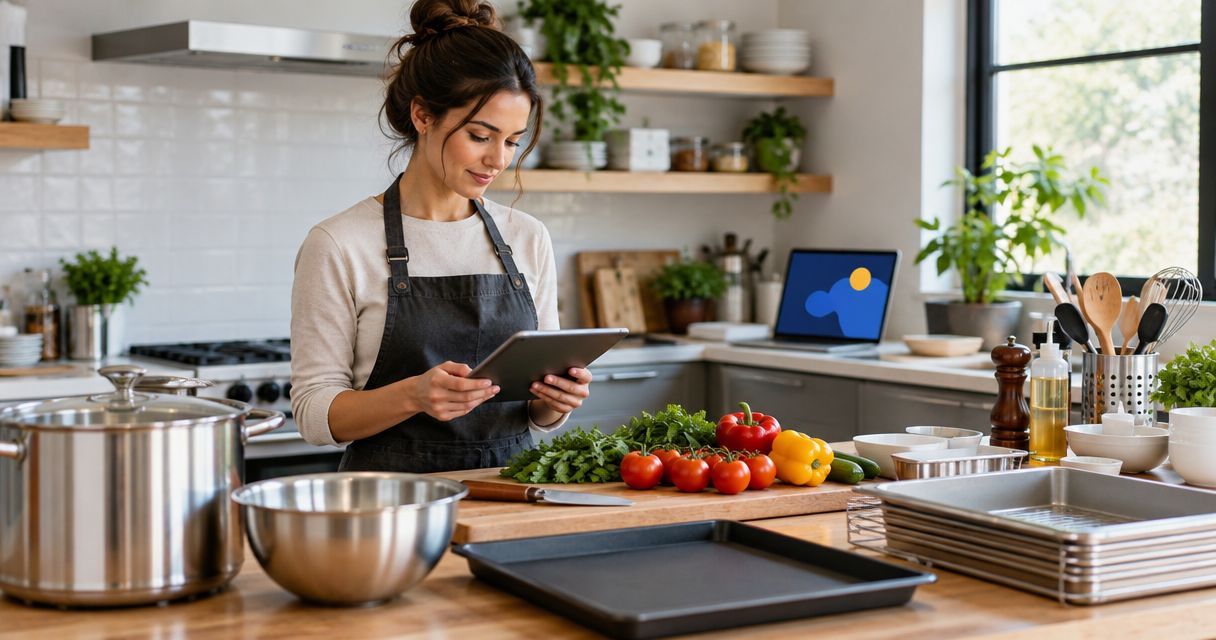
A home catering equipment checklist should cover cooking appliances, fridge space, preparation surfaces, serving equipment and washing-up arrangements. Check that each item works, fits the proposed menu and has a clear owner: you or the caterer. Confirm what arrives with the team, what needs hiring separately and what must remain available in your kitchen throughout service.
- Use a home catering equipment checklist to confirm cooking capacity, cold storage, serving equipment and clear-up responsibilities.
- myCHEF provides vetted chefs and event catering; confirm the equipment arrangements for your particular booking.
- Choose the service format before checking equipment: plated dining, buffets and drop-off meals need different setups.
- Send appliance photographs and a kitchen overview before agreeing the final menu.
What equipment should you check before home catering?
Check the kitchen against the menu, not against a generic shopping list. An oven that works for household meals still needs checking against the trays, dishes and cooking sequence planned for your event.
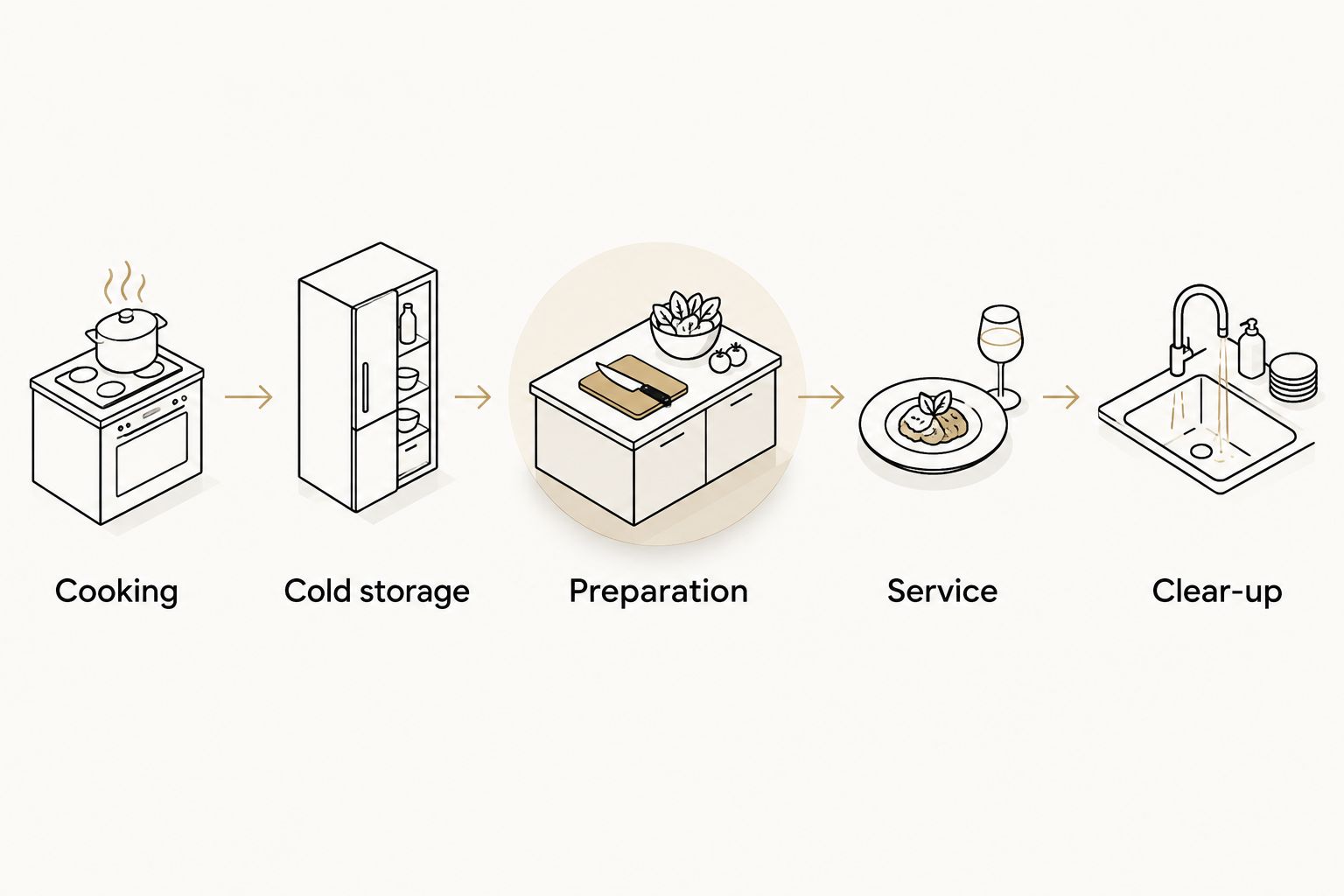
If you are deciding how much cooking should happen at home, the guide to private chefs for home dining in Dubai provides a related starting point. For the equipment brief itself, follow these checks in order:
- Cooking: identify the oven, hob and any other appliances the proposed menu needs. Confirm their condition and compatibility with the caterer's cookware.
- Cold storage: agree which ingredients, prepared dishes and desserts need refrigeration. Clear the required shelves before the team arrives.
- Preparation: identify clean worktops, suitable utensils and space to assemble dishes without blocking the cooking area.
- Service: confirm plates, cutlery, glasses, serving dishes, utensils and any equipment needed to keep food at the appropriate temperature.
- Clear-up: agree access to the sink, dishwasher, bins and a place for used equipment awaiting collection.
Record each item as supplied by the host, supplied by the caterer, hired separately or not required. Leave nothing assigned simply to whoever happens to arrive first.
Which service format are you preparing for?
Choose the meal format before you count plates or clear the fridge. A seated dinner needs a different arrangement from a buffet, and delivered food does not automatically remove the need for kitchen equipment.
The table below describes planning considerations, not standard inclusions in a catering package. Confirm the actual equipment and staffing in your proposal.
| Service format | Best for | Equipment to confirm | Advantage | Practical limitation |
|---|---|---|---|---|
| Plated dining | Hosts wanting dishes served to seated guests | Cooking appliances, plating surface, matching tableware and a route to the table | Keeps food service centred on the dining table | Requires space to assemble plates and coordinate service |
| Buffet | Hosts wanting guests to choose their dishes | Buffet surface, serving vessels, utensils and suitable temperature-control equipment | Gives guests a choice at the serving point | Uses floor or table space and needs an agreed replenishment arrangement |
| Drop-off catering | Hosts arranging their own presentation and serving | Receiving space, storage, reheating equipment if required, and serving utensils | Separates food delivery from an on-site cooking service | Leaves the host responsible for tasks not included in the delivery agreement |
For delivery-led events, the drop-off catering guide is a useful next read. Ask specifically whether the food arrives ready to serve, ready to reheat or with another finishing requirement.
What should you check on the oven and hob?
Share photographs of the appliances, including controls and any visible model details. Tell the caterer about faults, unreliable settings or equipment you do not normally use. An appliance listed in a property inventory is not proof that it is ready for event service.
Check the usable oven space against the proposed cookware. Shelf positions, tray depth and door clearance matter when several dishes need finishing in the same appliance. Ask which dishes depend on the oven and whether their cooking schedules overlap.
For the hob, confirm the type and available cooking zones. Induction cookware must be compatible with the appliance; do not assume every pan brought to the kitchen will work. Keep controls and surrounding surfaces accessible rather than placing decorations or serving dishes beside them.
Do not approve a menu that depends on unconfirmed equipment. If the kitchen cannot support a dish, discuss a different preparation method or menu choice before the event.
How much fridge and freezer space should you clear?
Ask the caterer what needs cold storage on arrival and during service. Include desserts, garnishes and ingredients awaiting preparation, not just the main dishes. Drinks also need an agreed location so they do not occupy shelves reserved for food.
Send a photograph of the available fridge interior after clearing it. A description such as a large fridge tells the team less than a clear view of the usable shelves and drawers. Mention any existing household food that must stay in place.
Freezer space matters only when the menu or drinks plan requires it. Confirm whether ice, frozen ingredients or desserts are part of the brief, then allocate space accordingly. Do not assume the caterer brings a separate cold-storage solution.
Ask for handling and storage instructions for anything left after service. Agree the storage plan before arrival, rather than trying to rearrange a full fridge while food is being unloaded.
What preparation space and utensils are needed?
Identify the worktop that the chef can use throughout preparation. Clear household paperwork, small appliances and decorative items from that area. Keep a separate location for guests' belongings so the preparation surface stays available.
Confirm who supplies knives, chopping boards, mixing bowls, measuring equipment, pans and specialist tools. The list should follow the menu: a baking task, a carved dish and a cold platter do not need identical equipment. Avoid purchasing utensils until the caterer has identified a genuine gap.
Dietary requirements belong in this conversation. Explain allergies and other restrictions before menu approval, then ask how preparation equipment and serving utensils will be managed. Do not treat separate utensils alone as confirmation that a meal is suitable for someone with an allergy.
For myCHEF event catering, include the kitchen description and dietary brief in the same enquiry. That keeps the proposed meal and the practical cooking arrangements connected without assuming a particular equipment package.
What serving equipment should you count?
Count tableware against the final menu and serving style. A main-course plate does not replace a bowl for soup or a dessert dish. Include the utensils guests need as well as the equipment used to serve them.
For a buffet, assign a serving utensil to each dish and identify where it rests between uses. Check that serving vessels fit the available surface without crowding guests' plates or blocking access. Discuss who monitors the buffet and replenishes food.
For seated dining, agree where finished plates wait before they leave the kitchen. The route to the table should remain clear of bags, furniture and arriving guests. If staff are required to serve, confirm that role explicitly rather than assuming the chef also covers it.
Glassware, water service and beverage equipment need their own check. Establish who provides them and who handles refilling, clearing and washing. Food preparation and drinks service are separate responsibilities unless the proposal combines them.
What changes for a garden, terrace or outdoor setup?
An outdoor serving area adds a journey between the kitchen and the guests. Walk that route before the event and identify steps, narrow doorways and surfaces that become crowded once furniture is arranged.
Confirm where food will be prepared, held and served. Shade, exposure and access to suitable equipment belong in the plan, but an outdoor table is not a substitute for an agreed food-handling arrangement. Ask the caterer to specify what the proposed setup requires.
Discuss power access if the service uses electrical equipment. Identify sockets and ask for the equipment requirements before agreeing their placement. Do not improvise connections or decide electrical suitability from a photograph alone.
A barbecue menu needs a separate equipment conversation. Confirm whether the cooking equipment is supplied, where it can be used and what preparation space supports it. The presence of an outdoor grill does not establish that it suits the menu.
Why does the home catering equipment checklist vary?
The equipment list changes because the menu and service create different tasks. Use these factors to explain your event brief, rather than asking for a universal catering kit:
- Menu: cooking methods determine the appliances, pans, preparation tools and serving vessels required.
- Guest count: the number of guests affects portions, tableware and the volume of food handled during service.
- Service format: plated meals, buffets and delivered dishes divide preparation and serving responsibilities differently.
- Kitchen layout: usable worktops, appliance access and the route to the dining area shape the setup.
- Dietary requirements: restrictions affect menu design and the questions needed about preparation and serving equipment.
- Location: an indoor dining room and an outdoor terrace create different access and equipment-placement requirements.
Confirm equipment against the final brief, not an early menu idea. Recheck the list if the guest count, dishes or service location changes.
What should the catering proposal say about equipment?
A useful proposal separates food preparation from the equipment and tasks supporting it. Ask for a written list that identifies what comes with the service and what remains your responsibility.
Check these points before accepting the arrangements:
- Which cooking and serving items the caterer brings.
- Which household appliances and utensils the team expects to use.
- Whether tableware, glassware, linen and furniture are included or excluded.
- Whether any equipment requires a separate hire arrangement.
- Who sets up, serves, clears and washes up.
- Who removes hired or supplied equipment, and when collection takes place.
Do not read event catering as an automatic promise of every item on that list. Equipment hire, additional staffing and collection arrangements belong in the written scope when required.
myCHEF home catering suits households seeking vetted chefs for a private event. Confirm the practical inclusions for your booking so the service matches both your menu and your home.
Should you buy equipment before the caterer visits?
Confirm the menu and supplied equipment before buying anything. Share photographs and an inventory first, then ask whether any gaps require purchase, hire or a change to the service format.
Buying duplicate serving dishes does not resolve a shortage of preparation space. Deal with the actual constraint rather than building a larger collection of kitchenware.
Can you host catering in a small kitchen?
A small kitchen needs a menu and workflow designed around its usable space. Show the caterer the appliances, worktops and storage, and explain where guests will gather.
Ask which tasks happen on site and which equipment must remain accessible. The decision should follow the proposed service, not the kitchen's appearance alone.
FAQ
What should be on my home catering equipment checklist?
Include cooking appliances, cold storage, preparation surfaces, utensils, tableware, serving equipment and washing-up arrangements. Assign responsibility for every required item before the event.
Does a home caterer bring all the cooking equipment?
Equipment provision depends on the agreed service scope. Ask for a written list of what the caterer brings and which household appliances or utensils the team expects to use.
Do I need to empty my fridge before catering at home?
Clear the space agreed with your caterer rather than assuming the entire fridge must be emptied. Confirm storage for ingredients, prepared dishes, desserts and drinks before arrival.
What equipment do I need for a buffet at home?
Confirm a suitable buffet surface, serving vessels, utensils and any temperature-control equipment required by the menu. Also agree who replenishes food and clears the serving area.
Can the chef use my induction hob?
The chef needs cookware compatible with your induction hob. Share the appliance details and confirm cookware arrangements before the menu depends on that hob.
Who handles washing up after home catering?
Washing-up responsibilities must be stated in the service agreement. Confirm kitchen cleaning, used tableware, waste and equipment collection separately so each task has an owner.
What kitchen information should I send with my catering enquiry?
Send appliance photographs, a kitchen overview, available fridge space and details of the serving area. Include your date, location, guest count, preferred service and dietary requirements.
Related guides
Prepare a useful catering enquiry
Send myCHEF your date, Dubai location, guest count and required catering service, together with photographs of the kitchen and serving area. Include dietary requirements and any appliance limitations. Ask for the equipment responsibilities to be confirmed alongside the menu, so you know exactly what to prepare before the team arrives.