
Begin with the current official requirements
Ask the relevant authority which approvals, programme registrations and food-service requirements apply to your school and the proposed operation. Use the latest official material and confirm its scope, rather than treating an older article or supplier claim as evidence of compliance.
Bring these questions to your school catering enquiry so the proposed scope and supporting documents can be reviewed together.
Confirm the provider’s scope
Check the legal entity carrying out the food service, the facilities it will use and the approvals relevant to preparation, transport and on-site operations. Any claimed certification should identify the holder, issuing body, scope and validity.
Review the menu and dietary process
Compare the proposed menu cycle with the current school policy and any applicable official criteria. Ask how ingredients, portions, dietary requirements and individual meal labels are managed. Specific restrictions should be confirmed from the rules that apply to the institution.
For kitchen-control questions, read our nursery allergen planning guide and adapt the discussion to the school’s policy.
Assess the daily operation
Document delivery and service windows, receiving checks, storage, equipment, cleaning and the staff responsible for each stage. The arrangements should suit the actual kitchen or canteen, student numbers and school timetable.

Keep a record of the decision
Retain the current requirements, provider documents, agreed menu and written responsibilities with the contract. Record how changes and incidents are reported and when the documents will next be reviewed. A proposal should be confirmed only when the required evidence and operational arrangements are in place.
Our guide to meal-service responsibilities helps organise ownership of preparation, receiving and service.
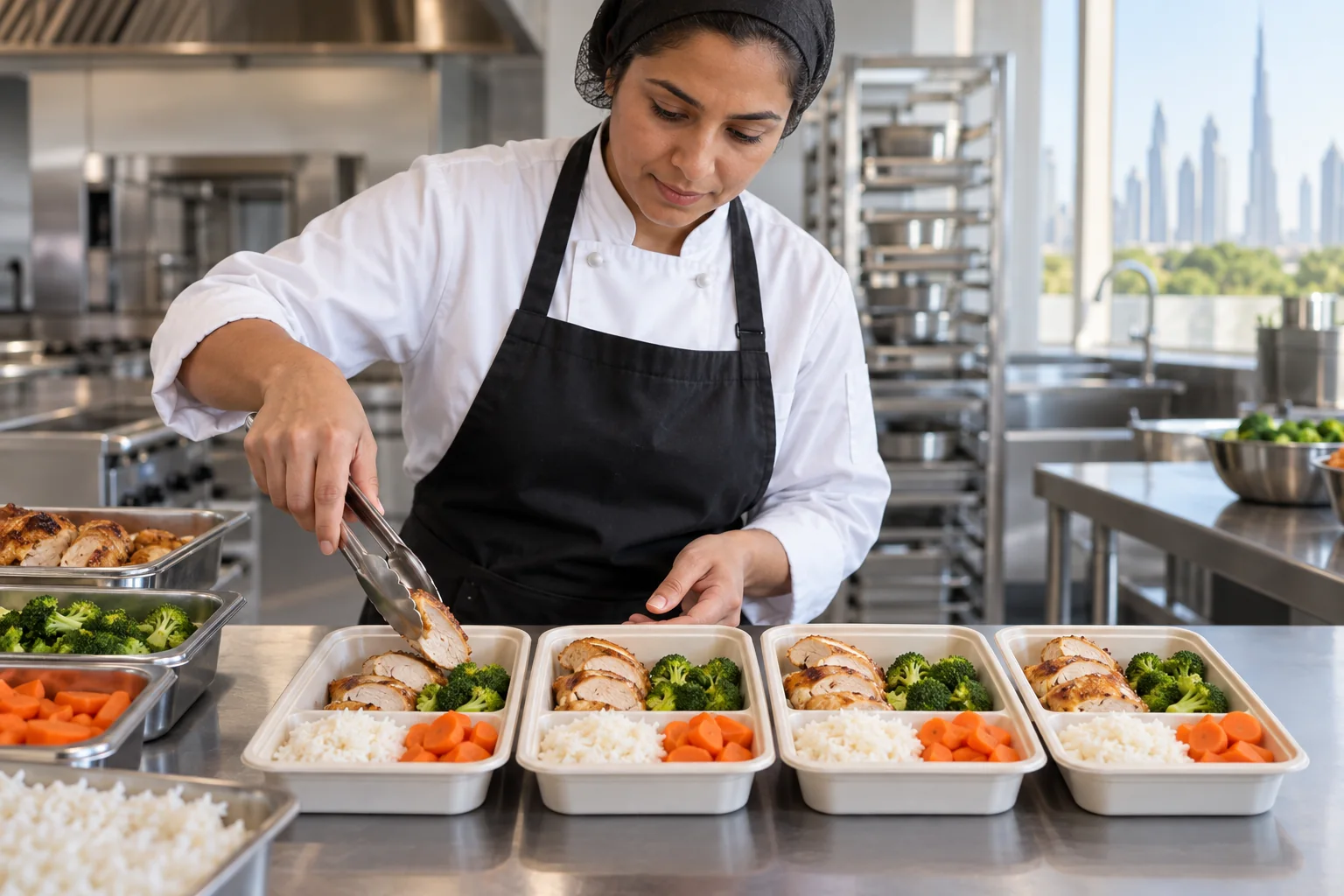
Build a review pack for the proposed service
Put the operational brief beside the provider’s proposal before comparing suppliers. Record the school sites, age groups, expected meal numbers, term dates, kitchen facilities and proposed service model. A delivered lunch service and an on-site canteen may involve different responsibilities; ask the provider to explain the scope of its offer rather than assuming the same documents cover both.
Create a question list with a named school contact for each topic: purchasing, facilities, menu review, parent communication and daily service. Mark each answer as confirmed, awaiting evidence or outside the proposed scope. This makes open questions visible before the school makes a decision.
Walk through an ordinary school day
Use the actual timetable to discuss the proposed handover. Where does the delivery arrive? Who is available to receive it? When do different groups eat? What happens when a class is on a trip or attendance changes? Ask how the provider would communicate a delayed delivery, menu substitution or missing dietary information.
Include the school’s own facilities team in questions about access, equipment, storage and cleaning responsibilities. The purpose of this walkthrough is to uncover assumptions in the proposal, not to replace the school’s applicable food-safety requirements or specialist review.
Turn the review into a clear enquiry
For school catering, share the agreed service scope, current policies and outstanding questions with the provider. Request an itemised proposal covering the food, staffing, equipment and operational responsibilities under discussion. Keep the approved version with the school’s records so later changes can be assessed against the same brief.