By myCHEF Dubai Team|
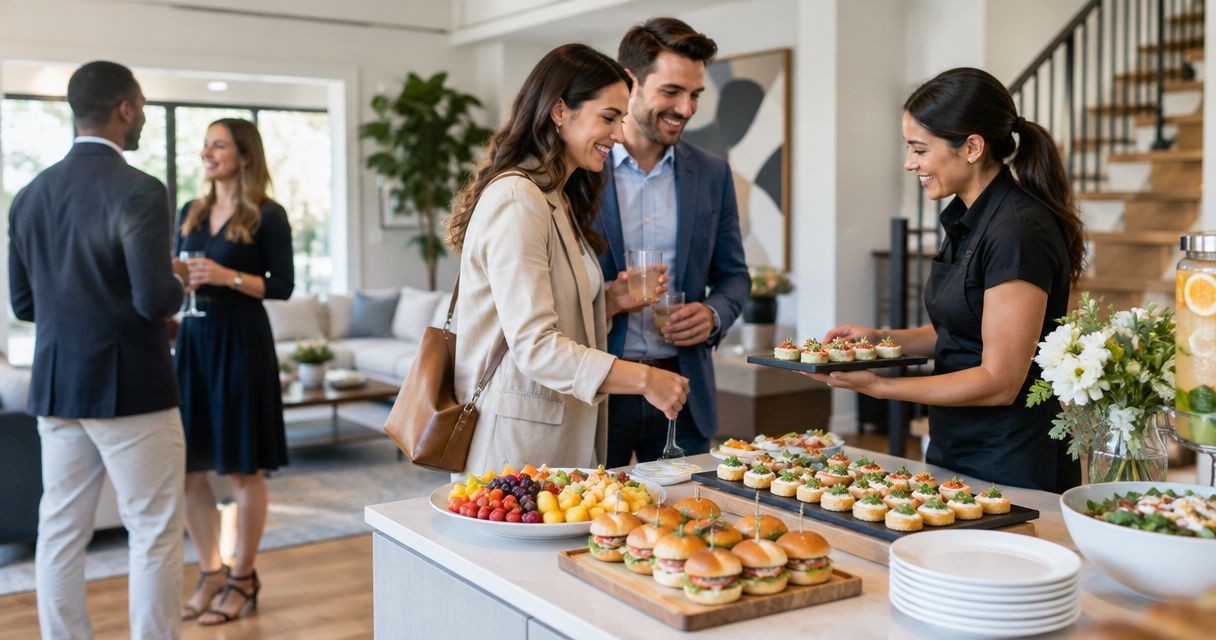
A real estate open house catering brief is a written plan for refreshments, staffing and guest movement that keeps property viewings—not food service—at the centre of the event. Your guests arrive in waves, agents need space for conversations, and the property must remain ready to show. myCHEF provides vetted chefs for event catering; this checklist explains what to specify before requesting a proposal.
- Your real estate open house catering brief should prioritise viewing routes, staggered arrivals and discreet refreshment service.
- myCHEF catering suits property teams seeking vetted chefs for an event.
- Choose passed canapés for roaming guests; choose staffed stations when refreshments need a fixed location.
- Specify guest estimates, access arrangements, dietary requirements and clearing responsibilities before comparing proposals.
Why catering matters for real estate open houses
An open house is not a seated reception. Buyers, brokers and invited guests move through the property at different speeds, while agents explain its features and answer questions. Catering needs to fit around that movement rather than create a second itinerary.
The practical constraint is shared space. An entrance can become a queue, a kitchen can become a preparation area, and a terrace can become a refreshment stop. Keep the spaces you want guests to inspect separate from the spaces the catering team needs to operate.
For a 2026 open house, write the brief around the actual viewing schedule and property layout. A villa with several reception areas needs a different service plan from an apartment where the kitchen and living room share one space.
The outcome to plan for is straightforward: guests can accept a drink, speak to an agent and continue the viewing without navigating trays, equipment or discarded glasses.
Build your real estate open house catering brief
1. Define the viewing schedule and guest pattern
Start with your invitation list, RSVP responses and agent appointments. A shared document is enough. Separate the total number expected across the event from the number likely to be inside at once; those figures answer different catering questions.
For illustration, an open house expecting 40 guests across 2 hours is not the same as a reception seating 40 guests together. The caterer needs to know whether those visitors have appointments, arrive freely or attend a presentation at a fixed time. These are planning examples, not recommended capacities.
Give your 2026 event brief one named owner who can confirm changes. Avoid several agents sending different guest estimates to the catering team.
- Record the event date, property address and viewing window.
- Separate invited guests, confirmed guests and the working estimate.
- Describe appointments, walk-ins and any fixed presentation time.
- Identify the busiest expected arrival period without treating it as a confirmed turnout.
- Name the person authorised to approve changes.
2. Map the route before choosing refreshments
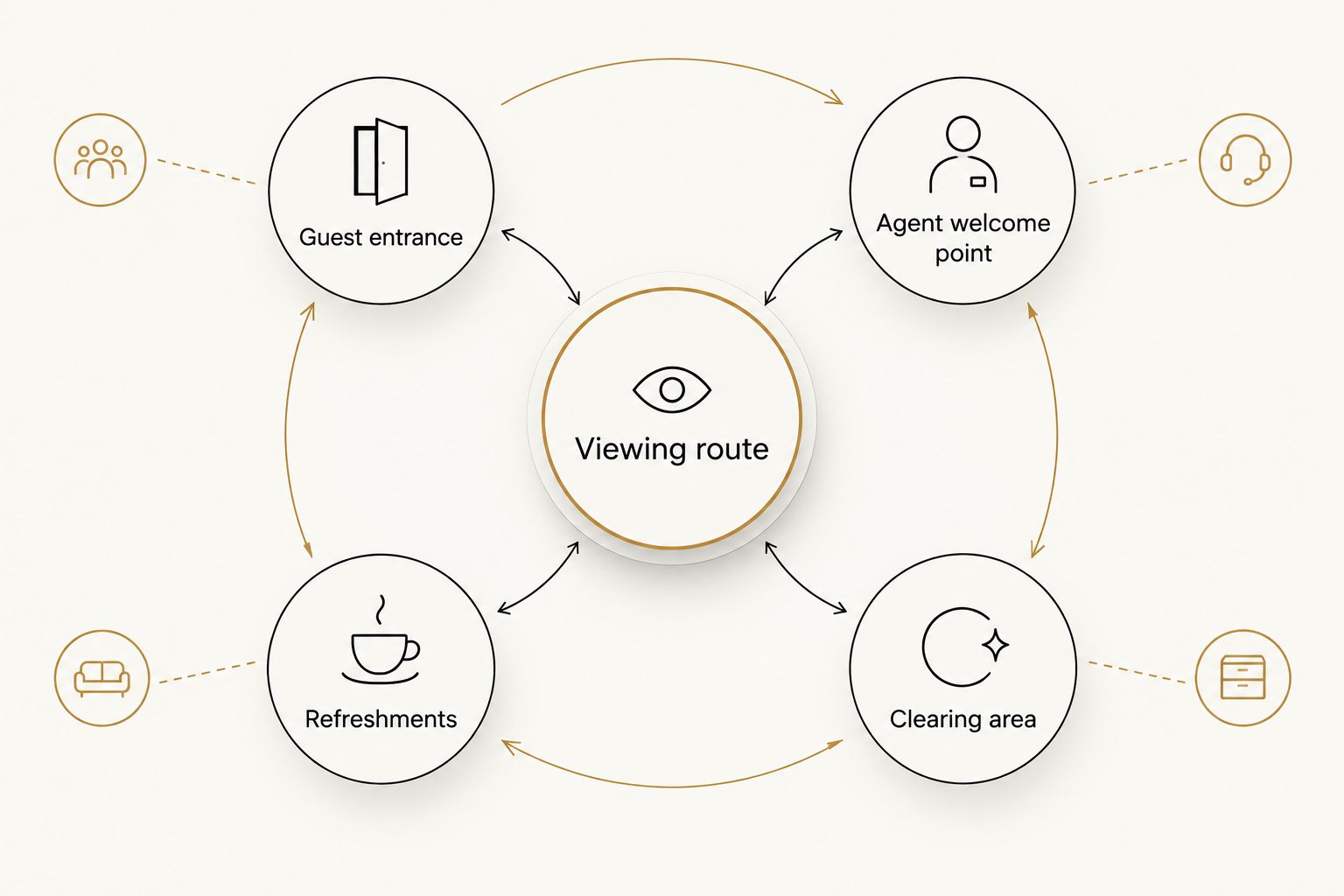
Walk the property as a visitor would: entrance, introduction, viewing rooms, refreshments and exit. Use a floor plan or annotated photographs to mark where guests stop and where staff can work. This manual check is more useful than choosing a menu first.
Keep the welcome point clear of food collection. Guests should not have to queue for a drink before meeting the agent, and an agent should not have to conduct a property introduction beside a clearing station.
If the kitchen is a selling feature, do not assume it can become the catering workspace. Ask whether preparation can happen elsewhere and identify which cupboards, appliances and surfaces are unavailable.
- Mark the guest entrance and agent welcome point.
- Identify the viewing route and spaces that must remain accessible.
- Place refreshments away from narrow doorways and circulation points.
- Allocate a separate preparation and clearing area.
- Mark staff access, waste collection and equipment storage.
A simple route sketch lets the agent and caterer discuss the same layout. The important distinction is between where visitors pause and where staff replenish or clear.
3. Choose the service format around the property
Compare formats yourself before requesting proposals. Decide whether visitors should collect refreshments, receive them while moving around or sit down for a scheduled presentation. Each choice changes staffing, equipment and the space required.
Then ask myCHEF to respond to that brief with an event-catering proposal. Its stated services include corporate events and catered celebrations; your enquiry should establish the arrangements for this particular property rather than assume a standard open-house package.
myCHEF catering suits property teams seeking vetted chefs for an event. Confirm the service scope separately: chef provision does not, by itself, define waiting staff, furniture, crockery or post-event cleaning.
- Choose one primary format rather than combining several without a purpose.
- State whether guests will stand, roam or sit during refreshments.
- Ask who serves drinks, replenishes food and clears used items.
- Confirm whether preparation happens on site or before arrival.
- Request an equipment list that matches the property’s available space.
Compare catering formats for an open house
Use this comparison to select a format, not to assume what any supplier includes. Each option has a practical advantage and a limitation that belongs in your brief.
| Option | Best for | Practical advantage | Key limitation |
|---|---|---|---|
| Drop-off refreshments | Property teams able to manage service themselves | Keeps supplier involvement focused on delivery and agreed setup | Your team must own replenishment, clearing and any required food holding |
| Passed canapés | Guests moving between viewing spaces | Offers refreshments without requiring a food queue | Service staff need clear routes and access to replenishment |
| Staffed refreshment station | Events with a suitable pause point | Gives guests one identifiable place to collect food and drinks | A poorly placed station creates a gathering point in the viewing route |
| Seated light service | Scheduled broker briefings or presentations | Aligns refreshments with a defined programme | Seats and tables occupy space that visitors might otherwise inspect |
For further questions to ask when comparing a roaming reception format, see the guide to cocktail-party catering options in Dubai. Use the service-format discussion to inform your open-house brief, rather than treating a party setup as an automatic fit for a property viewing.
4. Design a menu that supports conversation
Draft a short menu outline before asking for detailed suggestions. Focus on how guests will eat: standing, holding property information, speaking to an agent or moving into another room. Food that needs a table and cutlery creates a different experience from a small canapé.
An illustrative menu could include vegetable tartlets, small savoury sandwiches, chicken skewers served with suitable utensils, and individual sweet bites. This is a hypothetical planning example, not a myCHEF menu or confirmation of available dishes.
Ask the caterer to explain portion planning against your attendance pattern. A guest estimate alone does not establish how much food is needed; the event length, service timing and whether refreshments replace a meal also matter.
- Describe refreshments as light bites, substantial food or a meal.
- Request items suited to the intended standing or seated format.
- Identify vegetarian, vegan and other requested dietary options.
- Share allergy information and ask how preparation and labelling will be handled.
- Confirm utensils, napkins, serving vessels and disposal arrangements.
5. Confirm access, staffing and working facilities
Create an access note using information from the property manager or building contact. Do not assume a delivery team can park at the entrance, use a particular lift or enter before the agent arrives. Confirm those arrangements for the specific location.
List the facilities available to the caterer: preparation surfaces, refrigeration, water, power and any appliances you authorise for use. If something is unavailable, say so. A furnished kitchen is not permission to use every item in it.
For a 2026 event involving a terrace or garden, request a suitable outdoor service plan and an agreed indoor alternative. Ask the supplier how it will manage food holding and replenishment rather than leaving dishes outside without a defined service arrangement.
- Confirm delivery access, parking instructions and the responsible contact.
- Record lift access, stairs and the equipment-carrying route.
- List approved preparation areas, appliances and utilities.
- Confirm staffing roles, arrival times and departure arrangements.
- Assign waste removal, equipment collection and cleaning responsibilities.
6. Compare proposals against the same written scope
Send each caterer the same brief. Otherwise, you are comparing different events: one proposal might cover food delivery, while another includes service staff, equipment and clearing. The headline total cannot explain those differences.
For your 2026 proposal comparison, separate menu, personnel, equipment, transport, setup and end-of-event duties. Ask suppliers to identify exclusions and explain the process for changes to attendance or service timing. Read the terms supplied rather than assuming a common policy.
The main price drivers to discuss are menu complexity, food quantity, staffing, equipment, access and service duration. Request a current tailored quotation; do not use a general catering article as a rate card.
- Check that every proposal uses the same guest estimate and event window.
- Compare food quantities and service format, not menu names alone.
- Identify included staff roles and equipment.
- Ask for exclusions, optional items and change terms in writing.
- Confirm who handles clearing, collection and the final property check.
Use a brief the agent and caterer can share
Keep the final document practical. A supplier should be able to understand the event without reconstructing details from messages, photographs and separate conversations. Attach the route sketch and identify which information is confirmed.
Here is an illustrative brief outline for a 2026 event lasting 2 hours with 40 expected visitors. Replace the example figures with your own estimates; they are not staffing or portion recommendations.
- Event purpose: property viewings with light refreshments, not a seated meal.
- Attendance: 40 expected visitors across the viewing window; peak attendance to be discussed.
- Guest flow: agent welcome first, property tour next, refreshments at an agreed pause point.
- Service: request a proposal for passed canapés or a staffed station.
- Property protection: identify restricted surfaces, rooms and appliances.
- Dietary needs: attach confirmed requests and allergy information.
- Access: provide the building contact, delivery route and setup window.
- Close: define clearing, equipment collection and handover responsibilities.
Ask the supplier to flag unresolved decisions in its response. A useful proposal should make the remaining questions visible before you approve the event.
Common mistakes property teams make
Treating total attendance as simultaneous attendance
A rolling open house needs an arrival pattern, not just a guest total. Explain when visitors are expected and whether appointments overlap. That lets the supplier discuss replenishment and service against the actual programme.
Turning the showcase kitchen into a back-of-house area
Preparation equipment, packaging and used dishes compete with the room you are selling. Decide which kitchen areas remain available for viewings and where catering work happens instead.
Leaving clearing to whoever notices
An agent explaining a property cannot also monitor every glass and plate. Assign clearing explicitly, whether the catering proposal includes it or your team takes responsibility.
Choosing a menu before choosing the service format
A menu designed for seated dining does not automatically suit guests holding brochures and moving between rooms. Set the format first, then ask for suitable dishes and presentation.
Assuming a quotation includes the property handover
Food service, washing up, waste removal and restoring furniture are separate tasks. Agree who handles each one and define what the final inspection covers.
FAQ
What should a real estate open house catering brief include?
Include the date, location, viewing window, guest estimate, arrival pattern, service format, dietary requests and access arrangements. Add a route sketch and assign setup, replenishment, clearing and equipment collection.
What is the best catering format for guests who arrive at different times?
Passed canapés and staffed refreshment stations both support staggered arrivals when their service routes are planned. Choose passed service for roaming guests and a station when the property has a suitable pause point outside the viewing route.
Is drop-off catering enough for a property open house?
Drop-off catering fits an open house when your team can manage replenishment, clearing and the agreed food-holding arrangements. Confirm delivery, setup and equipment responsibilities rather than assuming those tasks are included.
How much does open-house catering in Dubai cost?
Request a tailored quotation based on the menu, guest estimate, service duration, staffing, equipment and access. Compare proposals using the same brief and ask each supplier to identify inclusions and exclusions.
Should the caterer use the property's kitchen?
Use the property's kitchen only within an agreed plan that preserves access for viewings. Confirm approved surfaces, appliances, refrigeration and preparation areas before the event.
How do I include dietary requirements in the brief?
List confirmed dietary requests and allergy information separately, then ask the caterer to explain preparation, labelling and service arrangements. Do not treat a dietary menu label as confirmation that every allergy requirement has been addressed.
What should I send myCHEF for an open-house catering enquiry?
Send myCHEF the date, property location, expected guest count, viewing window and service required. Include the arrival pattern, dietary requests, available facilities and any building-access restrictions so the proposal responds to the event.
Finish with the final walk-through
Walk the guest route with the refreshment position marked before approving the setup. A food station can fit comfortably in a room and still obstruct the doorway visitors need. Check movement, not just floor space.
For a tailored myCHEF enquiry, send the date, location, guest count and service required. Include your viewing schedule and route sketch so the catering discussion starts with the property, not just the menu.