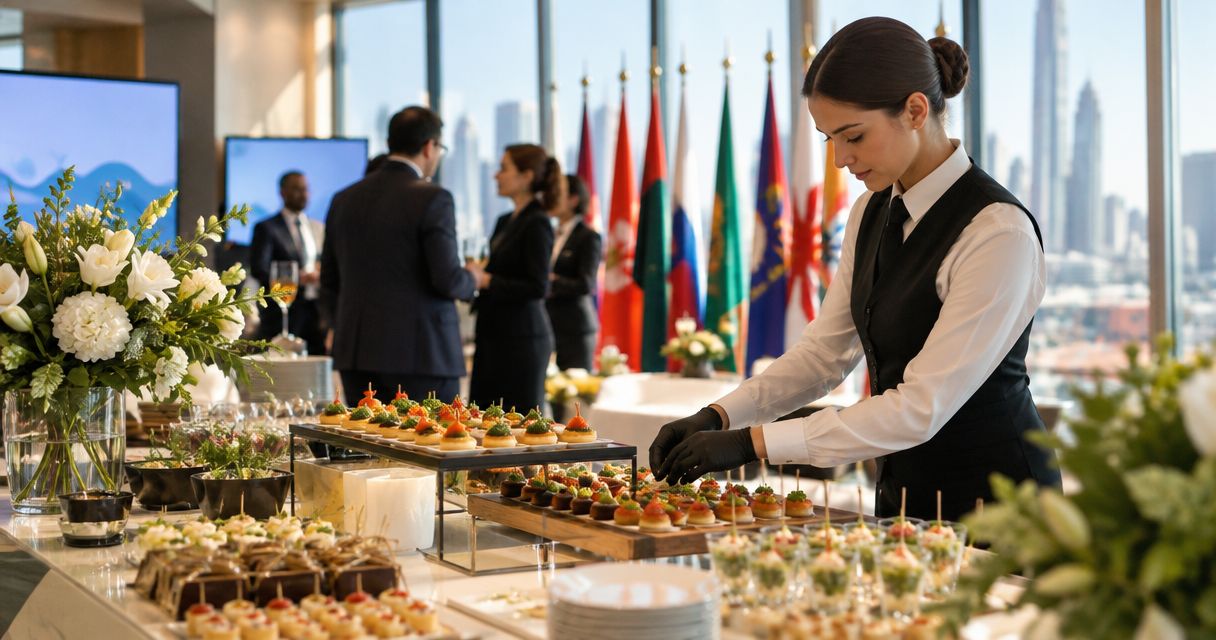
By myCHEF Dubai Team|
An embassy event catering brief in Dubai is a written plan for an embassy organiser that defines food, access and service responsibilities so the reception or dinner runs to the agreed programme. Start with the venue’s instructions, then specify the guest count, menu, staffing and clearance arrangements. Keep catering decisions separate from security and protocol approvals; the organiser must identify who authorises each.
- An embassy event catering brief Dubai organisers can use starts with approved access arrangements, not menu selection.
- myCHEF catering suits business-event organisers seeking a vetted-chef service; confirm the venue-specific scope before appointing.
- Choose plated dining, canapés or a buffet around the programme, available space and service responsibilities.
- Record dietary requirements, approval owners and clearance arrangements in the same working brief.
Why the access brief matters as much as the menu
An embassy reception brings catering into a setting where the host controls entry, movement and the event programme. Your brief should tell the caterer what the venue permits rather than ask the catering team to interpret security or diplomatic protocol.
A menu approval is not an access approval. Treat them as separate decisions, with named contacts and written confirmation. A chef needs practical instructions about where to unload, prepare and serve; the host needs control over when those activities happen.
For a broader supplier-selection question, the corporate event catering comparison guide provides a related starting point. This checklist addresses a narrower task: giving the selected caterer enough operational detail to prepare a proposal and service plan.
Build the brief before requesting proposals
Use a shared document or spreadsheet first. Give every supplier the same information, and distinguish confirmed arrangements from questions awaiting the venue’s answer. That makes proposals easier to compare without assuming that similar menus include similar work.
Define the occasion and approval owners
Describe the purpose of the event before choosing dishes. A standing reception, a working lunch and a seated diplomatic dinner require different service decisions, even when the guest count is identical.
Record who approves the menu, who confirms access and who directs service on the day. These responsibilities need not belong to the same person. Appoint 1 approval contact to consolidate the final brief, while retaining the specialist contacts the caterer needs.
Include the atmosphere you want: quiet service during discussion, circulating refreshments during introductions, or a meal centred on a seated programme. Describe the required behaviour rather than relying on words such as formal or premium.
Close this part of the brief with:
- Event purpose, date and venue address.
- Host contact and final approval contact.
- Menu approver and venue-access contact.
- Reception, lunch or dinner format.
- Areas available to catering staff and guests.
- Photography and confidentiality instructions supplied by the host.
Confirm the entry and unloading arrangements
Ask the venue contact for its actual access process. Do not assume another embassy’s arrangements apply, or that a previous event’s permissions remain valid. Keep sensitive information within the communication channel approved by the host.
Specify the arrival point and route from unloading to the preparation area. Confirm whether equipment needs to pass through lifts, stairs or restricted corridors. An address alone does not tell the team how to reach the service space.
Ask the caterer what staff, vehicle and equipment information it needs to provide. Then agree the submission deadline with the venue. Avoid promising admission until the responsible venue contact has confirmed the process.
Record these access details:
- Approved entrance and unloading location.
- Required staff and vehicle information, as specified by the venue.
- Submission deadline and recipient.
- Equipment delivery and collection arrangements.
- Waiting procedure if entry is delayed.
- Venue contact authorised to resolve arrival questions.
Match the service format to the programme
Start by marking the moments when food should arrive and when service should stop. A speech, presentation or seated discussion needs a different rhythm from an open reception. Choose the format after reviewing that programme.
Canapés support a standing event but need a circulation plan. A buffet gives guests choice but needs a clear serving route. Plated dining gives the organiser control over course timing but requires seating and an agreed method for identifying dietary meals.
myCHEF provides vetted chefs and event catering for businesses. Use that service as a route to a tailored proposal, not as a substitute for your venue brief. Ask which format the proposed team can deliver within your access, space and timing constraints.
Specify the following:
- Standing, buffet or seated service.
- Guest arrival and first-service time.
- Speeches or activities during which service pauses.
- Food and drink service responsibilities.
- Table layout or guest circulation route.
- Procedure for changes to the programme.
Reconcile guest counts and dietary requirements
Keep 2 headcounts in the working brief: expected attendance and the number the host ultimately approves for catering. Label each clearly. Ask the supplier when the catering count needs to be confirmed rather than treating a planning estimate as a final instruction.
Collect dietary requirements through the host’s chosen process. Distinguish preferences from allergies and other restrictions, and agree how the relevant information reaches the chef and service team. Do not share personal details more widely than necessary.
For a seated dinner, connect dietary meals to the seating plan. For standing service, agree labels and staff briefing. Neither a dish name nor a broad cuisine description is enough to establish suitability for an individual guest.
Complete this dietary section:
- Expected attendance and approved catering count.
- Dietary requirements and the contact confirming them.
- Ingredient questions requiring the caterer’s response.
- Dietary meal identification or labelling method.
- Substitution approval process.
- Confirmation deadline agreed with the supplier.
Approve the menu and kitchen arrangements together
Review the menu against the venue’s facilities. Ask what preparation happens before arrival, what happens on site and what equipment the proposed dishes require. Do not approve a menu independently of the space needed to deliver it.
Provide a factual kitchen description or arrange a venue discussion. Identify available preparation surfaces, refrigeration, water, power and washing-up facilities. Let the caterer confirm what is suitable and what additional equipment belongs in the proposal.
For outdoor service, ask the venue and caterer to agree a workable alternative if conditions prevent the intended setup. Keep this as a planning instruction, not an assumed inclusion. The host should approve any change in service location.
Confirm these menu and facility details:
- Proposed dishes and dietary alternatives.
- On-site preparation and finishing requirements.
- Available kitchen facilities and equipment.
- Equipment supplied by the caterer or venue.
- Approved service location and alternative arrangement.
- Person authorised to approve menu substitutions.
Assign staffing and equipment responsibilities
Write down who performs each task. Cooking, serving, clearing, washing up and coordinating the venue are separate responsibilities. A proposal that includes food does not automatically answer all of them.
Request a role-based staffing plan rather than imposing an unsupported staff-to-guest ratio. Ask the supplier to explain how the proposed team will deliver the chosen menu and format. Then check it against service areas, programme pauses and clearance requirements.
Ask myCHEF to separate the proposed catering scope from responsibilities retained by the host or venue. The value is a clear division of work; the limitation is that any venue-specific requirement still needs explicit agreement.
Allocate these responsibilities:
- Cooking and food preparation.
- Guest-facing service and dietary meal identification.
- Tableware, linen and serving equipment.
- Drinks provision and service, where requested.
- Clearing, washing up and waste removal.
- Event-day coordination and escalation.
Issue the final service run sheet
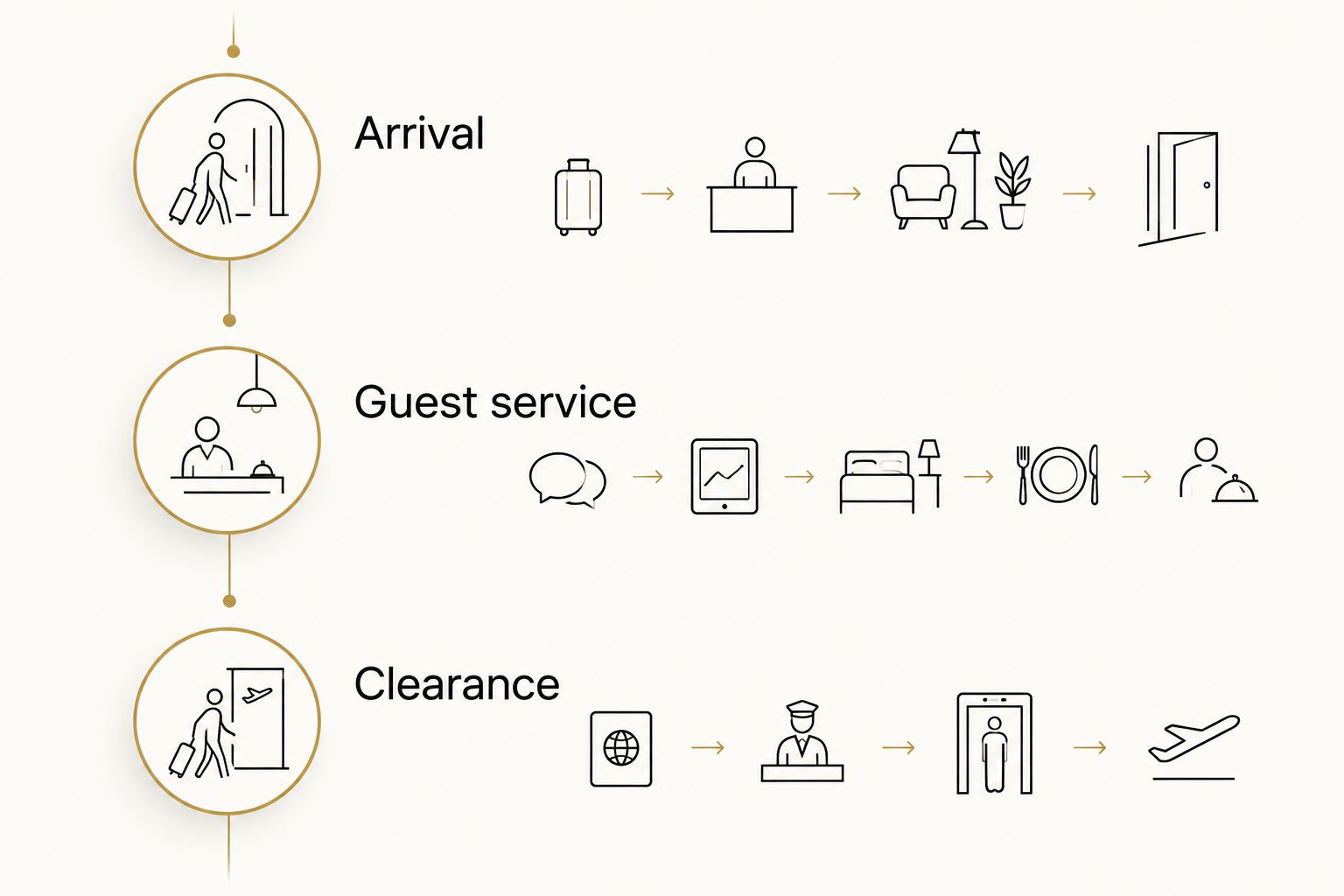
Turn the approved brief into a working sequence. Use 3 milestones as its backbone: arrival, guest service and clearance. Add the specific tasks within each milestone, using times agreed with the venue and caterer.
Record when catering staff must be ready, not just when guests arrive. Include programme pauses, the service-end instruction and the permitted collection period. Distinguish a planned time from a task that starts only after the host gives permission.
Keep one approved version accessible to the people delivering the event. If a change affects the menu, staffing or access, send it to the relevant approver before treating it as confirmed. A verbal request during setup should not silently replace the agreed scope.
Finish the run sheet with:
- Approved arrival and setup sequence.
- Readiness check before guest entry.
- Service start, pauses and finish instructions.
- Contact for operational decisions.
- Clearance and equipment collection sequence.
- Final document version and approval record.
Which catering format fits an embassy event?
Choose the format around the programme, not the impression created by the menu. The options below are planning categories, not confirmed packages. Ask your supplier to specify what it will deliver and what the venue must provide.
| Option | Best for | Practical advantage | Key limitation |
|---|---|---|---|
| Staffed canapé reception | Standing introductions and networking | Food can circulate without a seated meal | Requires agreed circulation routes and serving pauses |
| Staffed buffet | Informal meals where guests choose dishes | Offers a visible selection in one service area | Needs space for serving, replenishment and guest movement |
| Plated dinner | Seated events with a structured programme | Courses can follow an agreed service sequence | Depends on seating, dietary meal identification and coordinated timing |
| Drop-off catering | Meetings where the host manages service | Separates food delivery from guest-facing service | Leaves setup, serving and clearance responsibilities with the host unless separately agreed |
A combined format is another discussion point, not automatically a better choice. A reception followed by dinner introduces a transition: tables, guests and staff must move according to an agreed plan. Include that changeover in the brief before requesting a proposal.
Compare scope before comparing quotations
Send the same approved brief to each caterer. Then compare the proposed menu, staff roles, equipment, preparation arrangements and clearance tasks side by side. Differences in those items explain differences in scope more clearly than a menu headline.
Ask suppliers to identify exclusions explicitly. Venue equipment, guest-facing staff, drinks service and collection arrangements should each have a named owner. Treat an unanswered item as a question, not as an inclusion.
The useful comparison is what each proposal undertakes to deliver. Access restrictions, menu preparation, service format and equipment requirements are all details to discuss when requesting a tailored quotation. Do not transfer another event’s quotation to your embassy brief.
Common briefing mistakes embassy organisers should avoid
Treating supplier appointment as permission to enter
Selecting the caterer does not establish venue access. Keep the appointment decision separate from staff information submission, vehicle arrangements and the venue’s approval process. Tell the catering team who confirms entry.
Leaving protocol instructions implied
Do not expect a chef or service team to infer precedence, seating or the right moment to interrupt proceedings. Ask the host to translate protocol decisions into practical service instructions. Include the contact who can answer questions discreetly during the event.
Adding dietary information after the menu is approved
A late dietary request changes more than a dish name. Ask the caterer to confirm the required adjustment and how the meal will reach the correct guest. Update the brief rather than keeping the change in a separate message thread.
Assuming clearance is included
Define what remains after guests leave and who removes it. Crockery, hired equipment, leftover food and waste require separate decisions. Agree the collection route and timing with the venue as well as the supplier.
FAQ
What should an embassy event catering brief in Dubai include?
Include the event purpose, venue access instructions, guest count, menu, dietary requirements, staffing responsibilities and service run sheet. Name the people who approve the menu, access and event-day changes.
Who should confirm access for the catering team?
The embassy or venue’s designated contact should confirm its access process. The caterer should submit the requested staff, vehicle and equipment information through the host’s approved channel.
Are canapés better than a plated dinner for an embassy reception?
Canapés fit a standing reception; a plated dinner fits a seated programme. Choose according to guest movement, available space and when service must pause, rather than assuming one format is universally better.
How should dietary requirements be shared with the caterer?
Share confirmed dietary requirements through the host’s agreed process and ask the caterer to confirm the response. Connect seated dietary meals to the seating plan, or agree labels and staff instructions for standing service.
Does an embassy event always need an on-site kitchen?
The kitchen requirement depends on the proposed menu and preparation method. Ask the caterer to identify what happens on site and what facilities or additional equipment are required before approving the menu.
How do I compare embassy catering quotations?
Compare quotations against the same brief and check the work included in each. Review staff roles, equipment, preparation, service and clearance separately, and ask each supplier to state exclusions.
Can myCHEF provide catering for a business event in Dubai?
myCHEF provides event catering for businesses in Dubai. For an embassy event, submit the venue’s requirements and ask for confirmation of the proposed menu, staffing, access coordination and service scope.
Related guides
Send a brief that can be acted on
One useful final check: ask who can authorise service to begin if the programme changes. Put that name beside the service instructions, not only in the general contact list.
To discuss your event with myCHEF, send the date, Dubai location, guest count and service required. Include the venue’s access instructions and programme so the proposed catering scope can be considered alongside the practical arrangements.