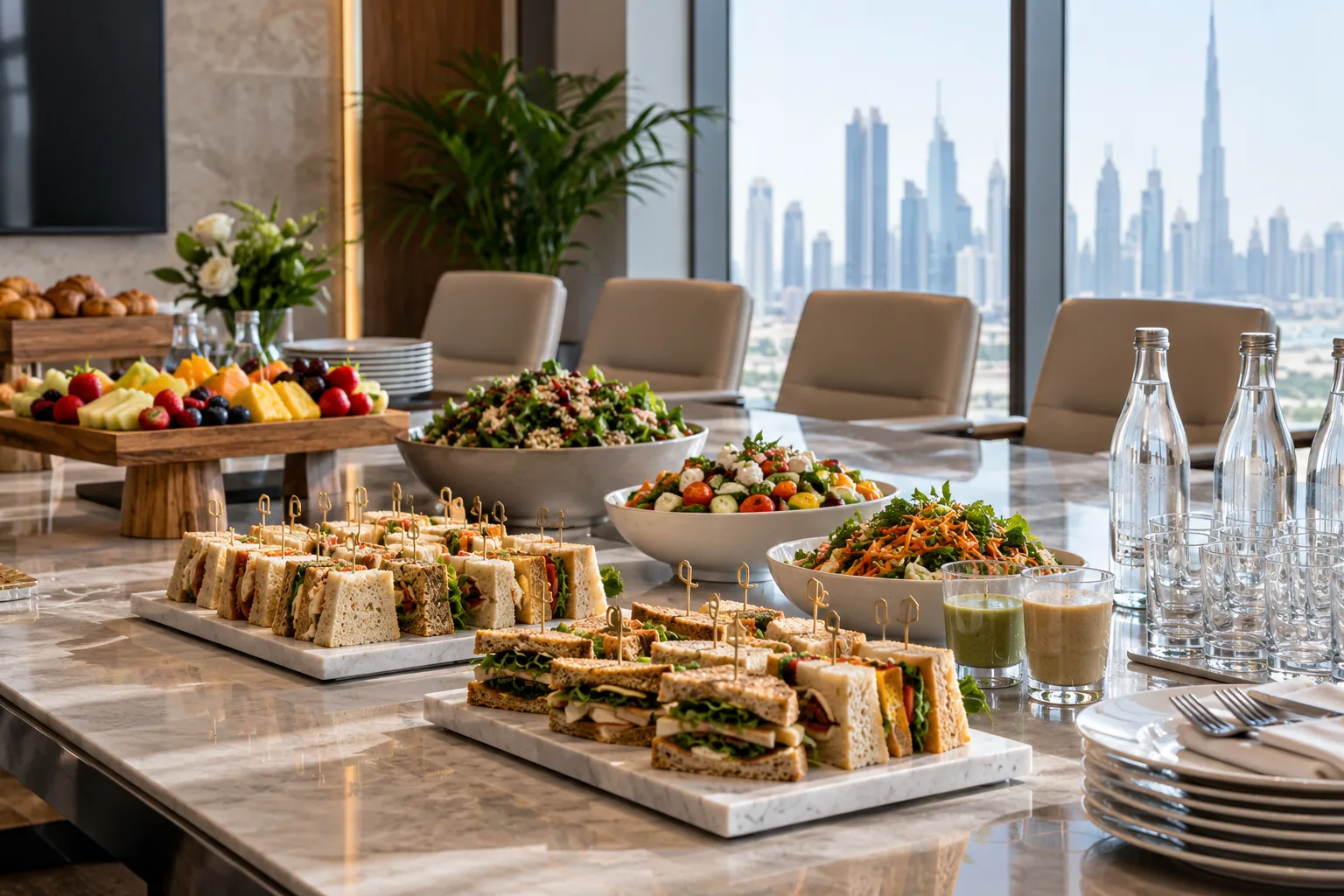
By myCHEF Dubai Team|11 min read
A Dubai coworking event catering brief is a written plan for feeding guests in a shared workplace without disrupting its other users. Specify the service format, guest count, delivery route, dietary requirements and responsibility for clearing the space. Unlike a dedicated event venue, a coworking space needs explicit agreement on which areas, facilities and access routes your event can use.
- Your coworking event catering brief Dubai should define delivery access, guest numbers, service boundaries and clearing responsibilities.
- myCHEF provides corporate-event catering; confirm the proposed staffing and equipment against your shared-space requirements.
- Choose drop-off catering only when someone on site owns receiving, serving and clearing.
- Get the workspace manager’s approval before confirming food stations, kitchen use or supplier access.
Why catering needs a different brief in a coworking space
Coworking event catering serves two audiences: your invited guests and the people still using the building. Your plan needs to protect both. A buffet beside occupied desks creates a different operational problem from refreshments inside a booked meeting room.
The catering brief should describe the space as carefully as the menu. Record where guests can eat, where suppliers can work and which shared facilities remain available to members. Do not assume an event booking includes kitchen access or permission to move furniture.
For the supplier-selection stage, the guide to corporate event catering companies in Dubai is a related resource. This checklist addresses a narrower question: what your caterer and workspace manager need to agree before delivery.
myCHEF catering suits businesses seeking food service for a corporate event rather than a venue booking. The service brief still needs to establish the menu, equipment, staffing and practical arrangements for your particular workspace.
Build the brief around the event, not just the food
Start with a shared document. A simple email or spreadsheet works if the organiser, workspace manager and caterer can all identify the agreed version. Keep decisions separate from unanswered questions so an unconfirmed request does not become an assumed inclusion.
The following steps turn that document into a usable delivery and shared-space checklist. You do not need specialist planning software. You need named responsibilities and written answers.
Define the guest experience
Describe what people are attending and what they will be doing while they eat. A working lunch needs a different setup from a networking reception. A presentation also needs service timing that does not interrupt the speaker.
Count everyone who needs food, including hosts or event staff where applicable. Separate confirmed attendance from invited attendance, and ask the caterer when the final headcount must be agreed. Do not present an optimistic registration total as a guaranteed order quantity.
Choose the eating format before choosing individual dishes. Guests carrying bags, drinks and laptops need food that fits the way they will use the room. Seated guests have different requirements from people standing and moving between conversations.
Include these details in the brief:
- Event purpose: meeting, workshop, member gathering or networking reception.
- Confirmed guest count and the status of outstanding registrations.
- Seated, standing or mixed arrangements.
- Programme timings and the intended food-service window.
- Whether hosts, speakers and event staff need catering.
- The person authorised to approve changes.
Confirm the workspace boundaries
Walk the route from the building entrance to the serving area with the workspace manager. Photos and a simple floor-plan sketch help explain the arrangement without requiring a site visit from every supplier. Mark occupied work areas separately from the event footprint.
Check whether the room has facilities you can actually use, not just facilities that exist nearby. A shared refrigerator might already hold members’ food. A kitchenette might be unsuitable for the preparation or equipment proposed in the catering quotation.
Record approvals in writing. Workspace rules are venue-specific; neither the organiser nor the caterer should infer them from another Dubai building.
Confirm the following:
- The room or area reserved for food service.
- Whether the event can use the kitchenette, sinks and refrigeration.
- Furniture that can be moved and who will restore it.
- Power access for any proposed catering equipment.
- Routes that must remain clear for other workspace users.
- Any restrictions on cooking, noise, smells or outdoor setup.
Choose the service format and assign ownership
Compare service formats using your actual staffing capacity. Drop-off catering transfers more on-site work to the organiser. Staffed service gives the brief a different set of questions about team access, working space and responsibilities.
You can manage a straightforward delivery yourself by appointing a receiving contact and writing down the serving and clearing plan. If that would pull your team away from hosting, ask for a staffed proposal instead. The useful comparison is not simply the food: it is who does each task.
When requesting a myCHEF catering proposal, include the approved workspace layout and event programme. Ask for the proposed service responsibilities alongside the menu. Do not assume that serving staff, furniture, crockery or clearing are included unless the quotation states them.
Assign these tasks explicitly:
- Receiving and checking the delivery.
- Setting out food, drinks and dietary labels.
- Replenishing the service area.
- Answering guests’ ingredient questions.
- Clearing used serviceware during the event.
- Removing waste and collecting hired equipment.
Design the menu around shared-space constraints
Begin with the room and service format, then build the menu. Ask how each dish will be served, handled and eaten. A dish that works at a seated dinner is not automatically suitable for a standing reception beside active workstations.
As an illustrative menu direction, a working lunch might combine individually portioned mains, a separately packed salad and a dessert that does not require cutting. A networking reception might use bite-sized savoury items with napkins and clearly identified alternatives. These are planning examples, not advertised packages.
Ask guests about dietary requirements before approving the menu. Distinguish preferences from allergies, and pass the precise information to the caterer. A dish name or dietary label alone does not establish whether preparation and handling meet a guest’s needs.
Check these menu details:
- Foods that suit the available seating and table space.
- Ingredients and dietary requirements for each agreed dish.
- How special meals will be identified and handed to guests.
- Serving utensils, plates, cutlery and napkins.
- The caterer’s instructions for holding and serving food.
- Drinks service and responsibility for spills.
Plan the delivery and supplier handover
Give the caterer a delivery address that identifies the building, entrance, floor and event room. A location pin alone does not explain how to reach the serving area. Confirm parking or unloading arrangements with the building team rather than assuming reception can resolve them on arrival.
Agree separate milestones for arrival, setup, service and collection. The delivery must fit the workspace’s access arrangements as well as your programme. If guests arrive while suppliers are moving equipment, the plan needs a clear route and a person directing the handover.
The receiving contact should know what was ordered and where it belongs. Ask the supplier how delivered items should be checked and handled, and make sure the contact can reach the event organiser if something differs from the brief.
Write down the delivery essentials:
- Building name, full address, floor and room.
- Approved entrance and unloading arrangements.
- Any supplier registration or access procedure confirmed by the venue.
- Lift access and the route to the service area.
- Arrival, setup, service and collection timings.
- Named receiving contact with a reachable telephone number.
- The process for reporting missing or incorrect items.
Agree the reset and sign-off
Treat clearing as part of the event plan, not an afterthought. Shared tables and kitchens need an agreed handback condition, particularly when members will use them immediately afterwards. Ask the workspace manager what they expect before the booking ends.
Take simple reference photos before moving furniture, with the workspace’s permission. Use them to record the agreed layout rather than photographing members or their belongings. Identify who checks the room after the caterer leaves.
Waste removal and equipment collection are separate tasks. Confirm both in the quotation or organiser’s checklist. A tidy serving table does not mean the event is finished if packaging, hired items or leftover food still occupy shared space.
Complete the reset checklist:
- Clear food, drinks and serviceware from the event footprint.
- Follow the caterer’s instructions for leftover food.
- Separate supplier equipment from workspace property.
- Remove waste through the venue’s agreed process.
- Return furniture to its approved arrangement.
- Check surfaces and report any damage or spills.
- Obtain the workspace manager’s handback confirmation.

Which catering format fits your coworking event?
Select the format that matches both the guest experience and your ability to manage service. The options below are planning categories, not a statement that every supplier offers every format. Ask for a proposal based on the facilities your workspace has approved.
| Option | Best for | Practical advantage | Key limitation |
|---|---|---|---|
| Drop-off catering | Working lunches with a named on-site organiser | Keeps the supplier’s on-site role focused on delivery | Your team must own agreed setup, serving and clearing tasks |
| Staffed buffet | Gatherings where guests eat during a defined break | Gives the service area a dedicated team | Needs room for food stations and a clear scope of staffing |
| Passed bites | Standing networking events | Brings food to guests without requiring everyone to visit a buffet | Requires suitable circulation space and agreed serving staff |
| Live cooking | Events where food preparation is part of the experience | Makes preparation visible to guests | Depends on explicit venue approval and suitable facilities |
A buffet is not automatically the simpler option. It needs a service area that does not obstruct normal movement. Passed bites reduce the need for a central queue but introduce staff circulation through the room.
What should the quotation include?
Request an itemised scope, not just a menu total. Compare proposals using the same headcount, menu brief, venue information and service window. Otherwise, a difference in the quote can reflect different responsibilities rather than a meaningful like-for-like comparison.
Price drivers include the menu, guest count, dietary adaptations, staffing, equipment, delivery arrangements and length of service. Ask which elements are included and which require a separate charge. Keep current rates in the tailored quotation rather than treating a previous event’s budget as a standard package.
Your comparison checklist should cover:
- Agreed menu and quantities against the final guest count.
- Delivery, setup, service, clearing and collection scope.
- Staff roles and their agreed working period.
- Equipment and serviceware supplied or excluded.
- Dietary information and special-meal arrangements.
- Final-count deadlines, amendments, payment and cancellation terms.
If the building changes the approved setup, send the revised information to the caterer before accepting the scope. A proposal written for kitchenette access needs reassessment if that access is withdrawn.
Common mistakes coworking organisers make
Treating a shared kitchen as an event kitchen
The presence of a sink, hob or refrigerator does not establish permission to use it. Get approval for the specific preparation and equipment proposed, then give that approval to the caterer.
Leaving delivery with reception
Reception is not automatically the receiving team. Appoint someone who understands the order, can inspect the handover and knows where each item belongs.
Ordering for registrations without agreeing the final count
Registrations and catered attendance are different planning inputs. Tell the supplier which count is confirmed and agree how changes will be handled before committing to quantities.
Assuming clearing includes everything
Serving staff, rubbish removal, furniture reset and equipment collection are distinct responsibilities. List each one and assign an owner rather than relying on the phrase full service.
Related guides
Use these guides when you need to explore a service format in more detail:
FAQ
What should a coworking event catering brief in Dubai include?
Include the event purpose, guest count, service format, venue facilities, delivery access, dietary requirements and clearing responsibilities. Add a named organiser and receiving contact so the workspace and caterer know who can approve decisions.
Is drop-off catering suitable for a coworking event?
Drop-off catering suits a coworking event when someone on site can manage the agreed receiving, setup, serving and clearing tasks. Confirm food-handling instructions and equipment requirements before choosing this format.
Do we need catering staff for a coworking networking event?
Choose catering staff when your event needs active serving, replenishment or clearing that your team cannot manage while hosting. Ask the supplier to state the staff roles and service scope in the quotation.
Can a caterer use the coworking kitchen?
A caterer should use the coworking kitchen only after the workspace manager approves the proposed activities and equipment. Give the supplier the confirmed facilities and restrictions before menu planning.
How do we handle allergies at a shared-space event?
Collect the guest’s specific allergy information and discuss it directly with the caterer before approving the menu. Ask how ingredients, preparation, handling and special-meal identification will be managed; do not infer suitability from a menu label.
What affects the cost of coworking event catering?
The menu, guest count, staffing, equipment, delivery arrangements and service duration affect the quotation. Request an itemised scope and compare proposals against the same event brief.
Does myCHEF provide catering for business events?
myCHEF provides corporate-event catering for businesses in the UAE. For a coworking event, send the event details and approved workspace arrangements so the proposed service can be assessed against the venue.
Give the caterer the room brief, not just the menu brief
The most useful final check is to ask who owns the space immediately after service. If the answer is unclear, clearing and handback are not yet planned. Resolve that before confirming the event.
For a tailored myCHEF enquiry, share your date, Dubai location, guest count and required service, together with the workspace’s approved facilities and delivery arrangements. Specify whether you need delivery only or a proposal that includes on-site service, and ask for inclusions and exclusions in writing.