By myCHEF Dubai Team|10 min read
This guide helps you prepare a practical brief. For service options and the next step, explore private chef services in Dubai.
Your household chef enquiry details checklist should cover your location, preferred start date, household size, cooking schedule, dietary requirements, kitchen facilities and the service you need. Explain whether you want meals cooked for immediate eating or prepared for later, then identify who handles ingredients and storage. A clear brief lets the provider discuss suitability and scope without treating everyday cooking as a one-off event.
- Use this household chef enquiry details checklist to explain your schedule, portions, dietary requirements and kitchen arrangements.
- myCHEF provides vetted chefs for household cooking and weekly meal prep; specify which service you need.
- Separate allergies from preferences, and explain ingredient sourcing rather than assuming it is included.
- Ask for written confirmation of the cooking schedule, responsibilities and booking terms before agreeing.
What details should you send in a household chef enquiry?
Send a practical description of how your household eats and what help you want. Start with the recurring routine, not a long list of favourite dishes. For prepared meals, the guide to meal prep for busy executives covers a related question: how meal preparation fits around work.
Use the following order when writing your enquiry. It keeps the essential service requirements together and leaves detailed menu decisions for the next conversation.
- Location: Give your Dubai neighbourhood and property type. Mention access restrictions that affect a chef arriving with ingredients or equipment.
- Start date: State when you want cooking to begin and whether that date is fixed or flexible.
- Household size: Explain who will eat the meals, including adults, children and anyone needing a separate portion or menu.
- Schedule: List your preferred cooking days, arrival windows and meal-ready times.
- Service format: Say whether you want freshly cooked meals, batch preparation, or a combination to discuss.
- Dietary requirements: Identify allergies, required ingredient exclusions, religious requirements and food preferences separately.
- Kitchen arrangements: Describe the cooking appliances, preparation space, refrigeration and containers available.
- Responsibilities: Ask who purchases ingredients, supplies equipment, stores meals and handles the agreed kitchen reset.
The most useful enquiry describes the work, not just the job title. A request for a household chef means little until the provider knows what should happen during each visit.
Which cooking format should you ask for?
Recurring household cooking and weekly meal preparation belong in a household-service enquiry. A single birthday dinner, dinner party or celebration belongs in a private dining or catering enquiry, even when it takes place in your home.
Choose the format around when you want to eat and how much you want to handle afterwards. These are service formats to discuss, not confirmed packages or inclusions.
| Service format | Best for | Main advantage | Practical limitation |
|---|---|---|---|
| Cooking for immediate meals | Households wanting food ready around their daily routine | The cooking brief centres on the meal you will eat that day | Kitchen access and meal timing need to align |
| Weekly meal preparation | Households wanting prepared food for later meals | You can plan portions and menu variety together | You need suitable storage and clear handling instructions |
| Private dining or catering | Hosts planning a single dinner or celebration | The brief centres on guests, service and the occasion | It does not describe an ongoing household cooking arrangement |
For household cooking, myCHEF suits households seeking vetted chefs for home-cooked meals or weekly meal prep. The service still needs a precise brief: the brand description alone does not establish your visit schedule, ingredient arrangements or agreed inclusions.
If you want both immediate meals and food for later, say so. Ask the provider to explain how those tasks fit into the proposed visits rather than assuming that preparing dinner automatically includes the rest of the week's meals.
How should you describe your household and portions?
Give the number of people eating and explain meaningful differences between their meals. Children, adults working away from home and family members eating at different times affect the brief in different ways.
Avoid describing portions only as small, normal or generous. Explain the outcome you want: a meal for everyone that evening, individual lunches for later, or leftovers intentionally included in the plan. The chef can then discuss quantities against a clear purpose.
Useful details include:
- Which meals you want covered: breakfast, lunch, dinner or selected meals.
- Who eats each meal and whether that changes during the week.
- Whether everyone shares the same menu.
- Whether you want individual containers or family-style dishes.
- Whether prepared portions are intended for home, work or school.
- Whether visitors should be included in the routine or discussed separately.
Do not turn your first message into a complete menu calendar. A few favourite dishes, clear dislikes and a description of your usual eating routine give the conversation a useful starting point.
What schedule and access information does the chef need?
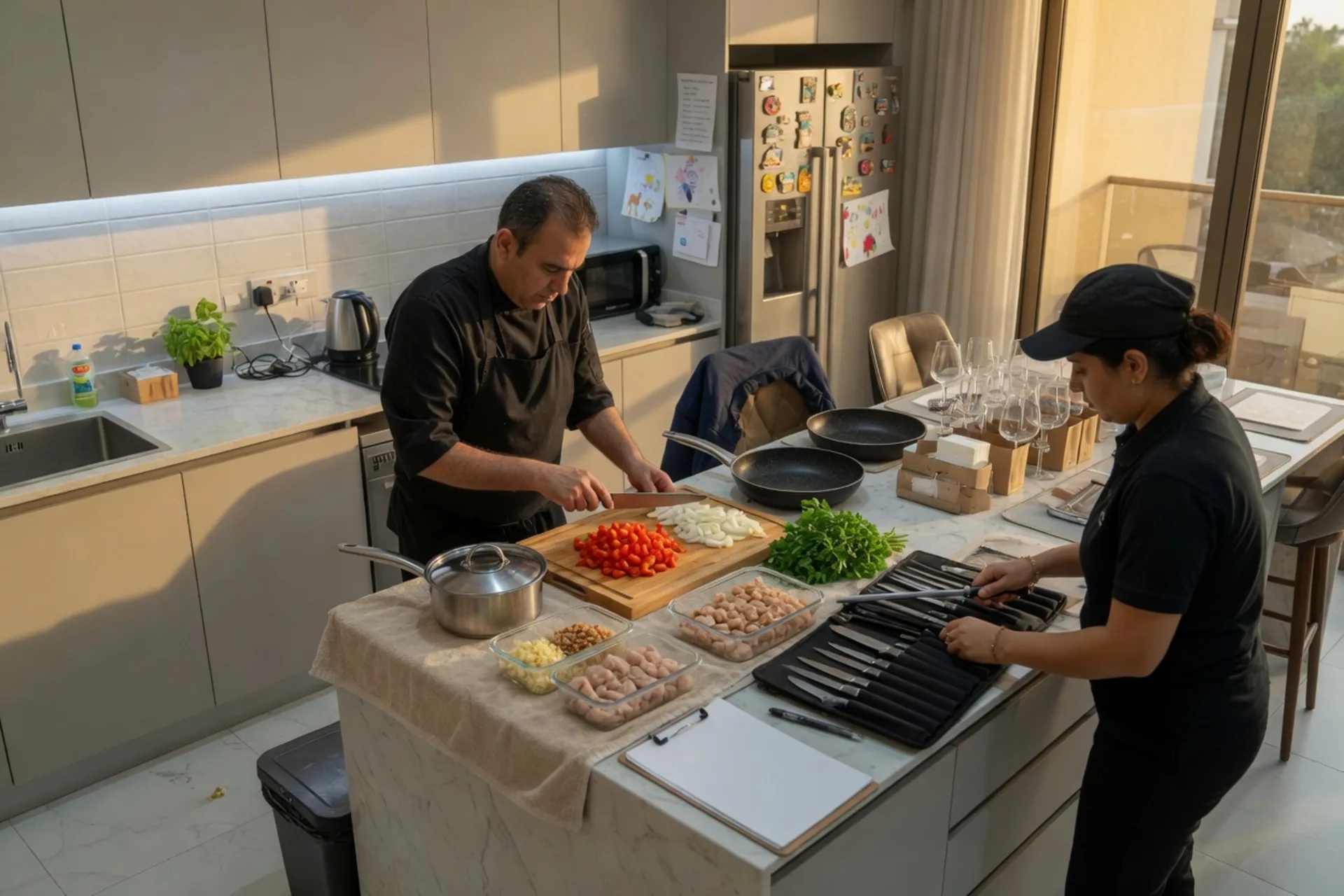
Distinguish arrival time, kitchen access and meal-ready time. They are different instructions. A chef arriving when you want to eat cannot treat that arrival time as the beginning of preparation unless you have agreed a different arrangement.
State which days work, which windows are flexible and when the kitchen is occupied. Include school routines, work calls or family cooking only where they affect access or service.
For a Dubai apartment or villa, ask about practical arrival arrangements:
- Building or community access procedures.
- Visitor parking and the route from parking to the kitchen.
- Lift access where relevant.
- Who will admit the chef if you are away.
- Whether deliveries require separate coordination.
- Any property rules affecting arrival or departure.
Share the neighbourhood first, then provide the exact address through the agreed booking channel when needed. Do not send access codes or sensitive household information as part of a general introductory message.
A schedule is also a boundary. Explain whether the chef should prepare meals only during the agreed visit or whether you are asking for additional tasks that need separate discussion.
How should you explain allergies and dietary requirements?
Put allergies and medically required restrictions before cuisine preferences. Name the ingredients involved and explain any instructions already given by the relevant healthcare professional. Do not expect a chef to infer the requirement from a broad label such as healthy eating.
Keep these categories separate:
- Allergies: Ingredients that must be excluded and any handling requirements you need to discuss.
- Required exclusions: Ingredients ruled out for religious, medical or other essential reasons.
- Preferences: Foods you dislike, preferred cuisines and flavours you enjoy.
- Meal goals: The practical result you want, such as more home-cooked lunches or a consistent dinner routine.
Ask how the provider assesses whether your requirements can be accommodated in your kitchen. An enquiry is not confirmation of an allergen-free environment, and a household cooking service is not a substitute for medical advice.
Mention halal requirements explicitly rather than leaving the provider to assume what you mean. Where ingredient sourcing matters, ask how it will be agreed and documented for your meals.
What kitchen details should you include?
Describe the equipment the chef can actually use. An attractive kitchen photograph does not show whether an appliance works, whether cookware is available or whether the fridge has space for prepared meals.
Your initial description should cover the hob, oven, refrigeration, usable preparation space and basic cookware. Add any missing equipment or appliance you do not want used.
For meal preparation, also explain:
- Where finished meals will be stored.
- Whether containers are available and suitable for the intended use.
- Whether you need individual portions or larger shared dishes.
- Whether labels and meal-specific handling instructions are required.
- Who will move, reheat or serve meals after the chef leaves.
If the provider requests photographs, send clear views of the relevant work areas and appliances. Keep people, personal documents and private household details out of the images.
Agree the kitchen reset rather than assuming its scope. Ask what happens to cooking utensils, work surfaces, packaging and waste, and distinguish that from general household cleaning.
Why does the scope of a household chef enquiry vary?
The same request for regular cooking can describe very different jobs. A proposal needs to reflect the tasks you want completed, not just the number of people at home.
The main scope drivers are:
- Cooking frequency: The visit pattern you want and how it fits your routine.
- Meal coverage: Which meals need preparing during each visit.
- Menu complexity: Shared dishes versus separate menus and preparation requirements.
- Ingredient sourcing: Whether shopping is your responsibility or something you want included.
- Storage and packing: Meals served immediately versus portions prepared for later.
- Additional service: Whether you are also asking for table service or other support.
Budget is useful context, but a budget figure does not define the work. Describe the scope first, then ask the provider to explain what the proposal includes and excludes. Treat additional tasks as questions until they are confirmed.
What can you copy into your first enquiry?
Use this message structure for an enquiry to myCHEF or another household cooking provider. Replace each prompt with your own information; it is a sample brief, not a description of a booked service.
Hello, I am looking for recurring household cooking in Dubai.
Location and property type:
Preferred start date and flexibility:
People eating, including any separate meal needs:
Preferred cooking days and kitchen access times:
Meals needed and when they should be ready:
Food for immediate eating, later meals, or both:
Allergies and required ingredient exclusions:
Preferred cuisines, favourite dishes and dislikes:
Available kitchen equipment and storage:
Ingredient shopping and container arrangements to discuss:
Please explain the proposed service scope, responsibilities and booking terms.
Keep your answers short enough to review easily. If a detail is undecided, identify the decision you need help with rather than guessing an answer.
The enquiry should then move through a clear sequence: Send brief, Confirm scope, Review proposal, Confirm booking. These are recommended checkpoints, not a claim about any provider's response time or internal booking system.
What should you check before agreeing to a proposal?
Compare the written proposal with your original brief. Check that the provider has answered the important questions rather than simply acknowledged receipt of your message.
Confirm the cooking schedule, people served, meal coverage and dietary requirements. Then establish responsibility for ingredients, containers, equipment, storage and the kitchen reset.
Ask how changes are handled if you need to alter a visit or add meals. Review the booking, payment and cancellation terms supplied by the provider; do not assume a particular policy applies.
A sent enquiry is not a confirmed booking. Keep the final agreed scope together with the provider's written confirmation so that both sides are working from the same instructions.
FAQ
What should I include in my first household chef enquiry?
Include your location, start date, household size, cooking schedule, meal requirements, dietary restrictions and kitchen arrangements. Ask who handles ingredients, containers and the kitchen reset.
Should I ask for a household chef or weekly meal prep?
Ask for household cooking when you want meals prepared around your daily routine, and specify weekly meal prep when you want food prepared for later. If you need both, describe each task so the provider can propose a suitable scope.
Do I need a full menu before contacting a chef?
You do not need a full menu for an initial enquiry. Share preferred cuisines, favourite dishes, dislikes and essential dietary requirements, then develop the menu against the agreed cooking schedule.
Will the chef buy groceries and bring containers?
Ingredient shopping and containers need explicit confirmation in the proposal. Explain what you already supply and ask the provider to identify any sourcing or packing responsibilities you want included.
What should I tell a household chef about food allergies?
Name the allergens and explain the handling requirements you need to discuss before booking. Keep allergies separate from preferences and ask whether the provider can accommodate them in your kitchen.
Can I use a household chef enquiry for a birthday dinner?
A single birthday dinner belongs in a private dining or catering enquiry rather than a recurring household cooking brief. Describe the occasion, date, location, guest count and service required.
How do I know my household chef booking is confirmed?
Treat the booking as confirmed when the provider has explicitly confirmed the agreed arrangements and you have met the stated booking requirements. Sending a message or receiving a proposal alone does not establish confirmation.
Ready to send your household cooking brief?
Before you send it, check one detail: have you stated when the food should be ready, or only when the chef should arrive? That distinction belongs in the first conversation.
For a myCHEF household chef enquiry, send your preferred start date, Dubai location, household or guest count and the service required. Add your cooking schedule and dietary requirements, then ask for a proposal that makes responsibilities clear.