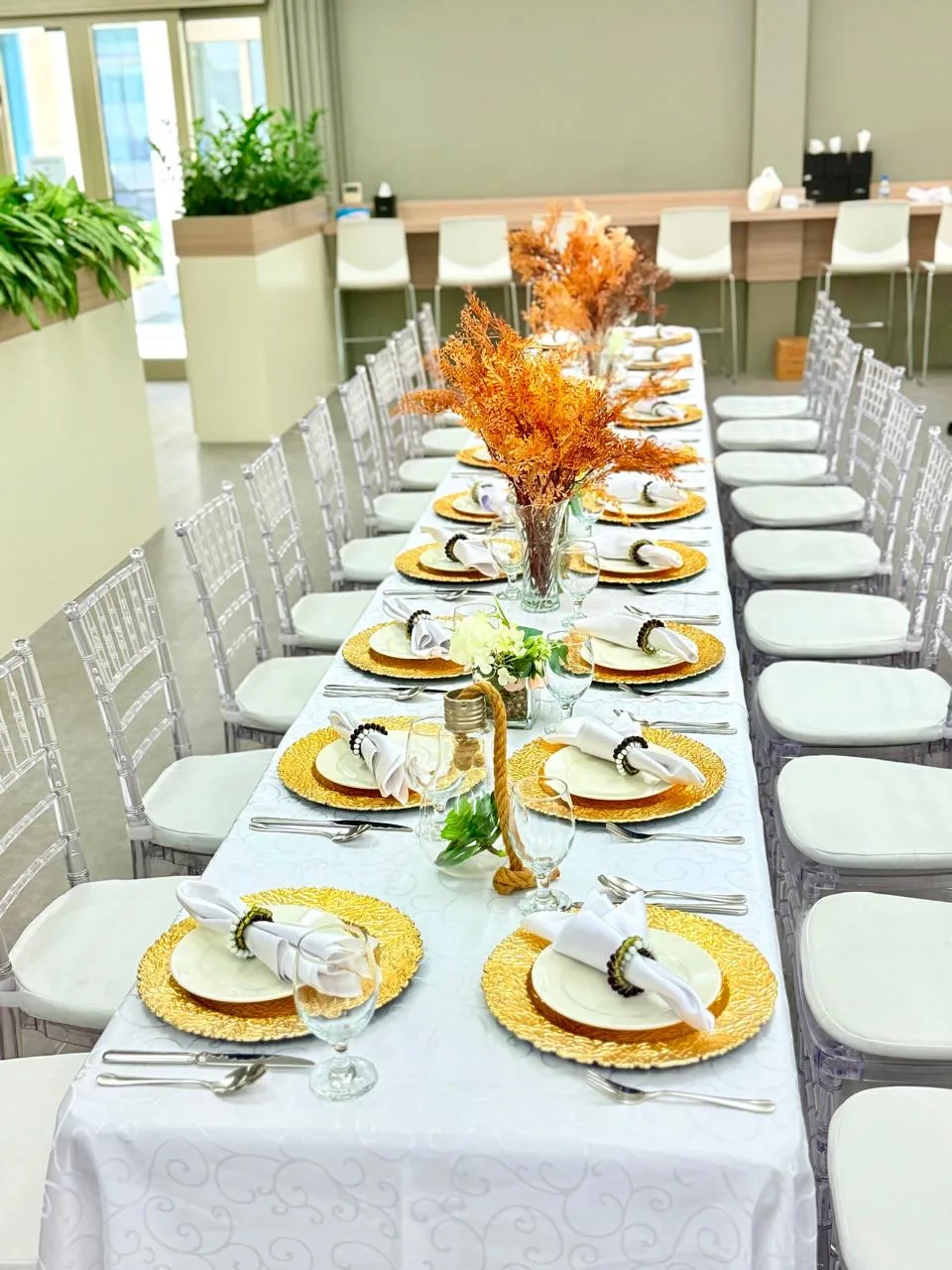
An indoor dining table set for a private meal; the photograph illustrates a home dining setting, not the household described.
When a private chef cooks in a home that already has a household helper, write down who does what in the kitchen before the first visit. A workable starting split: the chef decides the menu, cooks and makes food-handling calls; the helper keeps the household routines they already run. If you are still choosing a chef, begin with our private chef service in Dubai, then use this page to brief everyone at home.
Why a written split matters
Kitchens fail on small overlaps, not big ones: a helper tidies away a labelled container, a chef waits for a pan that is still being washed, or two people shop for the same ingredients. None of this is anyone's fault. It happens when nobody said who owns the task.
Treat the table below as a starting point and change any line that does not suit your household. It is a planning aid, not a service rule.
A suggested starting split
| Task | Suggested owner | Agree in writing |
|---|---|---|
| Menu and recipes | Chef, within your brief | Dishes to avoid and any dietary rules |
| Grocery list | Chef writes it | Who buys, who pays and who checks the delivery |
| Receiving and storing groceries | Helper or host, using the chef's list | Which shelves and fridge zones are the chef's |
| Prep and cooking | Chef | Whether anyone else may stir, taste or move pots |
| Washing up during the visit | Decide first | Chef cleans as they go, helper washes, or both |
| Final clean of cooking areas | Decide first | Hob, counters, sink and floor, and who checks |
| Labelling cooked food | Chef | Label style and reheating notes |
| Bins and recycling | Helper | Timing, so food waste does not sit in the kitchen |
Brief both people before day one
- Introduce them. A five-minute meeting in the kitchen beats a message passed on through you.
- Mark the chef's zones. Name the fridge shelf, pantry area and counter space that stay as the chef leaves them.
- Share one list. Give both people the allergy and dietary notes, written once, in one place.
- Agree the cleaning handover. Decide what counts as finished and who confirms it.
- Choose one contact. One person answers questions, so instructions do not conflict.
A worked example (hypothetical)
Imagine a family dinner on a Tuesday. The chef sends the grocery list on Monday. The helper receives the delivery and stores it in the zones you marked. The chef cooks, labels the extra portions and leaves a one-line reheating note. The helper washes the serving pieces and the chef wipes the hob and counters before leaving. This is an illustration of how the table works in an ordinary evening, not a fixed myCHEF procedure.
What to leave to the chef
- Food handling and storage decisions for the food the chef cooks.
- Whether a dish can be reheated, frozen or served cold.
- Substitutions when an ingredient is missing. Ask the chef to tell you before changing anything that could affect an allergy.
Allergies and medical diets need instructions from your own qualified professional. Give them to the chef in writing rather than as a spoken reminder.
Next step
Write your own version of the table, share it with the chef and the helper, and review it after the first two visits. To plan a chef for your kitchen, see the private chef page, or start with the household menu brief guide.