By myCHEF Dubai Team|11 min read
This guide helps you prepare a practical brief. For service options and the next step, explore yacht catering in Dubai.
A yacht chef needs a clear picture of the galley’s working equipment, usable refrigeration, preparation space, cookware and serving arrangements before boarding. Your yacht chef galley briefing checklist should also cover guest numbers, dietary requirements, boarding access and the captain’s cooking restrictions. Send photographs alongside the written brief, and settle who supplies food, equipment and service staff before agreeing the menu.
- A yacht chef galley briefing checklist should describe usable facilities, not just list equipment aboard.
- Confirm refrigeration, cooking restrictions and boarding access before approving the menu.
- Choose onboard cooking or prepared catering according to the galley and service arrangements.
- myCHEF provides chefs and catering; yacht hire is a separate arrangement.
What galley details does a yacht chef need before boarding?
Give the chef enough information to decide what can be prepared, stored and served aboard. A description such as fully equipped galley leaves too much unanswered. The equipment must suit the proposed menu and be accessible during your event.
For the broader service decision, the guide to yacht catering services in Dubai addresses the catering category. This checklist focuses on the practical handover between you, the yacht operator and the chef.
Work through these steps before confirming dishes:
- Record the equipment. Identify the hob, oven, microwave and any other appliances the chef is permitted to use. Note anything faulty or unavailable.
- Check usable refrigeration. Describe the space actually reserved for food, separate from drinks and crew provisions.
- Show the workspace. Photograph preparation surfaces, the sink, storage and the route to the serving area.
- List utensils and tableware. Confirm cookware, knives, chopping boards, serving dishes, plates and cutlery rather than assuming they are included.
- Agree service conditions. Ask the captain when cooking and service can take place, including any restrictions while underway.
- Confirm the handover. Name the boarding contact and agree who brings supplies, receives deliveries and handles clearing afterwards.
Send one consolidated brief. Scattered messages make it harder to distinguish a confirmed arrangement from an earlier suggestion.
Which equipment details should you photograph and describe?
Photographs show layout; written notes explain function. Send both, because a visible oven does not establish whether it works, which trays fit or whether the chef can use it.
Cooking equipment
List the appliances available for the event, their fuel or power source where known, and any usage restrictions supplied by the operator. Include model details or a photograph of the controls when those help the chef understand the appliance.
Ask the operator to confirm working condition. Do not describe equipment as checked merely because it appears in a yacht listing.
For each appliance, tell the chef:
- Whether it is available throughout the event.
- Whether another crew member needs it at the same time.
- Which cookware or trays are already aboard.
- Whether the captain restricts its use during particular parts of the trip.
A menu requiring oven finishing needs a different plan from cold canapés. Confirm the cooking method before approving the dishes.
Preparation space and washing facilities
Show the clear worktop area, not a surface covered with equipment that will remain in place. Include the sink and explain whether the chef shares these facilities with the crew.
Describe where ingredients, clean utensils and used dishes can sit without blocking access. Ask about water provision and washing arrangements rather than assuming the galley functions like a domestic kitchen.
Also explain the route between the galley and the dining area. Steps, narrow doors and shared passageways are relevant to carrying trays and clearing plates.
Cookware, utensils and serving pieces
Treat the equipment inventory as a responsibility list. Mark each item as supplied by the yacht, supplied by the caterer or still to be agreed.
Include preparation tools, suitable pans, oven trays where needed, serving utensils and guest tableware. If you want a plated meal, confirm where plates can be assembled before service.
Do not assume yacht glassware or crockery covers the catering brief. The operator’s provision and the caterer’s provision should meet without leaving gaps or duplicating equipment.
How much detail does the chef need about refrigeration?
The chef needs the usable storage arrangement, not just confirmation that a fridge exists. Explain what space will be reserved for ingredients, prepared dishes and any food brought by guests.
Give internal measurements if the operator can provide them. Otherwise, send photographs showing the shelves and compartments, and ask the chef to confirm whether the planned containers fit.
Check these points:
- Food allocation: which shelves or compartments are reserved for catering.
- Existing contents: drinks, crew food or other items sharing the space.
- Working condition: confirmation from the operator that the equipment is functioning.
- Freezer access: whether frozen ingredients form part of the proposed menu.
- Boarding sequence: when chilled food arrives and who receives it.
- Additional storage: whether any separate arrangement needs approval.
If refrigeration is not confirmed, leave the menu provisional. Ask the chef to explain which dishes depend on onboard storage and which require a different preparation or delivery plan.
A photograph cannot establish a safe food-storage process. The caterer must agree that process with the operator, including what happens between delivery, boarding and service.
Should food be cooked onboard or prepared before boarding?
Choose the service format after reviewing the galley. Cooking everything aboard is not automatically the right answer, and prepared catering does not automatically remove the need for refrigeration, workspace or staff.
These are planning formats to discuss, not confirmed myCHEF packages:
| Format | Best for | Practical advantage | Limitation to resolve |
|---|---|---|---|
| Onboard cooking | Hosts wanting dishes prepared aboard with suitable facilities | Cooking and finishing can follow the agreed service sequence | Requires usable equipment, preparation space and permission to cook |
| Prepared food with onboard finishing | Menus where some preparation happens before boarding | Reduces preparation tasks in the galley | Still requires agreed storage, finishing equipment and service arrangements |
| Prepared catering with minimal galley use | Events with limited cooking facilities | Reduces reliance on onboard cooking equipment | Does not remove the need for food handling, presentation and clearing arrangements |
The chef should explain which format fits your proposed dishes. You should then check that the operator accepts the associated equipment, deliveries and working arrangements.
For example, an illustrative menu might combine a prepared starter, an onboard-finished main course and a dessert assembled before boarding. That is a discussion prompt, not an advertised menu or a promise that a particular galley can support it.
If a dish depends on equipment the operator cannot confirm, change the dish or agree an alternative method. Do not leave that decision until the chef boards.
What guest and menu information belongs in the brief?
Equipment is only part of the galley briefing. The chef also needs to know whom the food serves and how you want the event to run.
Provide the guest count, identify whether crew meals are required, and describe the occasion. A seated dinner and a standing reception create different demands on plating, serving space and clearing.
Ask guests for dietary information before the menu is agreed. Separate allergies from preferences and religious dietary requirements; do not combine them under a general request for special meals.
Your menu brief should state:
- The intended service style: plated, shared dishes or circulating bites.
- The dishes or cuisines you would like to discuss.
- Allergies and other dietary requirements, with the affected guests identified privately.
- Whether children need a different menu.
- Whether a cake or other food will arrive separately.
- Who supplies drinks, glassware and any drinks service.
Tell the chef about allergies before proposing substitutions. Ask how the catering team will handle the requirement in the actual galley, including shared equipment and preparation surfaces. Do not assume a preference label establishes suitability for someone with an allergy.
Keep the final menu and dietary brief together. If the guest list changes, send a revised version rather than expecting the chef to reconcile several conversations.
What boarding and storage arrangements need agreement?
The boarding plan connects the menu to the yacht. Confirm the marina, yacht identification, meeting point, operator contact and the time the chef can access the galley.
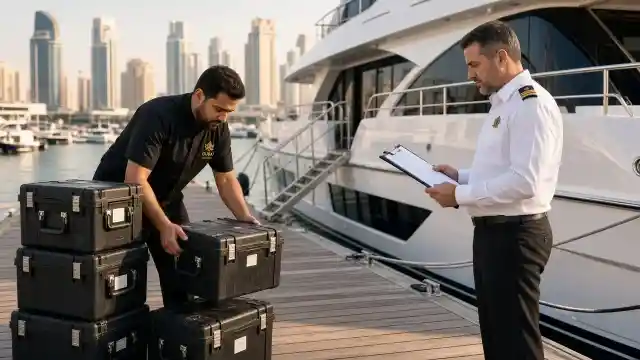
Ask the operator about delivery access and the route from the meeting point to the boat. Describe steps, narrow boarding points and any restrictions on bringing equipment aboard. The chef needs these details to plan transport and loading, not simply to find the yacht.
Secure equipment before departure
Ask the captain where catering equipment can be placed and how loose items must be secured. Serving dishes, portable equipment and drinks storage should all fit the operator’s approved arrangement.
Apply the same question to other items brought for the event: where will they sit, what keeps them secure, and do they obstruct the crew? Do not add decorations or equipment after approval without checking the revised layout.
Agree the working sequence
Your brief should distinguish boarding, preparation, departure, meal service and clearing. Exact timings belong in the event plan agreed with the operator and caterer.
A simple sequence keeps the responsibilities visible:
- Boarding: receive the chef, food and approved equipment.
- Storage: place ingredients and prepared dishes in the agreed locations.
- Preparation: complete the permitted galley work.
- Service: serve according to the captain’s agreed operating conditions.
- Clearing: collect dishes, manage waste and remove catering equipment as agreed.
Build the schedule around confirmed access, not only the guest arrival time. If the chef cannot enter the galley before departure, the menu and preparation plan must reflect that constraint.
Why do yacht chef arrangements vary between boats?
The same guest count does not produce the same catering plan on every yacht. The working conditions determine how the chef can deliver the menu.
The main drivers are:
- Cooking facilities: which appliances work and are permitted for use.
- Storage allocation: how much usable chilled space the operator reserves for food.
- Service format: whether dishes are plated, shared or circulated.
- Staffing responsibilities: who cooks, serves, clears and coordinates with the crew.
- Access and timing: when loading and preparation can happen.
- Dietary requirements: what additional handling and menu decisions need agreement.
These details also shape the quotation. Ask for a written scope that distinguishes food, chef attendance, service staff, equipment, delivery and clearing. Confirm exclusions rather than treating an unspecified item as included.
myCHEF yacht catering is best suited to hosts seeking food and an onboard chef, rather than yacht hire. Keep the yacht booking with the operator and the catering brief with the chef service, with one named contact coordinating the handover.
Can I send galley photographs instead of an inventory?
Send photographs alongside an inventory, not instead of one. Images show the space, but they do not confirm working condition, permission to use equipment or who supplies missing items.
Ask the operator to review your notes before sending the final brief. That avoids presenting your assumptions as confirmed yacht facilities.
Does the chef also serve and clear the meal?
Confirm serving and clearing separately from cooking. A chef’s cooking role does not establish that guest service, drinks service or all post-event clearing is included.
Ask who carries dishes, clears plates and manages waste. Record where the crew’s responsibilities end and the catering team’s responsibilities begin.
What should I do if the yacht changes after the menu is agreed?
Send a new galley brief and ask the chef to reconfirm the menu. A replacement yacht needs its own equipment, refrigeration and access checks.
Keep the previous plan marked as superseded. Do not assume a similar boat description means the same working facilities.
FAQ
What should I send a yacht chef before boarding?
Send the guest and dietary brief, galley inventory, photographs, storage details, boarding instructions and operator contact. Confirm who supplies food, equipment, service staff and clearing.
Can a chef cook in any yacht galley?
Do not assume every yacht galley supports the proposed menu. The chef and operator need to confirm working equipment, usable space and cooking permissions before you approve dishes.
What galley photographs should I take?
Photograph the cooking appliances, clear preparation surfaces, fridge interiors, sink and storage areas. Add written notes about working condition, access and equipment reserved for the crew.
Do I need catering staff as well as a yacht chef?
Staffing depends on the service format and the agreed division of responsibilities. Ask who serves food, handles drinks and clears dishes rather than assuming the chef performs every role.
How do I brief a yacht chef about food allergies?
Tell the chef about each allergy before the menu is agreed. Ask how the requirement will be handled with the yacht’s actual storage, equipment and preparation arrangements.
Can I arrange yacht catering without cooking onboard?
You can discuss prepared catering with minimal onboard cooking. The plan still needs confirmed food storage, handling, presentation and clearing arrangements.
Does myCHEF arrange yacht hire?
myCHEF’s yacht service covers catering and onboard chefs, not yacht hire or charter. Arrange the vessel separately and share the operator’s confirmed galley and boarding details with the catering team.
Related guides
Before you send the enquiry
Ask the operator one final question: what will occupy the galley during our event? Equipment photographs are less useful if the worktop or refrigeration shown will be needed by someone else.
For a tailored myCHEF yacht catering enquiry, send your date, marina or boarding location, guest count and required service. Include the operator’s contact, galley photographs and dietary brief so the discussion starts with a workable menu, not assumptions.
For an overview of food delivery and staffed event formats, see myCHEF catering services in Dubai.