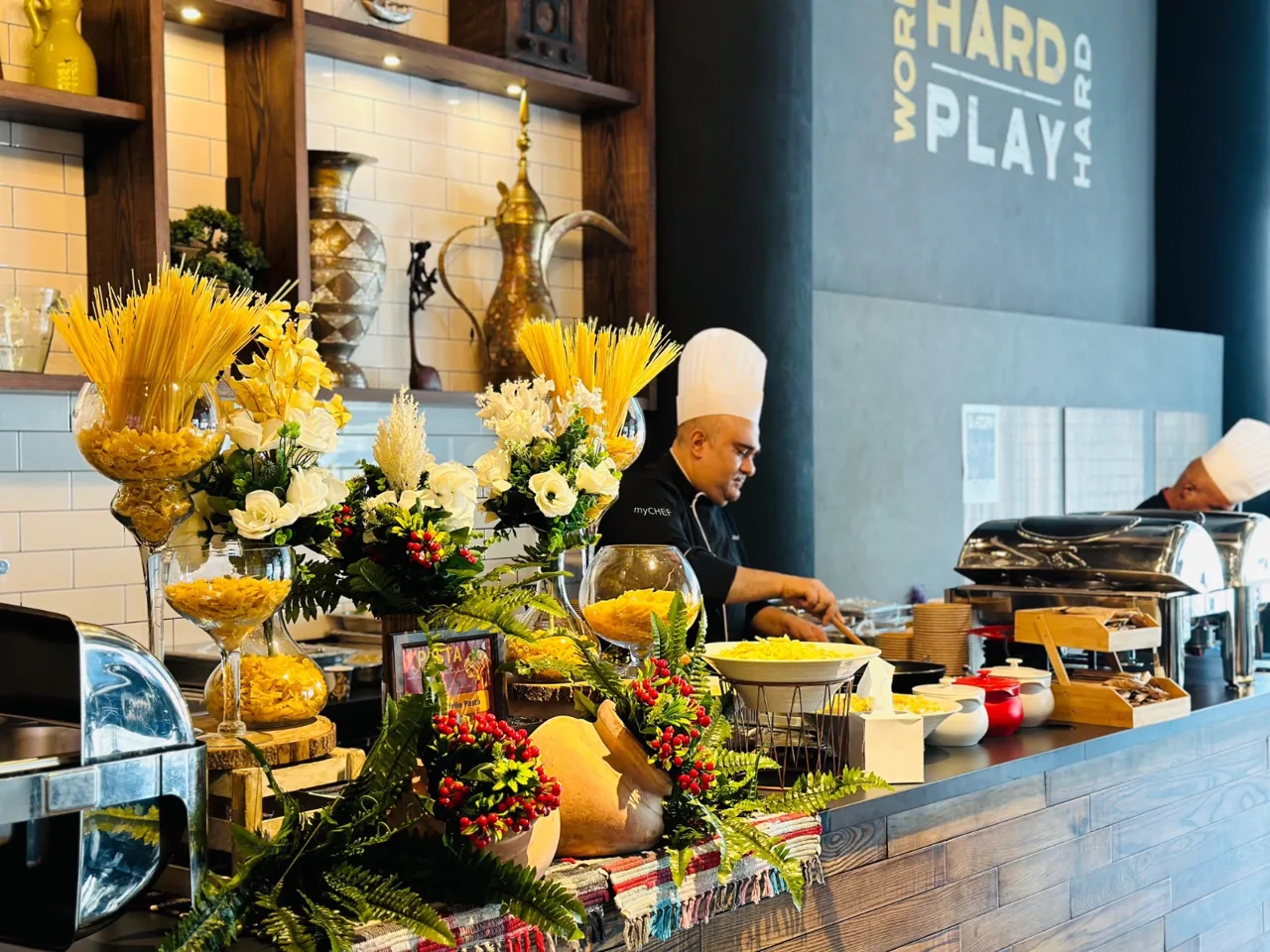
myCHEF cooking setup, shown as service context.
For family dinner at different arrival times, brief the chef by eating window rather than household size alone. Reserve later portions before the first sitting, agree who performs any final cooking, and request dish-specific handling instructions. Confirm when the chef leaves and who takes responsibility for the later meal.
If you are arranging household chef visits in Dubai, include these separate dinner times in your brief before the menu is confirmed. A later meal does not automatically mean the chef remains for a second service.
Count people by eating window
Write down who expects to eat, approximately when, and whether they will eat together. Include anyone who needs a meal set aside even if their arrival time is uncertain. Give one household contact responsibility for confirming changes, so the chef is not working from several conflicting messages.
A useful hypothetical brief is: two people will eat at 6pm, one at 8pm and one has not confirmed. These are planning examples, not recommended service times. Ask the fourth person to confirm by an agreed point; do not quietly assume their meal can be taken from the first sitting.
Choose what the later meal requires
| Arrangement | What to agree before cooking |
|---|---|
| Everyone eats the same menu in two sittings | Separate the later portions before the first meal is served, and confirm the dish-specific handling instructions. |
| Later diners want freshly finished food | Identify the final cooking or assembly task, who will perform it and whether that support is included. |
| A diner may eat away from home | Record when their portion becomes a confirmed meal and what happens if they cancel. |
| People want different dishes | Confirm the additional preparation and equipment needed rather than treating it as a timing change. |
Ask the chef which agreed dishes suit this arrangement. A crisp garnish, a sauce and a main component may need separate treatment. Avoid promising the household that every finished plate will look or eat identically several hours later.
Protect the meals for the second sitting
Use names or an unambiguous meal list to distinguish portions. Label the later meals before serving the first group, including the dietary information and specific instructions supplied for those dishes. An attractive shared platter can make it difficult to see how much has been reserved.
Request written storage, finishing, reheating and use instructions suitable for each dish. Follow those instructions; this planning guide does not replace them. If someone will be much later than expected, ask the responsible contact to check the changed plan rather than leaving food waiting indefinitely.
Leave a handover someone can use
- Meal allocation: which portions belong to which diners.
- Location: where each component has been placed.
- Remaining task: what still needs cooking, assembling or finishing.
- Responsible person: who has accepted that task and read the instructions.
- Change contact: who decides what to do when an arrival time changes.
If nobody in the household is comfortable finishing the proposed dish, raise that before agreeing it. The answer may be another menu, a different visit time or additional service confirmed in the proposal. It should not depend on a family member discovering an unfamiliar cooking task when they are already hungry.
Review the timing after the first visit
Note actual arrival times and which portions were used. If the late meal repeatedly goes uneaten, change the confirmed count or the planning deadline. If everyone ends up eating together, a split service may be unnecessary. Use the household menu brief to record the routine once it becomes clear.
Send your usual eating windows, household size and preferred cooking days with your chef enquiry. Ask for a written scope that states when the visit ends and who handles later meals.
Prepared with AI assistance for myCHEF as practical planning guidance. Confirm the arrangements for your own booking in the written service brief.